You open your closet on a Monday morning, and nothing looks right. Not the black trousers you wore last Thursday, not the linen blouse that needs ironing, not the cardigan that suddenly feels shapeless. You cycle through three half-chosen outfits before settling on the same jeans-and-navy-top combination you’ve worn to every Tuesday meeting for the past month. By Wednesday, you’re scrolling a fast-fashion site, convinced that the solution to your wardrobe boredom is one new dress away.
It’s not. The real fix isn’t another purchase—it’s a system. A 30-day outfit rotation built entirely from what you already own. This isn’t about decluttering down to an arbitrary number or buying a “perfect” capsule from scratch. It’s about creating a repeatable formula that makes every piece in your closet work harder, so you never feel like you have nothing to wear again.
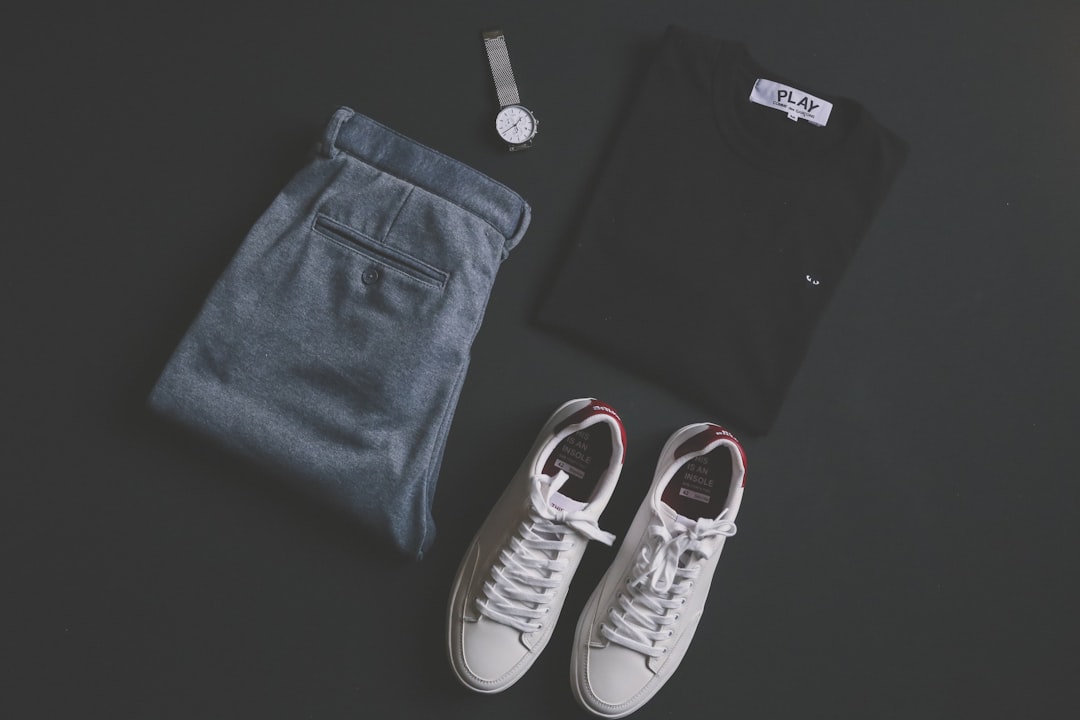 Photo by Mnz on Unsplash
Why a Rewear Formula Beats a Shopping List
Most capsule wardrobe advice starts with a target number—37 pieces, 10 bottoms, 15 tops—and asks you to shop your way there. That approach assumes you’re starting from a blank slate, which is rarely the case. You already own clothes. Some of them you love. Some of them you’ve worn twice. Some are waiting for the right pairing to unlock their potential.
A rewear formula flips the script. Instead of asking “What should I buy?”, it asks “What combinations can I build from what I have?” The goal isn’t a minimalist closet with identical hangers. It’s a rotation that feels fresh for 30 days without a single new purchase.
The formula rests on three principles: anchor pieces, bridge layers, and rotation rules.
- Anchor pieces are the foundation of your outfits—the trousers, skirts, jeans, and dresses that define the silhouette of your day. You need 8 to 10 of these.
- Bridge layers are the tops, sweaters, jackets, and cardigans that sit between your anchor and your accessories. Aim for 12 to 15.
- Rotation rules are the boundaries you set to prevent decision fatigue: no repeating the same anchor-bridge combo within a week, no wearing the same shoes three days in a row, and always changing at least one element from yesterday’s outfit.
This structure gives you the freedom of variety without the overwhelm of a fully open-ended closet. It also reveals gaps you don’t need to fill—because the moment you realize you can style your black midi skirt five different ways with tops you already own, that urge to shop for “something new” quiets down.
The 30-Day Rotation Blueprint: Anchors, Bridges, and Accessories
Before you start pulling pieces, you need a clear picture of what you’re working with. Take everything out of your closet and sort into three piles: anchors (bottoms and dresses), bridges (tops, sweaters, jackets), and accessories (shoes, scarves, belts, bags). Then apply the following target counts based on your lifestyle.
The Core Counts
| Category | Target Pieces | Examples |
|---|---|---|
| Anchors | 8–10 | Jeans, trousers, midi skirt, linen pants, denim skirt, slip dress, structured dress |
| Bridges | 12–15 | Cotton tees, silk blouses, linen button-downs, cashmere sweaters, blazer, denim jacket, trench coat |
| Shoes | 4–5 | White sneakers, leather loafers, ankle boots, block-heel sandals, low-top trainers |
| Accessories | 8–10 | Silk scarves, leather belt, crossbody bag, tote, gold hoops, linen tote, canvas belt bag |
These numbers are flexible. If you work in an office two days a week and from home the rest, your anchor count might skew toward trousers and dresses rather than jeans. If you live in a four-season climate, your bridge layer will include more sweaters and coats than someone in a warm region.
The Seasonal Swap Strategy
A true 30-day rotation requires seasonal adjustments. You don’t need separate wardrobes for winter and summer—just a smart swap of 5 to 7 pieces.
Spring/Fall rotation: Keep your core anchors (jeans, trousers, midi skirt) and swap heavy wool sweaters for linen button-downs and lightweight cardigans. Add a trench coat or denim jacket as your primary outerwear bridge.
Summer rotation: Replace trousers with linen pants and shorts. Swap long-sleeve bridges for cotton tees, sleeveless blouses, and silk camisoles. Your jacket layer becomes a linen blazer or an oversized cotton shirt worn open.
Winter rotation: Keep your trousers and jeans, but swap lighter anchors for corduroy pants or wool trousers if you have them. Your bridge layer expands to include chunky knit sweaters, turtlenecks, and a wool coat or puffer.
The key is to never store more than 7 pieces at a time. If you’re rotating seasons, pack those 7 away and pull out the corresponding 7 from storage. Everything else stays in your closet year-round.
Building Your 30-Day Rotation: A Step-by-Step Process
Step 1: Audit for Versatility, Not Quantity
You don’t need 37 pieces to make this work. You need pieces that can play multiple roles. A silk blouse can be a top, a light jacket over a camisole, or tied at the waist over a dress. A linen button-down works as a shirt, a swimsuit cover-up, or a layering piece under a sweater.
Go through your anchors and bridges and ask three questions for each piece:
- Can I wear this with at least three different opposites? (Your black trousers should work with a tee, a blouse, and a sweater.)
- Does this piece work in at least two seasons? (A cotton midi dress can be worn alone in summer and layered with a turtleneck and boots in winter.)
- Would I reach for this piece on a day when I feel uninspired? (If the answer is no, it’s probably not earning its keep.)
Pull out anything that fails two of these three tests. Those pieces go into a “maybe” pile—not to be discarded, but to be set aside while you build your rotation. You can reintroduce them later if you find a gap.
Step 2: Create Your Anchor-Bridge Matrix
Now comes the fun part: mapping out combinations. Take your 8 to 10 anchors and list them down the left side of a notebook page. Take your 12 to 15 bridges and list them across the top. For each intersection, ask yourself: “Does this work?” If yes, mark it. If no, leave it blank.
You should end up with at least 30 viable combinations—one for each day of the month. If you have fewer, you either need to rethink your bridges (maybe that silk blouse works with more anchors than you assumed) or swap out a few anchors for something more versatile.
For example, a simple matrix might look like this:
- Anchor: Dark wash straight jeans → works with: white tee, striped boatneck, silk blouse, chunky cashmere sweater, linen button-down, denim jacket
- Anchor: Black tailored trousers → works with: silk blouse, cashmere sweater, linen button-down, black turtleneck, striped boatneck
- Anchor: Cream linen pants → works with: white tee, striped boatneck, silk blouse, linen button-down
- Anchor: Midi denim skirt → works with: white tee, striped boatneck, chunky cashmere sweater, denim jacket
- Anchor: Slip dress (silk or viscose) → works with: chunky cashmere sweater over it, linen button-down under it, denim jacket, black turtleneck under it
Notice that the slip dress appears twice—once as an anchor and once as a layering piece. That’s the versatility you’re looking for.
Step 3: Set Your Rotation Rules
A rotation without rules is just a closet with good intentions. Here are the three rules that make a 30-day cycle feel effortless:
Rule 1: The 7-Day Anchor Reset
No anchor piece gets worn more than twice in a single week. If you wear your black trousers on Monday, they’re off the table until Thursday at the earliest. This forces variety without requiring you to think about it.
Rule 2: The Bridge Swap
Every time you wear a bridge layer, pair it with a different anchor than the last time you wore it. Your white tee might go with jeans on Monday, a midi skirt on Wednesday, and linen pants on Friday. The same piece feels completely different in each context.
Rule 3: The Accessory Refresh
Change at least one accessory every day. A silk scarf tied on your bag, a different belt, a switch from sneakers to loafers—small changes create the illusion of a new outfit without any new clothing.
Real Outfit Formulas for Every Season
The matrix gives you combinations. The formulas give you complete outfits. Here are four season-specific rotations built from the same core pieces.
Spring: The Layering Sweet Spot
- Look 1: Dark wash jeans + white tee + linen button-down (worn open) + white sneakers
- Look 2: Cream linen pants + striped boatneck + denim jacket + leather loafers
- Look 3: Midi denim skirt + silk blouse + crossbody bag + block-heel sandals
- Look 4: Black tailored trousers + chunky cashmere sweater + trench coat + ankle boots
- Look 5: Slip dress + black turtleneck underneath + white sneakers + canvas belt bag
Summer: Light and Breezy
- Look 1: Cream linen pants + white tee + linen tote + block-heel sandals
- Look 2: Midi denim skirt + striped boatneck + canvas belt bag + white sneakers
- Look 3: Slip dress alone + gold hoops + crossbody bag + leather sandals
- Look 4: Dark wash jeans + silk blouse + leather belt + loafers (for office days)
- Look 5: Black tailored trousers + white tee + denim jacket + sneakers
Fall: Texture and Transition
- Look 1: Dark wash jeans + chunky cashmere sweater + trench coat + ankle boots
- Look 2: Black tailored trousers + striped boatneck + denim jacket + loafers
- Look 3: Midi denim skirt + silk blouse + wool coat + block-heel boots
- Look 4: Cream linen pants (yes, still!) + black turtleneck + trench coat + sneakers
- Look 5: Slip dress + chunky cashmere sweater over it + tights + ankle boots
Winter: Warm and Polished
- Look 1: Dark wash jeans + chunky cashmere sweater + wool coat + ankle boots
- Look 2: Black tailored trousers + black turtleneck + denim jacket (under wool coat) + loafers
- Look 3: Midi denim skirt + striped boatneck + wool coat + tights + block-heel boots
- Look 4: Cream linen pants (with tights underneath) + silk blouse + cashmere cardigan + ankle boots
- Look 5: Slip dress + black turtleneck underneath + wool coat + tights + sneakers
Each of these formulas uses the same core pieces. The only difference is how you layer and which accessories you choose. For more ideas on styling a midi skirt across seasons, check out How to Style a Midi Skirt 5 Ways Without Buying Anything New.
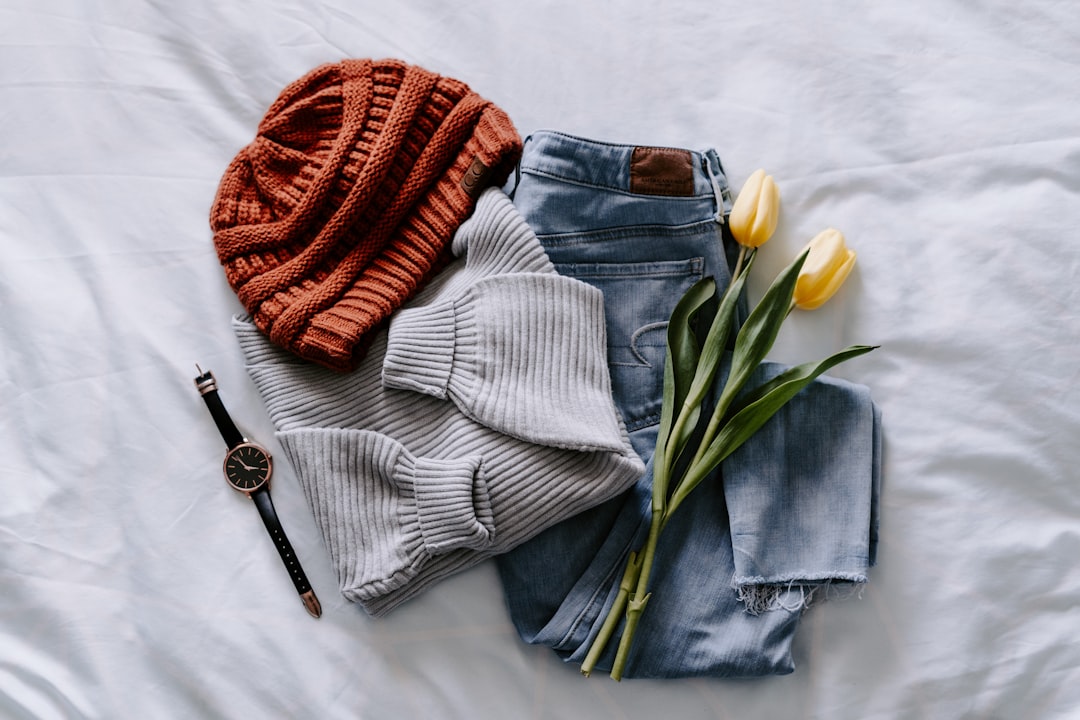 Photo by Angela Bailey on Unsplash
How to Keep Your Rotation Fresh Without Buying Anything
The biggest fear with a limited wardrobe is boredom. But boredom is almost always a sign that you’ve stopped experimenting, not that you’ve run out of options. Here are three ways to keep your rotation feeling new.
The Accessory Swap
Accessories are the cheapest way to change an outfit—and since you’re not buying anything, they’re free. A silk scarf tied around your ponytail, a leather belt cinching a blazer, a crossbody bag swapped for a tote—each change alters the silhouette and tone of your outfit. If you have 3 scarves, 2 belts, and 4 bags, you have 24 possible accessory combinations for a single anchor-bridge pairing.
The Layering Experiment
Take one piece you usually wear as an anchor and try it as a bridge. That slip dress you always wear alone? Layer a turtleneck under it and wear it with boots. That linen button-down you always wear as a top? Wear it open over a camisole with high-waisted trousers. That chunky sweater you always wear as a top? Tuck it into a midi skirt and add a belt.
These experiments often reveal combinations you never considered. For a deeper dive into layering techniques with secondhand finds, read How to Style a Secondhand Blazer 3 Ways: A Work-to-Weekend Outfit Formula.
The Seasonal Reintroduction
Every three months, pull one or two pieces from your “maybe” pile and reintroduce them into your rotation. This isn’t about adding volume—it’s about refreshing your options. A piece you set aside in spring might feel completely new in fall when paired with a different bridge layer.
Repeatable Outfits, Not One-Off Looks
The most sustainable wardrobe isn’t the one with the fewest pieces. It’s the one where every piece gets worn regularly, where you know exactly how to style each item, and where the urge to buy something new is replaced by the satisfaction of mastering what you already own.
A 30-day outfit rotation built on a rewear formula does exactly that. It turns your closet into a system rather than a storage unit. It gives you permission to repeat outfits—because repetition isn’t failure, it’s efficiency. And it proves that you don’t need a new dress to feel like you have something to wear.
Start this weekend. Pull out your anchors and bridges. Map your matrix. Set your rotation rules. By Monday morning, you’ll open your closet and see not a collection of separate pieces, but a month of outfits waiting to happen.
For more guidance on building a versatile foundation, read our comparison of Muji vs. Uniqlo vs. Everlane: Which Minimalist Brand Builds the Most Sustainable Capsule Wardrobe? and explore How to Build a 10-Piece Summer Capsule That Actually Works for Heatwaves and Office Days.