You’re standing in front of your open suitcase three days before a trip that promises both a 50-degree coastal morning and an 80-degree afternoon in the city. You have a “travel pile” on the bed that includes a rain jacket, a knit blazer, three pairs of shoes, and a dress you bought specifically for the flight because it was on sale. You are about to zip the bag, but the nagging feeling remains: you have packed a collection of outfits, not a system. You will likely wear 40% of it, lug the rest, and come home with a crumpled sweater you never touched.
The solution isn’t a bigger suitcase or a more restrictive packing list. It’s a formula that treats your clothing as a layered infrastructure. When you shop secondhand first, you have the advantage of sourcing pieces with proven durability and distinct character, but the challenge is editing them down to a functional core.
This guide outlines a 5-piece travel outfit system designed to handle temperature swings, city walking, and dinner reservations without requiring a wardrobe change every time the wind shifts. We are building a kit, not a haul.
 Photo by Anete Lūsiņa on Unsplash
The 5-Piece Formula: The “Layer Stack” Method
Forget the 5-4-3-2-1 method for a moment. That system works for specific itineraries, but it fails when you are moving between climates. Instead, we are using a Layer Stack formula. It is built on the principle that every piece must perform at least three functions: coverage, transition, and base.
The core is deceptively simple. You are packing:
- The Base Layer (Bottoms): One high-waisted trouser or jean.
- The Transition Layer (Mid): One knit or woven top.
- The Shield (Outer): One structured jacket or coat.
- The Wildcard (Statement): One dress or jumpsuit.
- The Anchor (Footwear): One pair of walking shoes.
That is it. Five items. But the magic is in the rules you apply to them.
The Selection Rules (The “Secondhand-First” Filter)
When sourcing these five pieces, you aren’t looking for the trendiest items. You are looking for “High-Density” pieces—items that carry visual weight and functional utility simultaneously.
- Rule #1: The 3-Outfit Minimum. Before you buy (or pull from your closet), you must be able to create three distinct outfits using that piece with the other four. If a jacket only works with one specific pair of pants, it fails the test.
- Rule #2: The “Climate Bridge” Test. The fabric must be able to handle a 20-degree swing. A chunky cable knit is too warm for a 65-degree day; a thin cotton tee is too cold for a 60-degree evening. You need transitional fabrics: merino wool, linen blends, technical poplin, or a mid-weight denim.
- Rule #3: The “No-New” Rule. This is a secondhand-first formula. When you are looking for that perfect blazer, check the shopping checklist for a secondhand trench coat to ensure the shoulders fit and the fabric hasn’t lost its water resistance. For the base layer, look for 100% organic cotton or a sturdy denim—check the sustainable denim brands guide if you need a baseline for quality, but always check consignment first.
Building the Stack: The 5 Pieces That Travel
Let’s break down the specific archetypes you should be hunting for.
1. The Base Layer: The “Dark Horse” Bottom
The Spec: A dark-colored, high-waisted trouser or a straight-leg jean. Dark colors on the bottom allow everything you wear on top to work. They hide dirt from public transit and spillage from airport coffee.
The Secondhand Hunt: Look for a pair with a bit of stretch (2% elastane) but not a full jegging. You want structure. Check the stitching around the pockets and the zipper. If you are looking at trousers, avoid anything with a crease that is too sharp—it looks formal and shows wear. A flat-front or a subtle pleat is better. If you are going for jeans, look for a rigid denim (10-12 oz) that has already been broken in—it will be softer than new but won’t bag out by day two.
The Outfit Logic: This is your “workhorse.” It works with the dress as a cover-up over a slip, with the knit for a casual day, and with the jacket for a dinner look.
2. The Transition Layer: The “Climate Conductor”
The Spec: A long-sleeve knit or a woven button-down. This is the piece you take on and off as the temperature shifts. It must be breathable enough for a warm afternoon but substantial enough to layer under a jacket on a cool night.
The Secondhand Hunt: Merino wool is the gold standard. It regulates temperature and resists odor, allowing you to wear it multiple times without washing. Look for a 100% merino or a merino-blend crewneck. If you are in a warmer climate, consider a 100% linen button-down. The key is a relaxed fit—not too tight in the arms, allowing air to circulate.
The Outfit Logic: This is your “mid-layer.” It buttons up over the dress to turn it into a skirt/tunic combo. It tucks into the trousers for a clean line. It ties over the shoulders when the sun is high.
3. The Shield: The “Structural Element”
The Spec: A structured jacket. This is the most important piece in the stack. It is the one that elevates the entire outfit from “tourist” to “intentional.” It needs to be water-resistant (or treated) and have pockets.
The Secondhand Hunt: Look for a classic trench coat or a cropped utility jacket. Avoid anything with a huge logo. You want a neutral color—olive, khaki, navy, or black. The fabric should have some weight to it; a flimsy cotton jacket will wrinkle and look messy. Check the lining for tears—that is the first thing to go on a secondhand jacket.
The Outfit Logic: This is your “exoskeleton.” It gives the dress a waist. It turns the t-shirt and trousers into a power outfit. It provides the warmth when the sun goes down. If you are flying, this is the piece you wear on the plane, not pack.
4. The Wildcard: The “Mood Changer”
The Spec: One dress or jumpsuit. This is your “one-click” outfit. It is the piece that makes you feel dressed-up without having to think about coordinating.
The Secondhand Hunt: Look for a slip dress in a heavy silk or a midi dress in a jersey or ponte knit. The fabric should not wrinkle easily. If you are going for a jumpsuit, ensure the fit is perfect in the torso—that is the hardest part to tailor. A pattern (like a subtle floral or a geometric print) is allowed here, as long as it incorporates the colors of your other pieces.
The Outfit Logic: It works alone with the shoes for a hot day. It works under the jacket for a cool evening. It works with the trousers underneath (if it is a slip dress) for a layered look.
5. The Anchor: The “Mile Muncher”
The Spec: One pair of shoes. This is the hardest rule to follow. It cannot be a sneaker that looks like a running shoe. It cannot be a heel. It must be a flat, supportive shoe that looks good with both trousers and a dress.
The Secondhand Hunt: Look for a leather loafer, a minimalist leather sneaker (like a Veja or a Cariuma—you can often find them on resale sites), or a sturdy Chelsea boot. The sole is the critical factor. Check for wear on the heel—if it is worn down, you will need to replace it immediately, which adds cost. If you are looking for a boot, ensure the leather is full-grain and can be resoled.
The Outfit Logic: This is your “constant.” It grounds every outfit. The goal is to not even think about your feet.
The “Climate Bridge” Matrix: How to Adjust the Stack
The formula is rigid, but the execution is fluid. Here is how the five pieces adapt to different climate scenarios.
| Climate Scenario | The Base (Bottoms) | The Transition (Top) | The Shield (Outer) | The Wildcard (Dress) | The Anchor (Shoes) |
|---|---|---|---|---|---|
| Hot & Humid (80°F+) | Linen-blend wide-leg trouser | 100% linen button-down | Lightweight unlined linen blazer | Silk slip dress | Leather loafer |
| Variable (50–70°F) | Rigid denim jean | Merino wool crewneck | Trench coat | Jersey midi dress | Chelsea boot |
| Cold & Wet (40–55°F) | Heavyweight cotton twill trouser | Long-sleeve thermal knit | Waterproof utility jacket | Long-sleeve knit dress | Waterproof leather boot |
The Golden Rule: If you are going to a hot climate, you swap the heavy jacket for a lighter one, but you keep the same structure. If you are going to a cold climate, you add a thermal base layer underneath the transition piece, but you don’t add a second sweater to the stack.
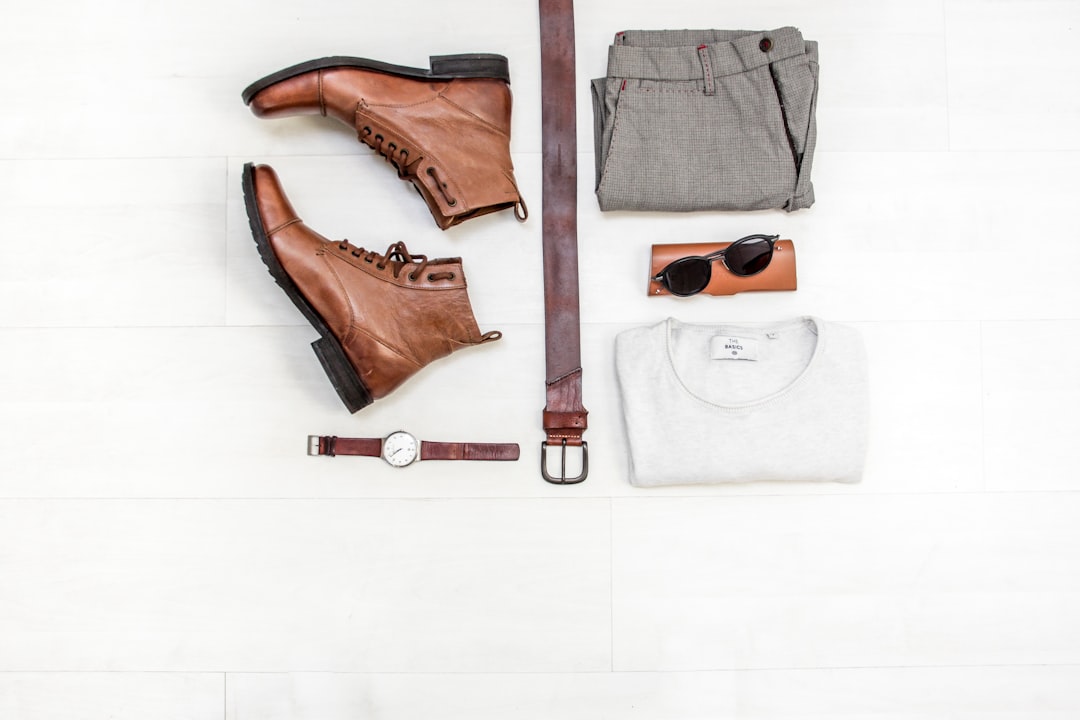 Photo by NordWood Themes on Unsplash
The “Non-Negotiables” That Travel With the Stack
These are the items that don’t count as “pieces” but are essential to the system’s success.
- The Scarf (The “6th Piece”): A large square of silk or a lightweight wool pashmina. It acts as a blanket on the plane, a shawl over the dress, a neck warmer under the jacket, and a headscarf if the wind picks up. It is the ultimate multi-tool.
- The Under-Layer: A thin, packable merino tank top. This is worn under the transition layer on cold days and instead of the transition layer on hot days. It adds a third dimension to the stack without taking up space.
- The Toiletry Kit: This is where you save weight. You are not packing 10 different outfits, so you have room for a proper kit. But keep it liquid-free if possible.
Shopping the Formula Secondhand: The 5-Step Edit
When you hit the thrift store or the resale app, you are not looking for “good clothes.” You are looking for these five specific archetypes. Here is the edit process:
- Start with the Shield. This is the hardest piece to find secondhand. If you find a great trench coat first, you can build the rest of the palette around its color. If you find the trousers first, you risk a jacket that clashes.
- Check the Fabric Content. Flip the label. If it is more than 30% synthetic (polyester, acrylic), put it back—unless it is a technical fabric specifically designed for travel (like a nylon shell). You want natural fibers that breathe and drape.
- The “Squish Test.” Crumple the fabric in your fist for 10 seconds. If it comes out looking like a wrinkled mess, it will look terrible in a suitcase. Look for fabrics that either resist wrinkles (wool, jersey) or look good wrinkled (linen).
- The “Mirror Check.” Hold the piece up against your body. Does it look like it fits you, or does it look like it fits a mannequin? A boxy blazer is only a good idea if you are intentionally going for a boxy look. For travel, you want a defined silhouette.
- The “One-in, One-out” Rule. For every piece you add to this travel kit, you must remove a piece from your permanent wardrobe. This keeps the system tight. If you are building this from scratch, consider the 70/30 rule to ensure you aren’t creating a wardrobe of all statement pieces and no basics.
Repeatable Outfits, Not One-Off Looks
The final test of this system is whether you can create a week’s worth of outfits without repeating the same combination twice in a row. Here are the six core “looks” that emerge from the 5-piece stack.
Look 1: The Transit Uniform
- Pieces: Base (Trousers) + Transition (Knit) + Shield (Jacket) + Anchor (Shoes).
- Vibe: This is your plane/train outfit. Comfortable, structured, and covers you from the cold airport to the warm plane.
Look 2: The City Explorer
- Pieces: Wildcard (Dress) + Anchor (Shoes) + Shield (Jacket) tied around the waist.
- Vibe: The dress is the hero. The jacket is an accessory. Perfect for a day of galleries and long walks.
Look 3: The Layered Look
- Pieces: Base (Trousers) + Wildcard (Dress) worn as a tunic/top + Anchor (Shoes).
- Vibe: This is the most advanced move. If your dress is a slip or a shift, wear it over the trousers. It creates a tunic silhouette that hides the waistline and looks incredibly intentional.
Look 4: The Evening Reset
- Pieces: Wildcard (Dress) + Shield (Jacket) + Anchor (Shoes).
- Vibe: Dress code sorted. The jacket adds structure to the evening look, and the shoes are polished enough for a nice bar.
Look 5: The “I Give Up” (But Look Good) Look
- Pieces: Base (Trousers) + Transition (Knit) + Anchor (Shoes).
- Vibe: You have no energy, but you have this outfit. It works because the trousers are tailored and the knit is nice.
Look 6: The Warm Day, Cool Night
- Pieces: Wildcard (Dress) + Transition (Knit) worn over the shoulders like a cape + Anchor (Shoes).
- Vibe: The knit is not worn as a top; it is worn as a scarf/shawl. It adds a pop of texture and warmth without committing to a full layer.
The Takeaway: The Suitcase is a Test
The 5-piece system is not just about packing light. It is about testing the quality of your wardrobe. If you can’t find five pieces in your closet that meet these criteria, it tells you something about your shopping habits. It means you have been buying “outfits” instead of “components.”
When you shop secondhand for this system, you are forced to be patient. You are waiting for the right merino sweater, the perfect cut of trousers. But when you find them, they will last. They have already survived someone else’s life; they will survive yours.
The next time you pack, don’t ask “What do I want to wear?” Ask “What system do I need to build?” The answer is always the same: five pieces, one stack, infinite possibilities.
Your next step: Go to your closet right now. Pull out your trousers, your knit, your jacket, your dress, and your shoes. Put them on the bed. If they don’t work together, identify the weakest link. That is the piece you need to source secondhand. Don’t buy anything else until that slot is filled.