What Is the 80/20 Wardrobe Rule, Really, and How Do You Apply It to Build a Sustainable Capsule?
You know the feeling. You stand in front of a closet packed with clothes, yet somehow nothing works together. That linen blouse you bought on sale? It requires a specific pair of trousers you don’t own. The printed midi skirt you thrifted? It only matches one sweater, and that sweater is in the laundry. You end up cycling through the same five outfits, while the remaining 80% of your wardrobe hangs there, taking up space and generating guilt.
This isn’t a personal failure. It’s a mathematical inevitability, and it has a name: the 80/20 wardrobe rule. The concept, borrowed from the Pareto Principle, observes that we wear roughly 20% of our clothes 80% of the time. But the real question isn’t why this happens. It’s how you can intentionally design your wardrobe so that 20% isn’t the only functional part.
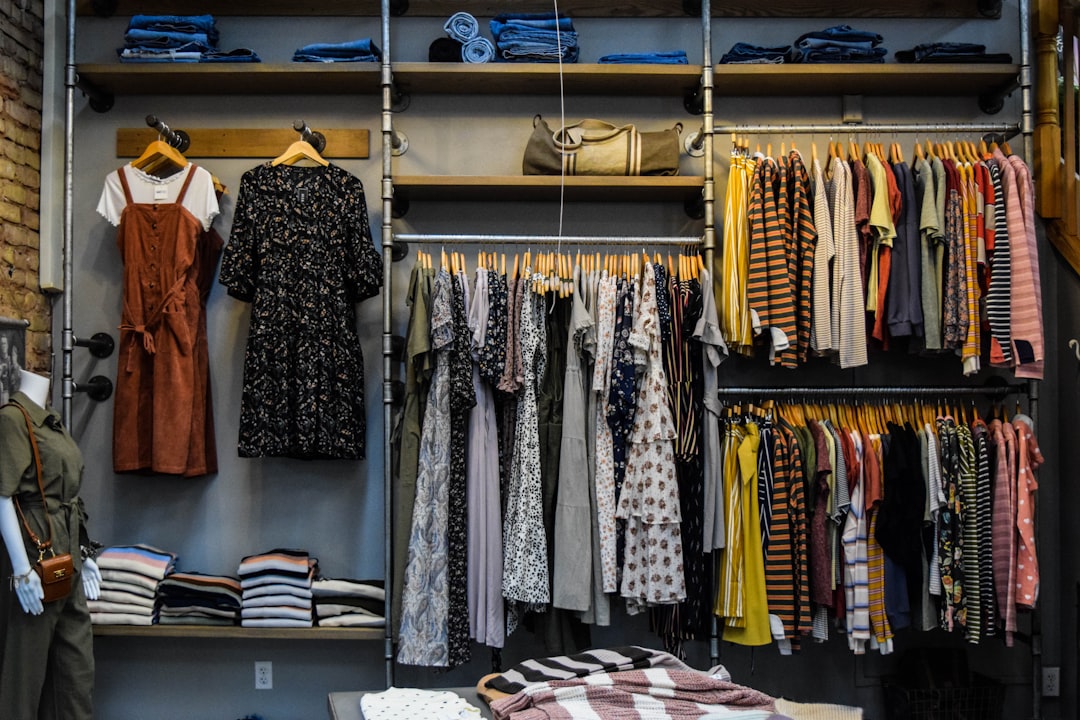 Photo by Burgess Milner on Unsplash
The 80/20 Rule Is Not a Diet Plan
The first thing to understand is that the 80/20 wardrobe rule gets misrepresented constantly. Some corners of the internet treat it as a rigid prescription: 80% of your clothes must be “classic” or “neutral,” and 20% can be “fun.” Others insist the split should apply to clothes versus accessories. Neither interpretation captures what actually makes this framework useful.
Tiffanie Darke, who popularized the “Rule of Five” approach, offers a more practical definition. She argues that 80% of your wardrobe should consist of high-quality, functional foundational pieces, and the remaining 20% should be what she calls “personality pieces.” The distinction matters. Foundational basics aren’t just beige t-shirts and black trousers. They are the garments that reliably support your daily life—the items you reach for when you need to feel put-together without thinking too hard. Personality pieces, by contrast, are the ones that signal your taste, mood, or creative impulse.
The rule works because it solves a specific structural problem: most wardrobes lack cohesion. If your clothes don’t mix and match easily, they are working against you. A real capsule wardrobe means every piece has a purpose, and the 80/20 split provides a framework for ensuring that purpose is balanced between utility and expression.
Where the Rule Performs Well
The 80/20 approach excels in three specific scenarios:
Decision fatigue reduction. When 80% of your wardrobe consists of reliable, interchangeable basics, getting dressed becomes a low-stakes operation. You don’t have to invent a new outfit every morning. You reach for a foundation piece, add a personality piece, and move on.
Travel and packing. If you’ve ever tried to pack for a trip and ended up bringing items that never left your suitcase, you understand the value of this ratio. The sustainable capsule wardrobe for travel formula works precisely because it forces you to identify which 20% of your clothing actually earns its place in your bag.
Budget allocation. When you know that 80% of your wear comes from foundational pieces, you can justify spending more on those items. A well-constructed pair of trousers or a merino wool sweater worn twice a week for three years delivers a cost-per-wear that fast fashion cannot touch.
Where the Rule Falls Short
The 80/20 wardrobe rule is not a universal solution, and pretending otherwise leads to frustration.
It assumes stable circumstances. If you are going through a body change, a career shift, or a climate move, the ratio shifts. That 80% of foundational pieces you carefully cultivated for an office job won’t serve you during a remote-work transition or a pregnancy. The rule works best as a periodic assessment tool, not a permanent constitution.
It can encourage overcorrection. Some people interpret the rule as permission to buy twelve identical white t-shirts and call it a capsule. That misses the point. Foundational does not mean monotonous. Your 80% should include variations in silhouette, fabric weight, and neckline that accommodate different seasons and occasions.
It ignores the reality of how we acquire clothes. Most of us don’t build wardrobes from scratch. We accumulate pieces over years, through gifts, impulse buys, and inherited items. Applying the 80/20 rule retroactively requires a clear-eyed assessment of what you actually own, which can be emotionally uncomfortable.
How to Audit Your Existing Closet Without the Drama
Before you can apply the 80/20 rule, you need to know what you’re working with. A full closet audit sounds tedious, but it doesn’t require emptying everything onto your bed and sobbing. It requires one honest question: What do I actually reach for?
The Wear Test Method
For the next two weeks, wear everything you own that fits and is seasonally appropriate. Yes, everything. When you get dressed in the morning, pull from the back of your closet. When you come home, note whether you felt good in that outfit. This isn’t about forcing yourself to wear uncomfortable clothes. If something doesn’t fit or makes you feel bad, it goes into the “needs evaluation” pile immediately.
After two weeks, you will have a clear picture of your actual 20%. These are the pieces you kept reaching for, the ones that made you feel competent and comfortable. Everything else is candidate for the remaining 80%—but not all of it needs to stay.
The Three-Pile System
Sort your non-20% items into three categories:
Keep but restyle. Some garments are good but currently orphaned. They need a partner piece to function. If you have a beautiful silk skirt that only works with one specific top, the solution isn’t to get rid of the skirt. It’s to identify what foundational pieces would unlock it. Write those down.
Keep but repair. This pile is for items with minor damage: a missing button, a hem that needs stitching, a zipper that sticks. The 5 R’s of sustainable fashion remind us that repair is a legitimate strategy. Set aside one afternoon to address these fixes.
Release. These are pieces that don’t fit, are beyond repair, or never made you feel good. Sell them through a consignment platform, donate them to an organization that accepts textile recycling, or pass them to a friend. Do not hold onto them out of guilt.
What to Look For in Your 20%
Your most-worn items share specific characteristics. They fit well without adjustments. They are made from fabrics that breathe, stretch slightly, or hold their shape. They work with at least three other items in your closet. They are easy to care for—you aren’t avoiding wearing them because they require hand-washing or dry-cleaning.
If your 20% consists entirely of faded fast-fashion t-shirts and one good pair of jeans, that’s data. It tells you that your wardrobe lacks quality foundational pieces and that your personality pieces (the things you actually want to wear) aren’t getting the support they need.
Building Your 80%: The Foundation Layer
Once you understand your current situation, you can begin constructing the 80% of your wardrobe that will actually serve you. This is not a shopping list. It is a framework for evaluating what you buy.
The Material Reality of Basics
Foundational pieces need to perform. They are the workhorses of your wardrobe, which means their material composition matters more than their trend status. When you are evaluating a potential basic, ask these questions:
Does this fabric hold up to repeated wear? Cotton jersey pills. Linen wrinkles (though proper care helps). Silk snags. None of these are disqualifiers, but you need to know what you’re signing up for. A merino wool sweater can be worn multiple times between washes and still look polished. A viscose blend blouse might lose its shape after three wears. Check the fiber content tag before you commit.
Does this garment require special care? If you are not the kind of person who hand-washes delicates, do not buy hand-wash-only basics. They will end up in the 80% you never wear. Look for machine-washable wool, linen that softens with washing, and cotton that doesn’t require ironing.
Does this color work with everything else in your 80%? This is where the “neutral” advice gets some traction, but neutrals don’t have to be beige and black. Your neutral palette is whatever colors appear repeatedly in your most-worn items. If your wardrobe leans toward olive, rust, and cream, those are your neutrals. Build your foundation around them.
The Personality 20%: Permission to Play
The personality 20% is where your wardrobe gets interesting. These pieces are not meant to be utilitarian. They are meant to signal something about you—your humor, your aesthetic, your cultural references. A printed silk scarf, a pair of emerald green trousers, a vintage leather jacket with an unusual cut. These items do not need to match everything. They need to match enough.
The key to making the 20% work is restraint. If every piece in your closet is a statement piece, nothing is a statement. The personality pieces function precisely because they are surrounded by quiet, capable basics. They stand out. They get noticed. They make you feel like yourself.
A Note on Accessories
Some interpretations of the 80/20 rule suggest that 80% of your wardrobe should be accessories and 20% clothing. This is nonsense. Accessories are not a substitute for a functional wardrobe. A great bag does not rescue a poorly fitting dress. Shoes do not compensate for trousers that bag at the knee. Focus on the clothing first. Add accessories as seasoning, not as the main course.
 Photo by Charles Etoroma on Unsplash
The Ratio in Practice: A Seasonal Example
Theory is useful. Application is where the 80/20 rule either works or fails. Here is how the ratio might look for a wardrobe designed for a temperate climate, four seasons, and a mix of remote and in-person work.
The 80% (Foundation)
- 2 pairs of well-fitted trousers (one wool, one cotton-linen blend)
- 1 dark denim jean (straight or slim cut)
- 3 tops: a white cotton button-down, a cream silk shell, a navy merino crewneck
- 1 blazer or structured jacket (neutral tone)
- 1 trench coat or long cardigan
- 1 pair of leather ankle boots (black or brown)
- 1 pair of low-profile sneakers (white or cream)
- 1 simple leather belt
That’s 12 items. They are not flashy. They are not trend-driven. They can be combined in dozens of ways, and they all work with each other.
The 20% (Personality)
- 1 printed midi skirt (floral, abstract, or geometric)
- 1 colorful knit sweater (coral, mustard, or teal)
- 1 pair of statement trousers (wide-leg in a bright color or unusual fabric)
- 1 vintage leather jacket or denim jacket with distinctive detailing
- 1 pair of heeled boots or colorful flats
- 1 bold accessory (scarf, bag, or jewelry)
That’s 6 items. Each one adds a distinct flavor to the foundation. The printed skirt transforms the white button-down and ankle boots into a completely different outfit. The colorful sweater turns the dark jeans and sneakers into something intentional. The statement trousers make the blazer feel fresh.
Total: 18 pieces. That is not a minimalist wardrobe. It is a functional one.
Questions to Ask Before You Buy
The 80/20 rule is most useful when it acts as a filter, not a formula. Before you purchase anything new, run it through these questions.
Which category does this belong to? Is this a foundation piece or a personality piece? If you cannot answer, put it back. A garment that tries to be both usually ends up being neither.
Does it work with at least three items I already own? If the answer is no, you are buying a wardrobe orphan. It will end up in your unworn 80%. The exception is personality pieces, which only need to work with one or two foundation items.
Is this filling a gap or creating one? A new pair of trousers that matches nothing you own creates a gap. You will need to buy something else to make it functional. A new top that works with three existing bottoms fills a gap. Buy the gap-filler.
Can I care for this without resentment? Be honest about your tolerance for special care. If you hate ironing, do not buy linen trousers. If you never hand-wash, do not buy delicate silk. The garment will not change your habits. Your habits will determine whether the garment gets worn.
Would I buy this secondhand first? Checking the secondhand market before buying new is one of the most effective ways to reduce your wardrobe’s environmental impact. If you can find a similar piece on a resale platform, start there. The secondhand-first strategy works for both foundation and personality pieces.
What is the actual cost per wear? Divide the price of the garment by the number of times you realistically expect to wear it in the next two years. If the result is more than $5 per wear for a basic or $10 per wear for a personality piece, reconsider. Those thresholds are arbitrary, but they force you to think in terms of use rather than price.
The One-Time Exception
There is one scenario where the 80/20 rule should be temporarily suspended: when you are rebuilding from scratch or transitioning between life phases. If you have lost or gained significant weight, changed careers, or moved to a different climate, your wardrobe needs a reset. In that case, focus on acquiring a small set of high-quality foundation pieces first. Let the personality pieces come later, once you understand what your daily life actually requires.
During this transition, resist the urge to buy “aspirational” pieces—the dress you will wear when you lose five pounds, the blazer for the job you don’t have yet, the sandals for the vacation you haven’t booked. Those items become the unworn 80% faster than anything else.
The Point Is Not the Number
The 80/20 wardrobe rule is a diagnostic tool, not a prescription. It exists to help you see the gap between what you own and what you actually use. If your wardrobe already works for you—if you wake up and reach for clothes that fit, feel good, and express who you are—you do not need to reorganize your life around a ratio.
But if you are tired of standing in front of a full closet with nothing to wear, the 80/20 rule offers a way out. It asks you to stop buying for the person you wish you were and start dressing the person you actually are. That person deserves a wardrobe that supports them, not one that confuses them.