You’re standing in a dressing room holding two nearly identical soft tees. One tag says “bamboo.” The other says “TENCEL™ Lyocell.” They feel the same against your skin, cost about the same, and both carry that vague eco-glow that makes you feel like you’re doing something right. So you buy the bamboo one, because bamboo is a plant, and plants are good.
That’s the mistake this article exists to prevent. Bamboo, modal, and lyocell are all semi-synthetics — regenerated cellulose fabrics made by breaking down plant material and reconstituting it into fiber. What separates them isn’t the plant on the label. It’s the chemistry used to get from plant to fiber, and whether the mill that did it captures its waste or vents it into the air around a factory town you’ll never see.
Here’s how each one actually works, where it earns a place in a wardrobe you’re trying to keep for years, and which claims on the hangtag deserve a raised eyebrow.
 Photo by enkuu smile on Unsplash
What “Semi-Synthetic” Actually Means
Cotton and linen are natural fibers — you pick the plant, clean it, spin it. Polyester is fully synthetic — it’s made from petroleum. Semi-synthetics sit in the middle: the raw material is plant cellulose (usually wood pulp or bamboo), but it’s chemically dissolved and extruded into new fibers. Viscose, rayon, modal, lyocell, and bamboo lyocell are all members of this family.
That means the sustainability story lives almost entirely in the processing, not the plant. A field of bamboo grows fast and needs little water or pesticide — genuinely impressive. But if the mill converting that bamboo into soft fiber uses an open system that releases carbon disulfide into the air, the fiber’s environmental profile collapses. The plant was never the problem. The chemistry is.
This is also why “bamboo” on a tag tells you almost nothing. It could mean bamboo viscose (the common, dirtier process), bamboo rayon (a near-synonym), or bamboo lyocell (the closed-loop version). Three very different fabrics, one word.
Bamboo: Great Plant, Complicated Fiber
Bamboo’s agricultural case is real. It’s a grass, not a tree, so it regenerates after cutting without replanting. It grows fast enough to harvest in three to five years, thrives without irrigation in many climates, and needs no pesticide to spread aggressively. As a crop, it’s close to ideal.
The trouble starts at the mill. Most bamboo fabric on the market is bamboo viscose, made with a process that uses carbon disulfide and sodium hydroxide in an open system — meaning solvent vapors escape into the surrounding air and wastewater carries chemicals out of the plant. Workers in these facilities face real occupational hazards, and the local environmental cost is well documented. The fiber that reaches your hands can be soft and lovely; the process that made it often isn’t.
There is a better version: bamboo lyocell. It uses a non-toxic solvent in a closed-loop system that recovers and reuses the vast majority of the chemicals. Bamboo lyocell is genuinely one of the more sustainable semi-synthetics available. The catch is that the label rarely says “lyocell” — it just says “bamboo,” which lets the viscose version ride on the plant’s reputation.
On the body, bamboo feels silky, flexible, and cool — very similar to modal. It drapes well, breathes, and works for all-day wear. It’s also less dimensionally stable than lyocell, meaning it’s more prone to stretching out at the elbows and knees and shrinking in a hot wash.
Modal: The Middle Child With a Wood-Pulp Secret
Modal is usually made from beech wood, not bamboo, though the two fabrics feel so similar that shoppers often can’t tell them apart in hand. It’s a modified viscose — the process is tweaked to produce a stronger, softer fiber with better resistance to shrinking and fading than standard viscose.
Environmentally, modal sits in the middle. It’s meaningfully more sustainable than bamboo viscose in most supply chains, but it’s not closed-loop the way lyocell is. The dominant producer, Lenzing’s Modal, has improved its process considerably and sources beech from certified European forests, which is a real point in its favor. Generic modal from unnamed mills is harder to vouch for.
Where modal shines is everyday wear. It’s soft, holds color well, resists pilling better than many semi-synthetics, and drapes without clinging. It’s a strong choice for underwear, loungewear, and base layers — the pieces that touch your skin most and get washed most often. The trade-off is that “modal” alone doesn’t guarantee a responsible supply chain. You’re relying on the brand to know its mill.
Lyocell and TENCEL™: The Closed-Loop Standard
Lyocell is the process, and TENCEL™ is the brand name Lenzing uses for its lyocell and modal fibers. This is the distinction that trips people up most. TENCEL™ Lyocell is lyocell made by Lenzing under a specific, audited process. Lyocell made by other manufacturers can be excellent, but TENCEL™ carries the traceability and certification that make it easy to verify.
The lyocell process dissolves wood pulp in a non-toxic amine oxide solvent in a closed loop, recovering and reusing about 99.8% of the solvent. Very little escapes as waste. The wood itself typically comes from certified, sustainably managed forests, and Lenzing’s fiber is biodegradable and can be produced with lower water and energy use than viscose.
Performance-wise, lyocell is the most dimensionally stable of the three. It resists shrinking and stretching better, holds its shape through repeated washing, and manages moisture well — it absorbs sweat and dries faster than cotton, which makes it a strong pick for anything you’ll wear against your skin in warm weather or during movement. It’s also the fiber most likely to still look like itself after two years of regular wear, which matters more for sustainability than any single sourcing claim.
If you want a concrete starting point, brands like Patagonia and Eileen Fisher build entire product lines around TENCEL™ Lyocell and publish their fiber sourcing. That transparency is the point — you can verify the claim instead of trusting it.
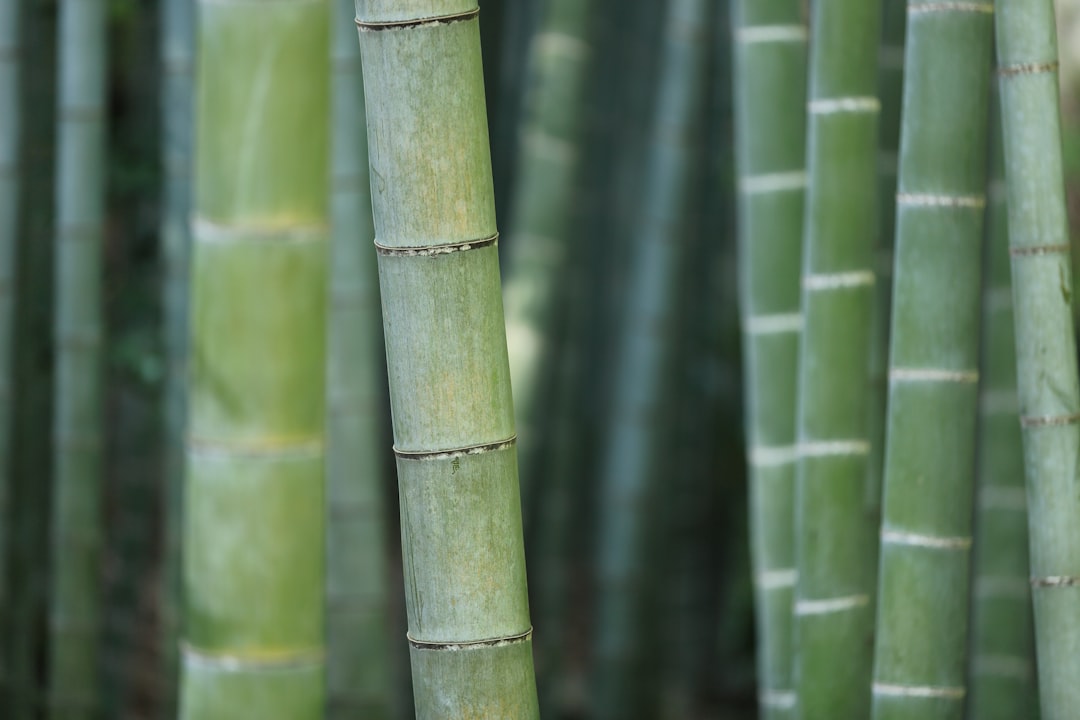 Photo by kazuend on Unsplash
How They Compare Side by Side
| Bamboo Viscose | Modal | Lyocell / TENCEL™ | |
|---|---|---|---|
| Raw material | Bamboo (fast-growing grass) | Usually beech wood | Wood pulp from certified forests |
| Process | Open system, carbon disulfide | Modified viscose, improved but not closed-loop | Closed loop, ~99.8% solvent recovered |
| Feel | Silky, cool, flexible | Silky, soft, similar to bamboo | Smooth, cool, slightly more substantial |
| Shape retention | Lowest — stretches and shrinks | Moderate | Highest — most dimensionally stable |
| Moisture management | Good | Good | Very good — absorbs and dries faster |
| Traceability | Often unclear | Depends on brand | Strong when labeled TENCEL™ |
| Best use | Casual tops, if you can verify the mill | Underwear, loungewear, base layers | Everyday tees, dresses, activewear, anything washed often |
The pattern is clear: lyocell wins on both process and performance, modal is a reasonable middle ground, and bamboo is only as good as the mill behind it. If a brand can’t tell you which process made its bamboo fabric, assume the default — viscose.
Reading the Label Without Getting Fooled
The word “bamboo” on a tag is a marketing decision, not a disclosure. Unless it specifies “bamboo lyocell” or names a certified closed-loop process, you’re almost certainly looking at bamboo viscose. That doesn’t make the garment unwearable — it makes the eco-claim unearned.
“Modal” without a brand name is similarly vague. Lenzing Modal is traceable; generic modal may not be. When a brand names its fiber supplier, that’s a signal it knows its supply chain. When it just says “modal” and moves on, you’re being asked to take a lot on faith.
“TENCEL™” is the most reliable shorthand you’ll find on a hangtag, because it’s a trademark with an audited process behind it. You’ll see it written as TENCEL™ Lyocell or TENCEL™ Modal. Either is a meaningful upgrade over an unnamed equivalent.
Third-party certifications are worth more than any adjective. Look for OEKO-TEX Standard 100 (tests for harmful substances), EU Ecolabel, or FSC certification on the wood source. These are verifiable, and they don’t depend on the brand’s own storytelling. For a broader framework on separating real claims from marketing noise, our 7 Rs of sustainable fashion checklist walks through how to evaluate a purchase before you commit.
One more thing worth saying plainly: how you care for these fabrics matters as much as which one you choose. Semi-synthetics are sensitive to heat. Wash cold, air dry, and skip the dryer — lyocell and modal will both last years longer. If you’re already in the habit of caring for delicate pieces properly, the same instincts apply here. Our guide to washing and storing denim for longevity covers the cold-wash, air-dry principles that translate directly to these fabrics.
Questions to Ask Before You Buy
Before you hand over your card, run the garment through these:
Does the label name the fiber process, or just the plant? “Bamboo” alone is a red flag. “Bamboo lyocell” or “TENCEL™ Lyocell” tells you something real.
Can the brand tell you where the fiber came from? If a brand publishes its mill list or names its fiber supplier, that’s a good sign. If customer service can’t answer, that’s your answer.
Is there a third-party certification? OEKO-TEX, EU Ecolabel, or FSC on the wood source. Certifications cost money and require audits — brands don’t pursue them for fun.
Will this piece survive fifty washes? Lyocell holds its shape best. Modal is solid. Bamboo viscose is the most likely to stretch and pill. If you’re buying a piece you plan to wear weekly, that durability difference is the sustainability difference.
Is the price consistent with a responsible supply chain? Closed-loop processing and certified wood cost more. A $12 “bamboo” tee is almost certainly bamboo viscose from an unverified mill. That’s not a moral failing on your part — it’s just information.
The short version: lyocell, ideally TENCEL™, is the safest bet for a wardrobe you’re trying to keep. Modal is a reasonable second when it’s traceable. Bamboo earns its place only when the label proves it was made the better way. Buy the process, not the plant.