You’ve got a video call with a client at 9 AM, a school pickup at 3:30 PM, and a dinner reservation for your anniversary at 7:30 PM. You stand in front of your wardrobe, and the pressure to have an outfit for each occasion—without looking like you raided a costume shop—feels uniquely modern.
We obsess over the style formulas of royals because they manage a similar balancing act, but with more protocol. Yet, when you look at the three most copied women in fashion, they aren’t just offering different aesthetics; they are offering different operational systems for how to buy clothes. The question isn’t simply “Who looks best?” It is: Whose method of acquiring, wearing, and repeating clothing actually aligns with a sustainable, budget-conscious, and realistic lifestyle?
We analyzed the “work-to-weekend” formulas of Amal Clooney, Meghan Markle, and Kate Middleton through a lens of circularity and longevity to determine which template you should actually steal for your 2025 wardrobe.
 Photo by Alina Matveycheva on Unsplash
The Decision Criteria: How We Judge a “Sustainable” Formula
Before we pit the three style icons against each other, we need to define what makes a wardrobe formula sustainable. It isn’t just about buying organic cotton. For the purposes of this comparison, we are looking at three specific pillars that make a wardrobe system work without feeding the fast-fashion cycle:
- The Repeat Factor (Versatility): Does the formula allow you to wear the same core pieces multiple times a week without looking like you have no other clothes? The best sustainable practice is simply wearing what you own more often.
- The “Uniform” Efficiency (Capsule Logic): How many items does the formula require to function? Does it rely on one-off statement pieces or interchangeable building blocks? This dictates your cost-per-wear and your closet space.
- The Transitional Ease (Work-to-Play): How much friction is there between your 9-5 look and your evening look? If you have to go home and completely change to feel appropriate, you are doubling your laundry load and your clothing consumption.
- The Fabric & Silhouette Longevity: Does the formula rely on trends that will look dated in two years, or on timeless cuts that can be sourced secondhand and worn for a decade?
We aren’t looking for who is “most ethical” personally, but rather whose style system is most likely to result in a lower-impact wardrobe for the average woman trying to navigate a busy schedule.
Amal Clooney: The Precision Siren
Amal Clooney’s formula is the one we tend to romanticize—the “power dresser” archetype. Her UN-era wardrobe is famously structured, relying on tailored suits, color-coordinated co-ords, and a strict adherence to fit.
The Formula Breakdown
Amal’s system is the most rigid. It consists of three key pieces: a statement co-ord or expertly tailored suit, a silk blouse or fine knit, and color-coordinating accessories. She rarely mixes metals or patterns. She relies heavily on the “total look”—buying a suit as a set and wearing it exactly as intended. Off-duty, she swaps the tailored trousers for a cashmere jumper dress and over-the-knee boots, but the color palette remains muted and cohesive.
Why It Works for the Planet
This formula is the gold standard for cost-per-wear. A well-tailored suit in a heavy wool or crepe will last decades if properly cared for. Because she buys the “set,” there is no orphaned jacket sitting unworn in the closet. Furthermore, her reliance on classic diamond or pearl earrings means she isn’t participating in the trend-driven jewelry cycle of cheap brass and plastic. This is a “buy less, choose better” philosophy in its most literal form.
Why It Fails for Real Life
Here is the friction: Amal’s formula is exhausting and expensive. To replicate this, you need a tailor on speed dial and a budget that allows for high-quality fabric. A cropped blazer and flared trousers (a signature Amal look) require precise alterations to look right. If you are buying these pieces secondhand, finding a matching set is a needle-in-a-haystack endeavor. More importantly, this formula does not transition to the weekend. You cannot chase a toddler in a playground wearing a razor-sharp crepe suit, nor can you relax in a linen co-ord without looking like you are about to give a press conference. It demands a complete outfit change, which reduces the “wear” time of each garment and encourages a larger wardrobe overall.
Verdict: Amal’s formula is aspirational, but it is a specialist system. It is best suited for women who work in corporate law, finance, or high-level consulting—where the uniform is required—and who have a separate, distinct “weekend wardrobe” that they curate separately. In terms of overall sustainability, the need for two distinct wardrobes (work armor and leisure wear) doubles your inventory.
Meghan Markle: The California Minimalist
Meghan’s formula is the most accessible for the modern woman. It is built on the concept of the “soft uniform”—neutral palettes, relaxed tailoring, and a heavy reliance on the capsule wardrobe.
The Formula Breakdown
Meghan’s style logic is transitional. She wears a trench coat over a slip dress, or a cashmere sweater with wide-leg trousers. She favors separates over sets. Her work-to-weekend formula relies on changing the shoe and the bag rather than the entire outfit. A silk midi skirt worn with a white shirt for a charity event is the same skirt she wears with a chunky knit on a casual Tuesday. She also famously loves a white button-down and perfectly tailored jeans—pieces that are easy to find secondhand and don’t scream “trend.”
Why It Works for the Planet
This is where sustainability gets practical. Meghan’s reliance on separates is the secret sauce. It aligns perfectly with circular fashion principles because it allows for a “capsule logic.” You can buy a high-quality linen shirt from a sustainable brand and pair it with an old pair of trousers. There is no pressure to buy a “set.” Her formula also leans heavily on repetition. She is famous for wearing the same coat or dress multiple times, simply changing her hair or accessories. This is the single most effective way to reduce your carbon footprint—just wearing the same thing again.
Why It Fails for Real Life
The “failure” here is one of identity and structure. Meghan’s formula can easily veer into “boring” territory if you don’t have her bone structure. The neutral palette (beige, cream, camel, black) requires a high level of maintenance to keep looking intentional rather than sloppy. Additionally, her off-duty uniform of skinny jeans and ballet flats (or now, tailored trousers) can be difficult to source sustainably if you are not a standard sample size. The “effortless” look is actually incredibly difficult to pull off unless you have the budget to buy very high-quality fabrics that drape well.
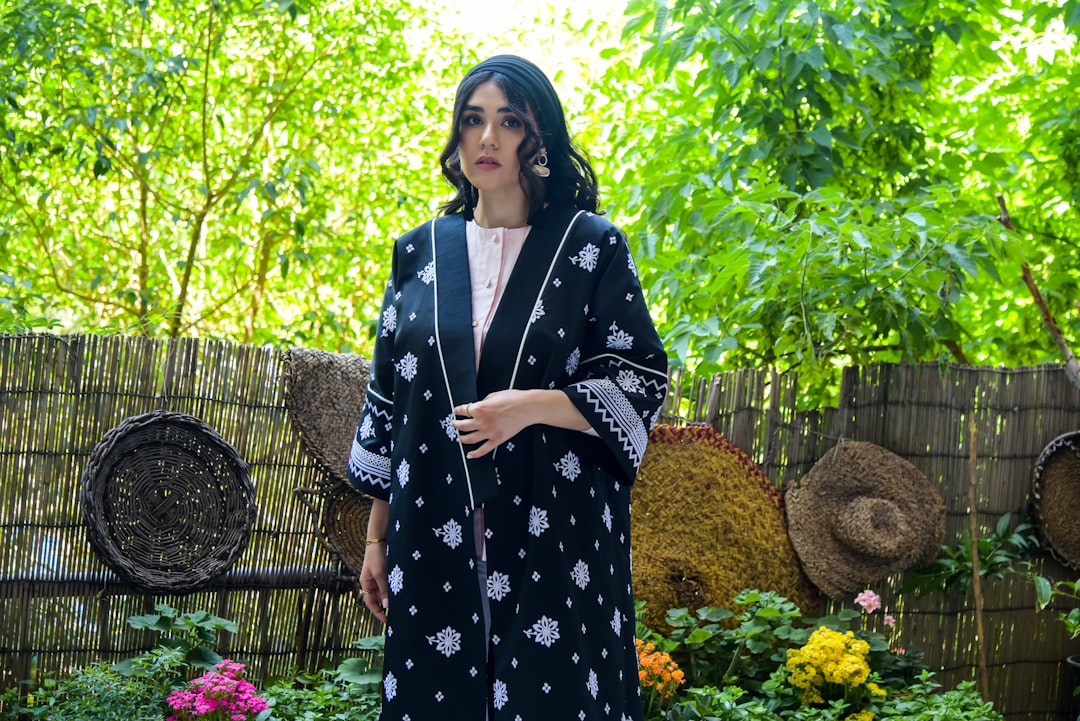 Photo by Amin Alizadeh on Unsplash
Why It Works for the Planet (The Deep Dive)
Let’s double down on the “separates” aspect. When we look at how to shop secondhand, Meghan’s formula is the most forgiving. If you are browsing a thrift store, finding a matching Amal Clooney suit is nearly impossible. But finding a high-quality silk skirt and a cashmere crewneck? Very doable. Her style allows you to mix a vintage find with a contemporary ethical brand without conflict. This reduces the friction of shopping sustainably and makes the 3-3-3 rule fashion much easier to follow. You aren’t looking for a look; you are looking for components.
Verdict: Meghan’s formula is the most realistic for the 25-40 demographic. It acknowledges that you need to move from a work Zoom call to a dinner date without a full costume change. It prioritizes the “outfit system” over the “individual garment.”
Kate Middleton: The High-Street Classicist
Kate’s formula is the most traditional, revolving around heritage pieces, dresses, and a distinct “public” versus “private” wardrobe split.
The Formula Breakdown
Kate’s work-to-weekend formula is, frankly, a bit of a myth. She doesn’t actually have a “work” wardrobe in the traditional sense. Her formula is: a tailored coat dress or shift dress for engagements, and jeans with a Breton stripe or a Barbour jacket for the weekend. She is the queen of the “one-and-done” dress. She buys a dress, wears it for a public appearance, and then wears it again three years later.
Why It Works for the Planet
Kate is the champion of the longevity pillar. She is famously loyal to brands like Mulberry and Smythe, and she holds onto her pieces for a decade or more. She also utilizes a “repeat” strategy that is radical for a royal—wearing a dress from 2011 in 2024 without apology. This sends a powerful message against the fast-fashion demand for “newness.” Her love for a structured coat also means she invests in outerwear that can be re-cut or tailored over time.
Why It Fails for Real Life
The sustainability of Kate’s wardrobe is undermined by its sheer volume. Because she rarely mixes separates, she needs a different dress for every occasion. A dress is a complete outfit; you cannot wear the top half of a shift dress with jeans. This means her formula requires a much larger inventory than Meghan’s. To replicate Kate’s look sustainably, you would need an enormous closet of dresses, many of which are only worn once a season. Furthermore, her “weekend” look (jeans and a waxed jacket) is often so casual that it feels like a costume for the office.
Verdict: Kate’s formula is excellent for outerwear investment, but poor for capsule efficiency. It is the most expensive to replicate and the least adaptable to a professional environment where you aren’t just standing for photo calls.
The Comparison Table: Royal Formulas at a Glance
To help you decide which “royal” to emulate in your shopping habits, here is the breakdown:
| Criteria | Amal Clooney (The Precision Siren) | Meghan Markle (The Minimalist) | Kate Middleton (The Classicist) |
|---|---|---|---|
| Core Strategy | The Matching Set (Co-ords) | The Separates (Capsule) | The One-and-Done Dress |
| Transitional Ease | Low (Requires full outfit change) | High (Change the shoe, keep the base) | Medium (Dress is the whole look) |
| Secondhand Viability | Low (Hard to find matching vintage sets) | High (Easy to mix and match found pieces) | Medium (Easy to find dresses, but sizing is limiting) |
| Cost Per Wear | Low (If you wear the suit often) | Lowest (Worn in multiple combinations) | High (Often worn only for specific events) |
| Closet Space Required | Medium | Low | High |
| Trend Vulnerability | Low (Timeless tailoring) | Medium (Risk of “beige” fatigue) | Low (Classic silhouettes) |
| Best For | High-level corporate / Legal | Creative / Tech / Hybrid Workers | Public-facing / Event-heavy roles |
The Better Pick for Each Kind of Shopper
So, who wins the crown for the most sustainable work-to-weekend formula? It depends entirely on your specific lifestyle constraints.
Choose Amal’s Formula If:
You are in a high-stakes corporate environment where “power dressing” is a non-negotiable part of your job. If you wear a suit 5 days a week, Amal’s approach—buying one excellent, tailored suit and wearing it to death—is the most sustainable option for you. You are likely looking for sustainable trench coat brands that offer the same architectural structure. Her formula is a “specialist tool,” and if you are a specialist, it is the right choice.
Choose Kate’s Formula If:
Your job is primarily event-based or involves a lot of public speaking where you need to look “complete” instantly without thinking. If you hate the mental load of mixing and matching, Kate’s “dress and blazer” uniform is efficient. However, to make this sustainable, you must commit to repeating those dresses without guilt. Focus on buying dresses that can be layered over a turtleneck in winter or worn with sandals in summer to extend their lifecycle.
Choose Meghan’s Formula If:
You are the “hybrid worker” or the “creative professional.” If your week is a mix of client meetings, coffee catch-ups, and school runs, Meghan’s logic is the only one that truly functions. This formula allows you to buy one high-quality item—say, a blazer—and wear it with three different trousers and two different dresses, giving you a week of outfits from five garments. It is the most aligned with the concept of circular fashion because it maximizes the utility of every single item you own.
The Ultimate Takeaway: If you want to reduce your wardrobe’s impact, stop buying “outfits” and start buying “ingredients.” Amal buys a meal pre-packaged; Kate buys a one-serving gourmet dish; Meghan buys groceries. For the reality of a busy life, the “ingredient” approach is the most forgiving, the most budget-friendly, and the most likely to result in you actually wearing what you own.
Your Next Step: The “Meghan” Reset
Let’s put this into practice this week. You don’t need to throw out your clothes to adopt this formula.
This week’s challenge: Pick three “bottom” pieces (trousers, a midi skirt, a pair of dark jeans) and three “top” pieces (a silk blouse, a fine knit, a crisp white shirt). Lay them out. That is nine potential outfits without touching a dress.
Now, look at your schedule. Find the one piece that you usually reserve for “work only”—perhaps a tailored vest or a structured skirt—and force yourself to wear it on Saturday with a casual t-shirt and sneakers.
If you find you are missing a crucial “ingredient”—say, a blazer that isn’t stiff—do not buy a new one. Check your local thrift store or look for a secondhand cashmere sweater to layer instead. The goal is to blur the lines between your “work” self and your “weekend” self. The more your clothes can multitask, the less you need to buy, and the closer you get to a wardrobe that truly works for the life you actually live.