You are standing in a thrift store or scrolling a resale app, and you spot it: a gorgeous wool blazer in a color you have been hunting for months. You check the size tag. It matches the number you usually buy. You try it on, or you hold it up to your frame, and something is off. The shoulders slump, or the button pulls across your chest, or the waist hangs straight down like a box. You put it back on the rack, slightly defeated, wondering why a blazer that should theoretically fit makes you feel like you are wearing someone else’s clothes.
This happens constantly with secondhand blazers, especially for hourglass shapes. Mass-market sizing assumes a straight silhouette, but an hourglass frame—defined by shoulders and hips that are roughly balanced with a clearly narrower waist—needs a garment that follows a curve, not one that ignores it. When you buy new, you can sometimes find a “curvy” cut or a petite proportion. When you buy secondhand, you are working with whatever the previous owner left behind, which means you need a sharper eye and a checklist.
The goal is not to find a blazer that fits perfectly off the rack. The goal is to find one with the right bones—shoulders that sit where yours do, a waist seam that lands in the right place, and enough seam allowance to let a tailor do the rest. This checklist walks through the exact questions to ask yourself before you commit, organized by the order you should ask them. It covers what to look for in the fitting room, what to check in the mirror, and which red flags mean you should walk away even if the fabric is beautiful.
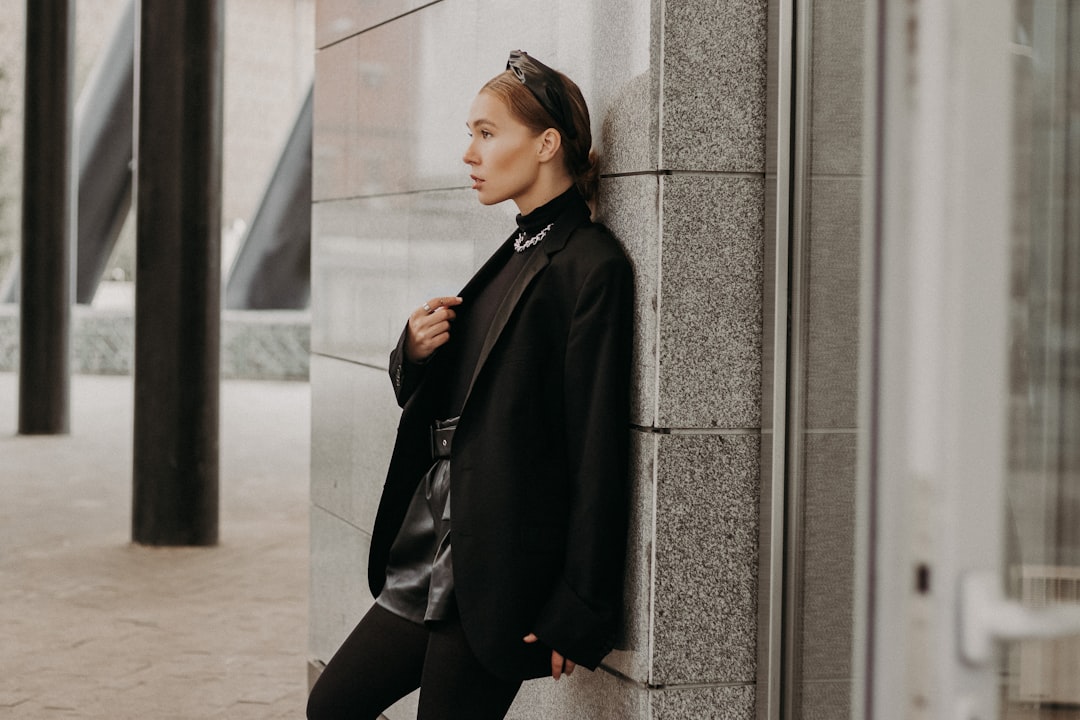 Photo by NIKITA SHIROKOV on Unsplash
Does the Shoulder Seam Sit on Your Shoulder?
The shoulder is the hardest part of a blazer to alter. A tailor can take in a waist, shorten sleeves, or move buttons, but adjusting shoulders requires reconstructing the entire garment, which often costs more than the blazer itself. For an hourglass shape, the shoulder line matters even more because it sets the visual balance for your hips.
Start by checking where the shoulder seam falls. On a well-fitted blazer, that seam should sit at the edge of your natural shoulder, not hanging past it and not cutting inward. If the seam droops down your arm, the blazer is too big in the shoulders, and no amount of waist tailoring will fix the slouchy look. If the seam sits inside your shoulder line, the blazer is too small, and you will feel restricted every time you reach forward.
For hourglass figures, the shoulder should feel structured but not exaggerated. You want a clean line that mirrors your natural shoulder width. Some vintage blazers have strong shoulder pads, which can work beautifully if they are proportional to your frame, but they can also tip into costume territory if they extend too far. If the pads are removable, that is a bonus. If they are stitched in and make you look like a linebacker, keep looking.
One more check: press your arms forward like you are typing or driving. If the shoulder seam digs into your arm or the fabric pulls across your upper back, the blazer is too tight through the shoulders and chest. This is a common issue for hourglass shapes because a larger bust often requires more room in the upper body than a straight-cut blazer allows.
Does the Waist Seam Land at Your Natural Waist?
This is the single most important fit question for an hourglass shape. A blazer that ignores your waist will make you look boxy, while one that nips in at the right spot will highlight your proportions without any effort.
Put the blazer on and button it. Find the narrowest part of your torso—usually an inch or two above your belly button. Now look at where the blazer’s waist seam or darting falls. Ideally, the blazer should curve inward at that exact point. If the waist seam sits too high, it will make your torso look short and your hips look wider. If it sits too low, it will create a droopy, sad silhouette that erases your waist entirely.
Single-breasted blazers with one button are generally the best choice for hourglass figures because that single fastening point sits under the bust and draws the eye inward. Double-breasted styles can work, but they add bulk across the chest and often have a straight, boxy cut that fights your curves. If you find a double-breasted blazer you love, check that the buttons are positioned so the jacket still curves in at the waist rather than hanging straight down.
Darts are your friend here. Look for blazers with vertical darts on the front and back. These are sewn folds that shape the fabric to your body, and they are much easier for a tailor to adjust than a blazer with no shaping at all. If the blazer has no darts and no waist seam, it will likely hang like a rectangle unless you have it heavily altered.
What About Belted Blazers?
Belted blazers and trench-style jackets can be a great option for hourglass shapes because the belt lets you define the waist yourself. The key is to choose a blazer that is not too bulky through the torso. If the fabric is thick and the cut is generous, belting it can create a marshmallow effect rather than a sleek line. Look for belted blazers in lighter wool, linen blends, or cupro, which drapes without adding volume. If you are curious about cupro and how it compares to silk or viscose for workwear, that fabric guide breaks down the breathability and care differences.
Does the Button Pull Across Your Chest?
Button the blazer and look at the fabric between the button and your bust. If you see horizontal wrinkles radiating from the button, or if the button looks like it is straining to stay closed, the blazer is too small through the chest. This is a dealbreaker for hourglass shapes because a pulling button distorts the entire line of the jacket and draws attention to the fit rather than the style.
Sometimes the issue is not the overall size but the button placement. A blazer with a single button placed too high can pull even if the rest of the jacket fits. In that case, a tailor can sometimes move the button down an inch or two to relieve the tension. But if the fabric pulls significantly, or if the lapels gape open when you button it, the blazer is too small and you should size up.
If you are shopping online and cannot try the blazer on, ask the seller for the measurement across the chest when buttoned, then compare it to your own bust measurement. You want at least an inch or two of ease so the fabric can drape rather than strain. For hourglass shapes, it is almost always better to buy a blazer that is slightly too big in the waist and have it taken in than to buy one that fits the waist but pulls across the chest.
Where Does the Hem Fall on Your Hips?
The hem length of a blazer changes the entire proportion of your outfit. For hourglass shapes, the most flattering hem usually falls at mid-hip, right around the fullest part of your hip or slightly below. This length elongates the torso and creates a smooth line over the curves.
If the hem hits at your natural waist, it will chop your body in half and make your hips look wider. If it hits at the widest part of your hip, it can create a horizontal line that emphasizes width rather than balancing it. A cropped blazer can work if you are wearing high-waisted pants, but it is a trickier proportion to pull off with an hourglass shape because it exposes the hip rather than skimming over it.
When you try on the blazer, turn to the side and look at where the hem sits. Does it create a smooth vertical line, or does it cut you off? If the hem is too long, a tailor can shorten it, but keep in mind that shortening a blazer can change the pocket placement and the overall balance. If the hem is too short, there is no fix. Walk away.
A Note on Venting
Check the back of the blazer for vents—the slits at the bottom hem. A single vent in the center back is common and allows for movement. Double vents, one on each side, are also fine. But if the vent pulls open when you button the blazer, the jacket is too tight across the hips. This is a common issue for hourglass shapes because our hips need more room than a straight-cut blazer provides. If the vent gapes, size up or look for a blazer with more room through the hip.
 Photo by Laura Chouette on Unsplash
What Do the Sleeves and Fabric Tell You?
Sleeve length is one of the easiest alterations, so do not reject a blazer just because the sleeves are too long or too short. A tailor can shorten sleeves from the cuff, and lengthening is possible if the blazer has enough seam allowance inside. That said, check the sleeve width. If the sleeves are so tight that you cannot bend your arms, or so wide that they swallow your hands, the blazer may not be worth the alteration cost.
For hourglass shapes, sleeves that taper slightly at the wrist tend to look more polished than straight or flared sleeves. A little structure at the shoulder and a clean line down the arm balances the curves of the body without adding bulk.
Fabric matters too, especially for secondhand pieces. Thick, stiff fabrics like heavy wool can be harder to tailor and may add unwanted volume. Look for fabrics with a bit of drape—wool crepe, lighter-weight wool blends, linen blends, or cupro. If you find a secondhand wool blazer you love, a wool care playbook will help you keep it in good condition for years. And if you are considering a blazer with suede details or a suede finish, that suede care guide covers how to clean and protect it without damaging the material.
Check the Lining and Seams
Before you buy, turn the blazer inside out. Look at the lining. Is it intact, or are there tears at the armholes or underarms? A damaged lining is not a dealbreaker, but it is a negotiating point if you are buying from a seller who accepts offers. More importantly, check the seams. Are they straight and secure, or are they pulling apart? If the seams are fraying, the blazer may not survive many more wears.
Also, look for signs of previous alterations. If the waist has been taken in and then let out, or if the shoulders have been recut, the blazer may be difficult to tailor again. You want a clean slate with enough seam allowance for your own tailor to work with.
The Shortlist Criteria That Matter
When you are standing in a fitting room or messaging a seller, you do not have time to run through every detail. Use this shortlist to make a fast decision. If a blazer fails on any of the first three criteria, walk away. If it passes those, the rest are negotiable with a good tailor.
| Criteria | What to Check | Dealbreaker? |
|---|---|---|
| Shoulder seam | Sits at the edge of your natural shoulder, not drooping or cutting in | Yes |
| Waist shaping | Curves inward at your natural waist, either through darts, a seam, or a belt | Yes |
| Button tension | No pulling or gaping across the chest when buttoned | Yes |
| Hem length | Falls at mid-hip or slightly below, creating a smooth vertical line | Negotiable if too long |
| Vent | Lies flat when buttoned, does not gape open | Negotiable if minor |
| Sleeve length | Can be shortened or lengthened by a tailor | Negotiable |
| Fabric drape | Soft enough to follow your curves without adding bulk | Negotiable |
| Lining and seams | Intact and secure, no major repairs needed | Negotiable |
If you find a blazer that passes the first three checks and has a hem that is slightly too long, buy it. A tailor can shorten the hem and adjust the waist for a fraction of the cost of a new blazer. If it fails on the shoulders or the button tension, leave it. There will be another blazer.
Brands Worth Searching Secondhand
Some brands cut blazers with more curve-friendly proportions than others. When you are searching resale sites, keep an eye out for these labels:
- Theory: Known for clean, single-breasted blazers with subtle waist shaping. Their wool blazers hold up well and are easy to tailor.
- Vince: Offers softer, drapier fabrics that follow the body without clinging. Their blazers often have a relaxed but shaped fit.
- J.Crew: Vintage and secondhand J.Crew blazers from the 1990s and early 2000s often have strong waist darts and good seam allowances.
- Eileen Fisher: Focuses on relaxed, sustainable fabrics with a forgiving fit. Their blazers tend to skim rather than cling, which works well for hourglass shapes who want a softer line.
If you are shopping for a secondhand blazer to wear to a wedding or a special event, that size-inclusive roundup of sustainable wedding guest dresses includes tips on balancing proportions that apply to blazers too.
What to Do Before You Buy
You have found a blazer that passes the checklist. Before you hand over your money, take three final steps.
First, check the return policy if you are buying online. Secondhand platforms often have different rules than retail stores, and you want to know whether you can send it back if the fit is off in person.
Second, budget for alterations. A good tailor can transform a blazer that is 80 percent there into one that fits like it was made for you. Expect to pay for waist suppression, sleeve shortening, or hem adjustments. If the blazer is cheap but the alterations are expensive, factor that into your decision.
Third, think about how the blazer fits into your existing wardrobe. Does it work with at least three outfits you already own? If you are building a capsule or a travel wardrobe, a blazer that only works with one pair of pants is not worth the space. That five-piece travel outfit system guide walks through how to choose pieces that layer and mix, which is a useful framework for evaluating any new addition.
The best secondhand blazer is not the one that fits perfectly the moment you try it on. It is the one with the right structure, the right seams, and enough room for a tailor to make it yours. Use this checklist the next time you are standing in front of a rack, and you will walk away with a blazer that actually earns its place in your closet—not one that hangs there waiting for a body it was never cut for.