You spot it across the thrift store rack: a deep emerald crewneck, soft as a whisper, with a label that reads 100% cashmere. The price is right. The color is perfect. You’re already mentally styling it with your favorite jeans. But then you hesitate. You’ve been burned before—by the sweater that looked divine in the store and looked like a felted dishrag after one wash, or the one that shed enough fuzz to knit a second sweater.
That hesitation is smart. Secondhand cashmere is one of the best values in sustainable fashion, but it is also a minefield of shrunken, pilled, and misshapen pitfalls. The difference between a wardrobe staple and a regrettable purchase comes down to a few minutes of inspection. You need a system.
This checklist is that system. It is designed to be used in real time, whether you are in a bustling charity shop or scrolling through a grainy listing on a resale app. By the end, you will know exactly what to touch, what to ask, and when to walk away.
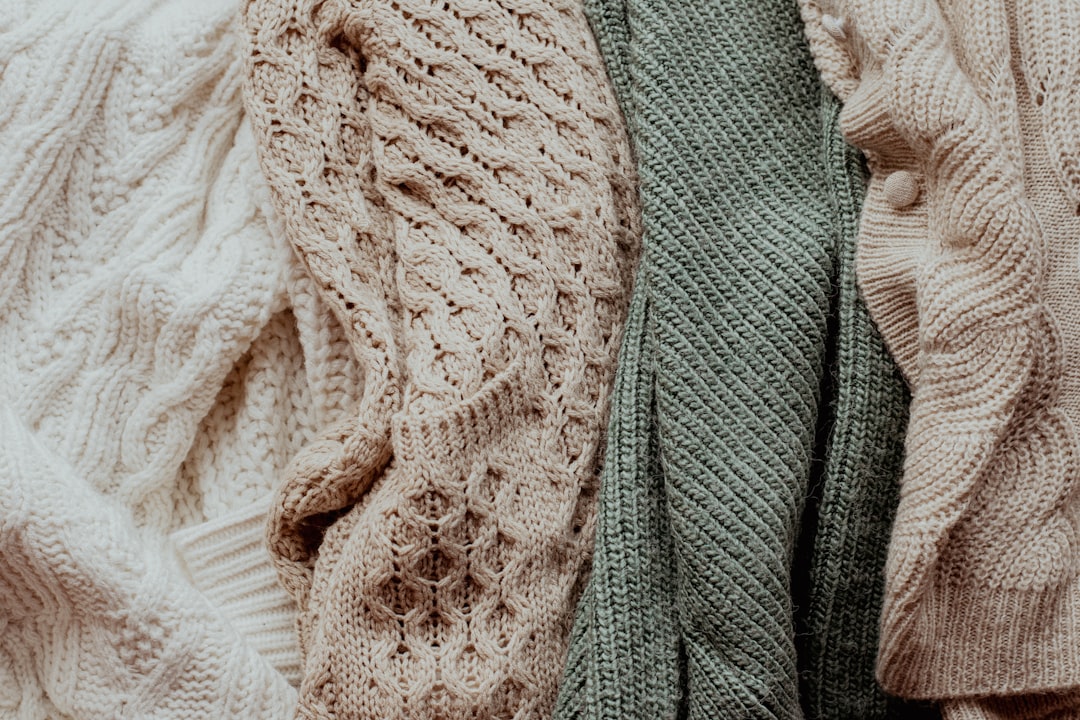 Photo by Ruta Gudeliene on Unsplash
Step 1: The Label Interrogation (Fiber Content and Brand)
Before you fall in love with the texture, check the tag. This is the single most important step in the process. You are looking for two things: the fiber composition and the manufacturer.
The Fiber Content Test: Flip the sweater inside out and find the care label. You want it to read “100% Cashmere.” If it says “Cashmere Blend,” you need to look at the percentages. A blend with up to 10% silk or nylon is sometimes intentional—silk adds a subtle sheen, and nylon adds durability to high-friction areas like elbows. However, be wary of blends with high polyester or acrylic content. These are often used to bulk up the garment cheaply, and they will pill aggressively because the synthetic fibers are often shorter and less resilient than the cashmere around them. As a general rule for your first few purchases, stick to 100% cashmere until you are confident in your ability to judge the hand-feel of a quality blend.
The Brand Name Check: If the label is a recognizable luxury house (think Loro Piana, Brunello Cucinelli, or even a mid-range brand like Vince or Theory), you are likely looking at a higher grade of fiber. These brands source longer, finer cashmere staples. If the label is an unknown fast-fashion brand, proceed with extra caution. Fast fashion often uses lower-grade cashmere that has been treated with chemical softeners to mimic the feel of high-quality fiber. That softness is often a mask for short, weak fibers that will pill and shed within a few wears. A quick Google search on your phone for “[brand name] cashmere quality” can give you a sense of their reputation.
The “Shoulder Seam” Tip: While you have the sweater inside out, look at the shoulder seams. A quality sweater will have a fully fashioned construction, meaning the shaping is knit into the garment rather than cut and sewn. You can spot this by looking for a chain of knit stitches running vertically along the seam. If the sweater is just cut from a larger piece of fabric and sewn together, it is lower quality and more likely to lose its shape.
Step 2: The Pilling Reality Check (Fuzz vs. Flaw)
Pilling is the most common concern, but it is often misunderstood. You need to distinguish between normal wear and a structural flaw.
The Friction Test: Run your hand along the inside of the sleeves and under the arms. A little bit of pilling here is normal. In fact, the research data from our guide on how to shop for cashmere sweaters confirms that even high-quality cashmere will develop light pilling in areas of friction. This is a physical property of the fiber—short, loose fibers that work their way to the surface. It is not a dealbreaker.
The “Shedding” Red Flag: The problem is excessive fuzz. If the sweater looks like it has a halo of fuzz around it, or if you pull your hand away and it is covered in loose fibers, that is a sign of low-quality, short-staple yarn. This is the kind of sweater that will leave a trail of fluff on your dark coat and eventually thin out to a see-through state.
The 15-20 Wear Rule: Here is a good benchmark from our research: if a sweater still pills heavily after 15-20 wears, it is low quality. High-quality cashmere will pill slightly at first, but the loose fibers will shed away, and the pilling should dramatically decrease. When you are buying secondhand, you are buying a sweater that has already been through this initial break-in period. If a used sweater is still covered in heavy, dense pilling, it means the yarn is fundamentally weak. It will only get worse. Put it down.
The “Sweater Stone” Test: If you find a sweater that is otherwise perfect but has moderate pilling, don’t immediately dismiss it. You can remove surface pilling with a fabric comb or a sweater stone. But be honest with yourself: are you willing to do that maintenance? If the pilling is concentrated in one small area, it might be a quick fix. If it is everywhere, it is a sign of poor fiber quality that no amount of shaving will fix.
Step 3: The Shape and Shrinkage Audit (Proportions and Felting)
This is where the “won’t shrink” part of your goal comes into play. Shrinkage in cashmere is not just about size; it is about felting. When cashmere is washed in hot water or agitated, the scales on the fibers lock together, causing the fabric to become dense, stiff, and smaller. This is irreversible.
The “Flat Lay” Test: If you are in a store, lay the sweater flat on a counter. Does it lie flat, or does it have a weird, puffy shape? Look at the seams. Are they wavy or puckered? Wavy seams are a classic sign of shrinkage. The knit has contracted, but the sewn thread hasn’t, resulting in a rippled effect.
The “Proportion” Check: Look at the sleeve length relative to the body length. A shrunken sweater will often have sleeves that look too short for the torso, or the cuffs will have ridden up. Check the underarm area—if the fabric looks bunched or the armhole seems too small, the sweater has likely felted. When shopping online, this is why you must ask for flat-lay measurements. Don’t rely on the tag size. A “Medium” that has shrunk might now fit like an “Extra Small.” Compare the pit-to-pit and shoulder-to-shoulder measurements against a sweater you own that fits well. The shopping checklist for secondhand linen dresses uses a similar logic—always measure, never assume.
The “Hand-Feel” Test: Touch the fabric. Quality cashmere should feel soft and lofty, with a slight “give” when you compress it. A felted sweater will feel dense, flat, and almost like a stiff board. It will have lost its bounce. If you gently stretch the fabric and it doesn’t spring back but stays stretched, that is a sign of damaged elasticity in the knit structure.
Step 4: The Care History Investigation (Smell and Stains)
You can’t ask a thrift store sweater where it has been, but you can look for clues about how it was treated. This is about finding a sweater that has been cared for properly.
The Sniff Test: Smell the sweater, especially around the armpits. A musty smell might just be storage odor, which can be aired out. A sour, lingering smell of body odor or perfume is harder to remove. More importantly, if you smell a strong chemical scent (like dry-cleaning fluid), it might be masking a stain or a sign that the previous owner was trying to revive a garment that was on its last legs.
The Stain Inspection: Look for water stains, which appear as faint rings on the fabric. These are tricky to remove from cashmere. Also, check the collar and cuffs. These areas are prone to heavy soiling from skin oils. If the collar is visibly dirty or discolored, it might be too far gone to clean effectively without damaging the fibers.
The “Shoulder Hanger” Damage: Look at the shoulders. If the sweater has been hung on a wire hanger for a long time, it will have “hanger bumps”—permanent indentations where the weight of the sweater stretched the knit. This is a sign of poor care. It can sometimes be steamed out, but often it is a permanent distortion that will make the sweater look odd on the body.
Step 5: The Value Math (Cost Per Wear)
You have found a sweater that passes all the physical tests. Now, you need to do the financial math. Just because it is secondhand does not mean it is a bargain.
The Price vs. Quality Equation: A $10 cashmere sweater that is heavily pilled and slightly felted is not a bargain; it is a chore. You will spend time and money trying to fix it, and you will likely never wear it. A $50 cashmere sweater that is in pristine condition, from a reputable brand, is a steal. The price should reflect the condition. If the price is too high for the condition, walk away.
The “Fixing” Budget: Factor in the cost of restoration. Do you need a sweater stone? That is $10. Do you need to take it to a tailor to fix a small hole? That is $20. If the sweater is $15 but needs $30 of repairs, you are not saving money—you are buying a project. Only buy a project if you genuinely enjoy the process of restoration. If you want a sweater to wear tomorrow, pay for the one that is ready.
The “Wardrobe Fit” Check: Finally, ask yourself if this sweater fits the life you actually live. Does it go with three other items in your closet? Will you reach for it over your existing sweaters? This is the core of building a 30-day outfit rotation that works. If you are buying it just because it is a “good deal” on cashmere, but it is a neon orange turtleneck and you wear only neutral crewnecks, it is a bad investment. The most sustainable garment is the one that gets worn.
 Photo by Vitaly Gariev on Unsplash
The Shortlist Criteria That Matter
To help you make a final decision, here is a quick reference table to use when you are on the fence. It distills the entire checklist into a single glance.
| Criteria | Pass (Buy It) | Fail (Walk Away) |
|---|---|---|
| Fiber Content | 100% Cashmere, or blend with <10% silk/nylon | High synthetic blend (polyester/acrylic) |
| Pilling | Light pilling only in friction zones (underarms) | Heavy, dense pilling covering the whole garment |
| Shape | Flat-lay is smooth; seams are straight; fabric has “bounce” | Puckered seams, felted density, “hanger bumps” on shoulders |
| Scent & Stains | Neutral smell; minor, treatable stains | Sour body odor, chemical masking smell, water rings |
| Proportions | Sleeve length matches body length; cuffs are intact | Short sleeves relative to body; wavy/rippled seams |
| Brand Reputation | Known for knitwear (Loro Piana, Vince, etc.) | Unknown fast-fashion label with soft, fluffy texture |
The Care Commitment: Your Next Step
Once you have found your gem, the real work begins. Buying secondhand cashmere is only the first step; keeping it alive is the second. The reason many of these sweaters end up in thrift stores is improper washing.
Your immediate next step is to establish a care routine before you even wear it. Do not wash it after every wear. Cashmere needs to rest between wears to allow the fibers to recover their shape. Hang it on a padded hanger or fold it neatly—never on a wire hanger.
When it does need a wash, hand-wash in cool water with a cashmere-specific detergent (or a no-rinse wool wash like Eucalan or Soak). Do not wring it. Roll it in a towel to remove excess water and lay it flat to dry. This is non-negotiable. If you follow this routine, your secondhand sweater will last for years. For more detailed instructions on washing delicate fibers, our care playbook for silk offers similar principles that apply perfectly to cashmere.
If you are looking for a new sweater to complement your secondhand finds, consider checking out our comparison of minimalist brands like Muji vs. Uniqlo vs. Everlane for their occasional cashmere releases, though the secondhand route remains the most affordable and sustainable option. Take your checklist, bring a measuring tape, and trust your hands. The perfect sweater is out there.