You’ve found the perfect vintage cashmere sweater. The color is a deep charcoal, the silhouette is a classic crewneck, and the label reads “100% Cashmere – Made in Scotland.” The price tag says $18. You try it on, and it feels like a hug from a cloud. You buy it, wear it twice, and by the third wear, the surface looks like a tiny, fuzzy battlefield. Pills have formed on the sleeves, the sides, and the lower back. The cloud is now a lint trap.
This scenario is so common it has become a rite of passage for secondhand shoppers. But it doesn’t have to be. The difference between a thrifted cashmere sweater that becomes a decade-long wardrobe staple and one that ends up in a donation pile after three wears comes down to three things: fiber quality, construction tightness, and your willingness to do a few specific pre-purchase checks. This guide will teach you exactly how to spot the keepers, avoid the pills, and care for your finds so they hold up for years.
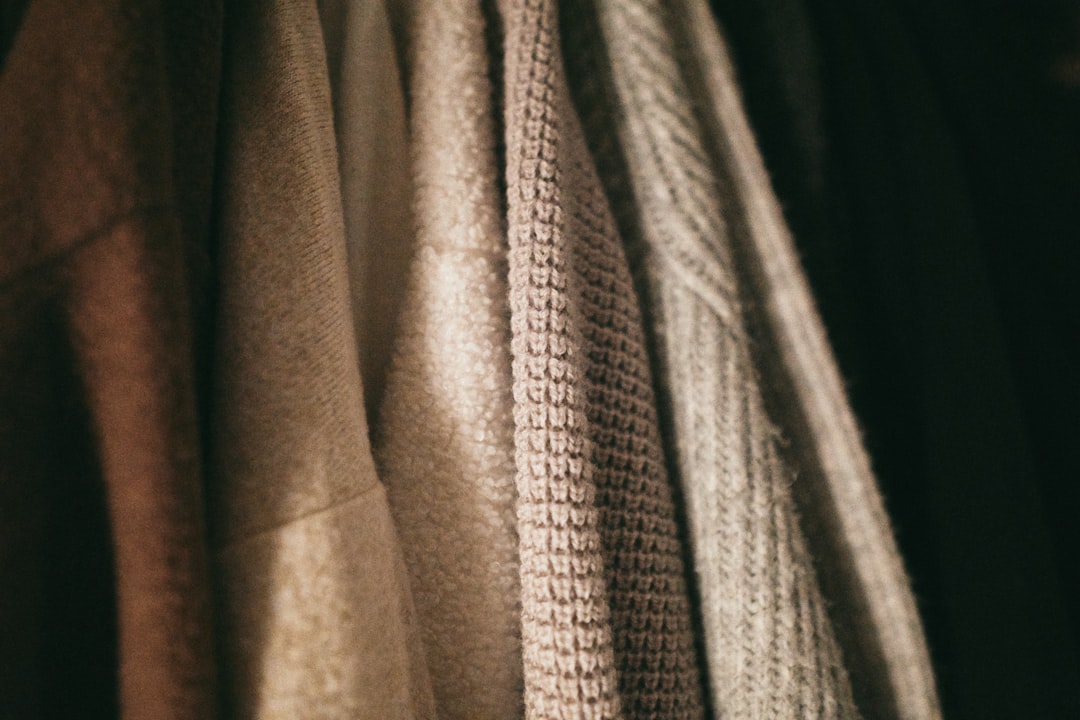 Photo by Haley Truong on Unsplash
Why Cashmere Pills (And Why That’s Not Always a Bad Sign)
Before you can shop with confidence, you need to understand the enemy. Pilling happens when short, loose fibers on the surface of the yarn tangle together into small balls. Every cashmere sweater will pill to some degree—even the most expensive ones. The key variable is how much and how quickly.
High-quality cashmere uses longer, finer fibers that are spun tightly together. These long fibers are less likely to break free and form pills. Lower-grade cashmere uses shorter, coarser fibers that are cheaper to produce but far more prone to shedding and pilling. The difference is visible under a microscope and, more importantly, visible to your fingers.
When you’re thrifting, you are often dealing with sweaters that have already been worn and washed multiple times. This is actually an advantage. A sweater that has already gone through several wash cycles and is still in good shape has likely passed the “initial pilling test.” The loose fibers have already worked their way out, been washed away, or been removed by a previous owner. A thrifted sweater that looks smooth and even after several years of use is a very promising sign.
The goal is not to find a sweater that will never pill. That sweater does not exist. The goal is to find a sweater that pills slowly and evenly, and that responds well to a simple combing routine.
The Pre-Purchase Check: Five Tests for Fiber Quality
When you pick up a cashmere sweater in a thrift store, you have about thirty seconds to decide if it’s worth buying. Use these five tests to make that decision count.
1. The Squeeze Test
Pick up the sweater and gently squeeze a handful of the fabric in your palm. High-quality cashmere has a dense, springy feel. It should feel substantial, not flimsy. If the fabric feels thin, loose, or like you could see through it if you held it up to light, that is a sign of low fiber density. Low density means more movement between fibers, which means more friction, which means more pilling.
A good cashmere sweater should feel like it has weight and body, even if it is a lightweight knit. If it feels like a flimsy t-shirt, put it back.
2. The Stretch and Snap Test
Gently stretch a small section of the knit—the cuff or the hem works well—and observe how it behaves. High-quality cashmere will stretch slightly and then snap back into place when you release it. Low-quality cashmere will stretch out and stay stretched, or it will feel loose and baggy immediately.
This test also reveals the tightness of the knit. A tighter knit means the yarns are packed closely together, which reduces the friction that causes pilling. A loose knit allows the yarns to move and rub against each other, accelerating pilling. Look for sweaters with a dense, tight stitch pattern.
3. The Light Test
Hold the sweater up to a light source. Look at the fabric’s surface. High-quality cashmere should have a soft, even halo—a fine, fuzzy surface that is uniform across the entire garment. You should not see obvious thin spots, gaps in the knit, or areas where the yarn appears to be separating.
If you see uneven patches, thin areas, or visible holes forming, the sweater has already started to degrade. Skip it.
4. The Label Check
Read the care label. Look for the percentage of cashmere. A 100% cashmere label is ideal, but a high-quality blend (such as 70% cashmere and 30% silk) can also be excellent. Be wary of blends with acrylic, polyester, or nylon listed as the first or second ingredient. These synthetic fibers are often added to cheap cashmere to reduce cost, and they tend to pill aggressively and create a less breathable fabric.
Also check the country of origin. Cashmere from Inner Mongolia, Scotland, or Italy is generally associated with higher quality control and longer fiber lengths. Cashmere from China or India can be excellent, but it varies widely by manufacturer. A “Made in Scotland” label is a strong signal of quality. A “Made in China” label is not a dealbreaker, but it means you should pay closer attention to the other tests.
5. The Pilling History Check
Run your hand gently over the sweater’s surface, especially on the sleeves, the sides, and the underarms. Feel for existing pills. A few small pills are normal and can be removed. But if the sweater is covered in dense, matted pills, or if the pills are large and stubborn, that sweater has already experienced significant fiber breakage. It will continue to pill aggressively.
Look for sweaters that have a smooth, even surface with only minimal pilling. A sweater that has been well cared for will look clean and uniform. A sweater that looks “fuzzy” in an uneven way is a sweater that has been through the wringer.
Fit and Construction: The Secondhand Fit Formula
Fit is the second most important factor after fiber quality. A poorly fitting cashmere sweater will not get worn, regardless of how good the fiber is. Here is how to assess fit in a thrift store setting where you cannot return the item.
Shoulder Seam Check
The shoulder seam should sit right at the edge of your shoulder bone, not hanging down onto your upper arm and not pulling up toward your neck. Cashmere has some give, but a sweater that is too tight in the shoulders will stretch out and lose its shape over time. A sweater that is too loose will look sloppy and will also experience more friction as the fabric rubs against your outerwear.
Sleeve Length Check
Sleeves should hit at your wrist bone or slightly above. Cashmere sweaters can shrink slightly in length over time, especially if they are machine washed. If the sleeves are already a bit short in the thrift store, they will only get shorter. If they are a bit long, you can often fold the cuff or have them hemmed.
Body Length Check
The hem of the sweater should hit at your hip bone or just below your natural waist. A sweater that is too short will ride up when you move. A sweater that is too long will look baggy and may bunch up under a jacket. Pay attention to the ribbing at the hem. If the ribbing is stretched out or loose, the sweater has lost its shape and will not hold up well.
The “Wear It Twice” Rule
When you try on a cashmere sweater in a thrift store, wear it for at least two minutes. Move your arms. Bend over. Sit down. See how the fabric behaves. Does it pull at the buttons? Does it gap at the chest? Does it feel restrictive? Cashmere is a forgiving fabric, but a fundamental fit issue will not be solved by the fiber.
Where to Find the Best Thrifted Cashmere
Not all secondhand sources are created equal. Here is a comparison of the most common channels for finding cashmere sweaters, ranked by risk and reward.
| Resale Channel | Price Range | Risk Level | Best For | Watch Out For |
|---|---|---|---|---|
| Local Thrift Stores (Goodwill, Salvation Army) | $5–$20 | Medium | Bargain hunting, tactile inspection | Inconsistent inventory, no returns |
| Online Thrift (ThredUp, Poshmark) | $15–$60 | Medium-High | Brand-specific searches, size filtering | Inability to feel fabric, shipping costs |
| Vintage Boutiques / Curated Shops | $30–$100 | Low | Pre-vetted quality, unique pieces | Higher price point |
| Estate Sales / Garage Sales | $3–$15 | Low-Medium | High-end labels, bulk deals | Requires time and travel |
| Consignment Stores (The RealReal, Vestiaire Collective) | $40–$150 | Very Low | Designer cashmere, authenticated pieces | Highest price point, return windows vary |
Our recommendation: Start with local thrift stores and vintage boutiques. The ability to physically touch the fabric is invaluable for the squeeze test, the stretch test, and the pilling history check. Online platforms like Poshmark and ThredUp can be useful for finding specific brands, but you are taking a risk on fiber quality because you cannot perform the tactile tests. If you buy online, look for sellers who provide detailed photos of the care label, the knit texture, and any visible pilling.
The Care Routine That Stops Pilling Before It Starts
You have found the perfect sweater. You have passed all the tests. Now, the way you care for it will determine whether it lasts one season or ten. Cashmere is a natural protein fiber, and it responds best to gentle, minimal intervention.
Wash Less Often
Cashmere does not need to be washed after every wear. In fact, over-washing is one of the fastest ways to degrade the fibers. Unless the sweater is visibly dirty or has absorbed odors, air it out between wears. Hang it on a padded hanger or fold it and place it in a breathable garment bag. A single cashmere sweater can often be worn four to six times before it needs a wash.
Hand Wash or Machine Wash on Delicate
When you do wash, hand washing is the safest method. Fill a basin with cool water and a small amount of cashmere-specific detergent (such as The Laundress Cashmere Shampoo or Eucalan). Submerge the sweater, gently agitate it, and let it soak for 15 minutes. Rinse with cool water. Do not wring or twist the sweater. Instead, press the water out gently and roll it in a clean towel to absorb excess moisture.
If you must use a machine, place the sweater in a mesh laundry bag, turn it inside out, and use the delicate cycle with cold water. Spin on low. Avoid the dryer entirely.
Dry Flat, Never Hanging
Hanging a wet cashmere sweater will stretch it out of shape. Instead, lay it flat on a clean, dry towel or a drying rack. Reshape it gently while it is damp. Let it dry completely, which can take 24 to 48 hours depending on humidity.
The Combing Routine
Pilling is a fact of life for cashmere, but you can manage it easily. Use a cashmere comb (available at most fabric stores or online) to gently remove pills after every few wears. The best time to do this is before washing, when the pills are dry and easy to catch. Comb the sweater in one direction, working from the hem upward. Be gentle—you want to remove the pills, not the underlying fibers.
A steam iron can also help. Cover the sweater with a dish towel and steam it lightly. The steam relaxes the fibers and helps them lie flat, which reduces the appearance of pills and makes combing more effective.
Storage
Fold cashmere sweaters, do not hang them. Hanging can cause the shoulders to stretch and form bumps. Store them in a cool, dry place away from direct sunlight. If you are storing them for the season, use cedar blocks or lavender sachets to deter moths. Moths love cashmere, and a single moth hole can ruin a sweater.
Your Smartest Secondhand Moves
You now have the strategy to find a cashmere sweater that will actually hold up. Here is the condensed playbook for your next thrift run.
- Prioritize tactile inspection. Always squeeze, stretch, and light-test any cashmere sweater before buying. Trust your hands more than the label.
- Look for tight knits. A dense, tight stitch pattern is your best defense against pilling. Loose knits are high-risk.
- Check the care label for fiber percentage and origin. 100% cashmere from Scotland or Inner Mongolia is a strong bet. Avoid blends with high synthetic content.
- Assess the pilling history. A sweater with minimal, even pilling is a good sign. A sweater with dense, matted pills is a lost cause.
- Buy from sources that allow returns or tactile inspection. Local thrift stores and vintage boutiques are your best bets. Online platforms are riskier but can work if you know what to look for.
- Commit to a care routine. Wash less, dry flat, comb gently, and store folded. This routine will extend the life of your sweater by years.
For more guidance on building a durable, sustainable wardrobe, read our How to Repair a Wool Sweater Like a Pro guide for dealing with pilling and moth damage, and our How to Thrift a Silk Blouse That Actually Looks Luxurious article for another fiber-focused secondhand strategy.
A well-chosen cashmere sweater is not a fast-fashion impulse. It is a long-term relationship. With the right strategy, you can find one that will keep you warm, look elegant, and stay beautiful for a decade or more. Happy hunting.