You’re standing in a thrift store, the air thick with the smell of cedar and old fabric. You’ve just spotted a summer dress with promise—a swishy skirt, maybe a delicate floral print. You pull it off the rack, hold it up to your shoulders, and… it looks like it might fit. The tag says size small, but the waist seems generous. You head to the mirror, shimmy into it, and the zipper stops halfway up your back. Or the straps gape. Or it fits perfectly everywhere except the chest, where it’s two sizes too large.
This is the secondhand sizing conundrum. Unlike buying new, where you can grab your standard size from a brand you know, thrifting requires a different skill set. With an estimated 85% of donated clothes now being fast fashion (often poorly constructed and inconsistently sized), the hunt for a dress that actually fits can feel like a losing game. But it doesn’t have to be.
This is not about luck. It’s about a system. A fit-first secondhand shopping strategy that turns the chaos of the thrift store aisle into a targeted search. You’ll walk away with summer dresses that not only look good on the hanger but feel like they were made for you.
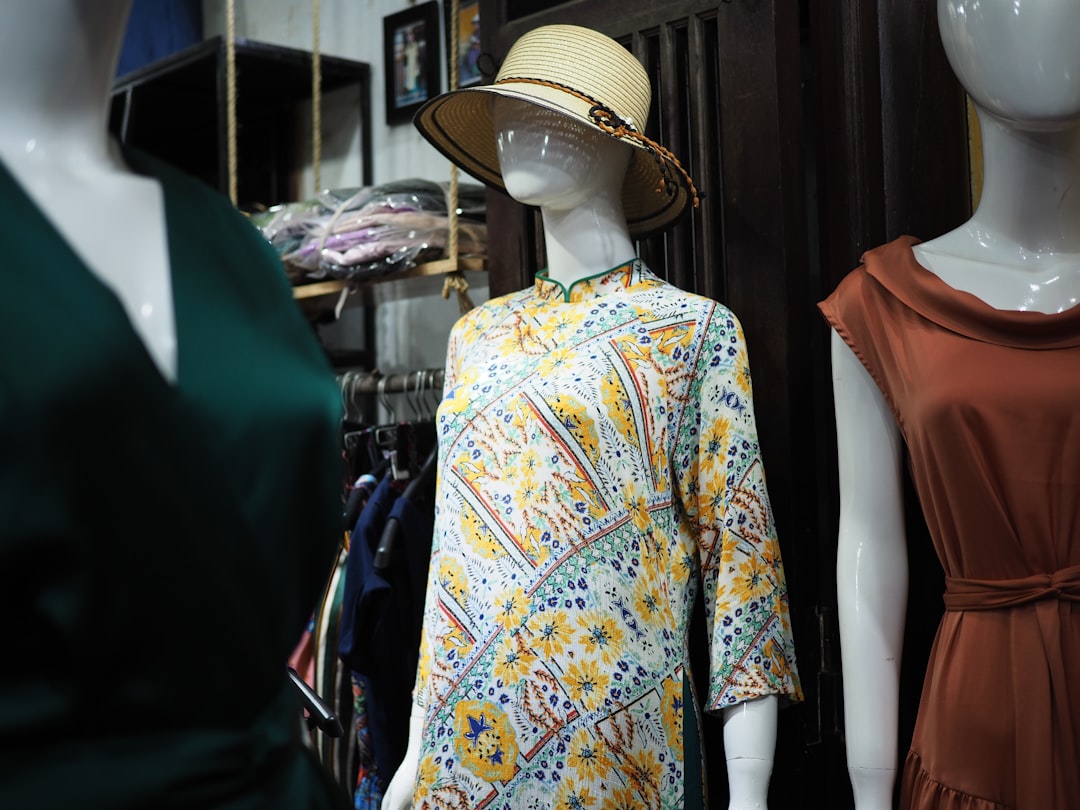 Photo by TRẦN THANH HẢI on Unsplash
The Fit-First Mindset: Why Size Is a Suggestion, Not a Rule
Before you touch a single hanger, you need to internalize one truth: the number on the tag is a marketing decision, not a measurement of your body. A size 8 at a fast fashion brand like Shein can measure differently than a size 8 at Eileen Fisher, and both will differ from a vintage 1980s size 8. In the secondhand world, you are shopping across decades and continents, all with their own sizing standards.
The first step, then, is to stop shopping by size. Start shopping by measurement.
Know Your Numbers
Take three critical measurements with a soft measuring tape, and write them down on your phone or a small card you keep in your wallet:
- Bust: Measure around the fullest part of your chest, keeping the tape parallel to the floor.
- Waist: Measure at your natural waist, the narrowest part of your torso (usually just above your belly button).
- Hips: Measure around the widest part of your hips and bottom.
For dresses, you’ll also want to know your shoulder width (from the edge of one shoulder to the other) and your torso length (from the top of your shoulder, down your front, to your natural waist). These two measurements are often the difference between a dress that fits and one that pulls or bunches.
Now, when you find a dress you love, you’re not just eyeballing it. You’re holding it up against your body and asking: Does the shoulder seam hit my shoulder bone? Does the waistline land at my natural waist? If the answer to either is no, put it back. No amount of tailoring can fix a shoulder seam that’s two inches too wide.
The 3-Step In-Store Fit Check
Once you’ve got your measurements in mind, you can move through the store with intention. Here’s a practical, repeatable process.
Step 1: The Visual Scan (30 Seconds)
Don’t touch everything. Scan the racks for silhouettes that work for your body type. If you have a long torso, look for dresses with a defined waist or an empire line that won’t cut you in the wrong place. If you’re petite, look for dresses with vertical seams or a shorter hemline (knee-length or above). If you carry weight in your shoulders, look for dresses with raglan sleeves or a v-neckline that will balance your frame.
This is where knowing your own proportions becomes a superpower. You’re not fighting the rack; you’re filtering it.
Step 2: The Hanger Check (15 Seconds)
Pull the dress off the hanger and hold it up to your front. Look at the shoulder seams. If they’re falling off your shoulders or digging into your neck, the dress won’t fit. Check the waistline. If it’s marked as a drop-waist but hits you at your natural waist, it’s a miss. Run your hand along the zipper or buttons. Are they broken? Missing? Move on.
Step 3: The Try-On (The Only Real Test)
You have to try it on. But here’s the trick: don’t just stand still. Move. Bend over to pick something up. Raise your arms above your head. Sit down in the dressing room chair. A dress that looks perfect standing still can become unwearable when you actually live your life. Does the fabric pull across your back? Does the skirt ride up when you sit? Does the neckline gape when you lean forward?
If you pass the movement test, you’re in business. If not, even a tailor might not be able to save it.
The Fabric and Construction Audit
A dress that fits is only half the battle. A dress that lasts requires a quick quality check. You don’t need to be a textile expert, but you do need to know what to look for.
Feel, Don’t Just See
Run your hand along the fabric. Does it feel thin, flimsy, or rough? Fast fashion dresses are often made from polyester blends that pill, snag, and lose their shape after a few washes. For summer, prioritize natural fibers like linen, cotton, Tencel, cupro, or silk. These fabrics breathe, drape beautifully, and age gracefully.
If you’re unsure about a fabric, check the care tag. A dress that says “Dry clean only” might be a hassle, but it’s often a sign of higher quality construction. A dress that says “Machine wash cold, tumble dry low” is practical, but check the seam construction (see below). For a deeper dive into summer fabric choices, our guide on Tencel vs. Linen for Summer Dresses can help you decide which material suits your climate and lifestyle.
The Seam and Stitch Test
Turn the dress inside out. Look at the seams. Are they finished? A serged edge (a tight, looping stitch) is standard for modern clothes. A French seam (where the raw edge is enclosed) is a sign of higher-end construction. Loose threads? Skip it. A seam that’s already pulling apart will only get worse.
Check the zipper. Does it slide smoothly? Is it a metal zipper (more durable) or a plastic one (more prone to breaking)? Check the buttons. Are they securely attached? Are there spare buttons sewn into the seam?
The Stretch Test
For knit dresses (like jersey or ribbed styles), gently stretch the fabric widthwise. Does it snap back to its original shape? If it stays stretched out, it will sag after a few hours of wear. Good recovery is a sign of quality knit construction.
The Online Thrifting Fit Strategy
Thrifting isn’t just about physical stores. Platforms like Depop, Poshmark, and ThredUp offer incredible access to summer dresses, but the fit challenge is amplified when you can’t try something on.
Your Online Fit Toolkit
- Know Your Measurements (Again): This is non-negotiable. Have your bust, waist, and hip measurements saved in your phone. When a seller lists “Bust: 34 inches, Waist: 26 inches,” you can immediately compare.
- Ask for Measurements: Most sellers are happy to provide flat-lay measurements (the garment lying flat, not on a body). Ask for the pit-to-pit measurement (armpit to armpit across the chest), the waist measurement (at the smallest point), and the total length (from shoulder seam to hem).
- Stick with Familiar Brands: If you already know your size in a specific brand (e.g., you’re a size 4 in Reformation dresses), search for that brand first. Brand sizing is inconsistent, but within a brand, it’s more predictable.
- Look for Less Tailored Styles: Shift dresses, A-line silhouettes, and wrap-style dresses are more forgiving than fitted bodices or strapless styles. They allow for more size variation without looking sloppy.
- Check the Fabric: A dress made from 100% linen will have very little stretch, so you need a precise fit. A dress with a bit of elastane (say, 5%) will be more forgiving.
Red Flags in Online Listings
- Blurry Photos: A seller who can’t be bothered to take clear photos of the item, especially the tags and seams, is a risk.
- No Measurements Listed: If a seller only says “Size Small, fits like a 4,” and doesn’t provide actual measurements, proceed with caution.
- Fast Fashion Brands (Shein, Zaful, Romwe): These are often poorly constructed and sized randomly. Unless you know the exact item and are confident in the measurements, avoid them. Our research suggests that thrifting these brands is rarely worth the risk, as they make up the bulk of donated inventory.
Risk Signals: What to Avoid at All Costs
Not every thrifted dress is a win. Some are simply not worth your time or money, no matter how cute they look on the hanger.
High-Risk Categories
| Category | Why It’s Risky | What to Look For Instead |
|---|---|---|
| Strapless or Spaghetti Strap Dresses | These require a precise fit around the ribcage and bust. Without a boned bodice or a tight elastic band, they will slip or gape. | Dresses with sleeves, wide straps, or a supportive bodice (e.g., a bodice with internal boning or a built-in bra). |
| Fitted Sheath Dresses | These leave no room for error. Any discrepancy in your hip or waist measurement will show immediately. | A-line, shift, or wrap dresses that skim the body. |
| Dresses with Heavy Zippers or Buttons | Broken zippers and missing buttons are common. Replacing a zipper can cost more than the dress. | Dresses with simple side zippers or no closures at all (pull-over styles). Check buttons are secure. |
| Synthetic Blends (100% Polyester, Acrylic) | These trap heat, pill quickly, and often have a cheap, plasticky feel. | Natural fibers or high-quality blends (e.g., cotton-linen, Tencel-silk). |
Condition Red Flags
- Stains: Check under the arms (for deodorant stains), at the collar (for makeup or sweat), and on the hem (for dirt). Some stains can be removed, but set-in oil stains or yellowing are often permanent.
- Pilling: Run your hand over the fabric. Pilling (those little balls of fiber) is a sign of low-quality material or heavy wear. It can sometimes be shaved off, but it’s a hassle.
- Holes or Snags: Check seams, under the arms, and at the hem. Small holes can be mended, but a large tear or a snag in a knit fabric is a dealbreaker.
- Fading: Check the color in natural light. Sun fading is common on shoulders and the back of the neck. If the color is uneven, it will look worn.
Your Smartest Secondhand Moves
You’ve done the work. You’ve measured yourself, you’ve scanned the racks, you’ve checked the seams. Now, how do you turn this into a repeatable, successful habit?
- Make a “Fit First” Shopping List: Before you go thrifting, note down your measurements and a few silhouette goals. “I’m looking for an A-line linen dress in a midi length with short sleeves.” This prevents impulse buys.
- Use the “One-In, One-Out” Rule for Dresses: For every summer dress you bring home, consider donating or selling one that no longer fits or serves you. This keeps your wardrobe curated and prevents the thrift store from becoming a dumping ground for your own mistakes.
- Learn Basic Alterations: You don’t need to be a master seamstress. Learning to hem a dress (a simple straight stitch) or take in a side seam can save a dress that’s 90% perfect. A tailor can also do wonders for a small fee—sometimes $15 is all it takes to make a $10 dress fit like a dream.
- Focus on Versatile Silhouettes: A simple, well-fitting cotton sundress can be dressed up with heels and jewelry or worn casually with sneakers and a denim jacket. Prioritize pieces that can work for multiple occasions. For more on building a versatile secondhand wardrobe, check out The Secondhand Shopping Checklist: How to Vet Quality, Fit, and Value Before You Buy.
- Know When to Walk Away: If a dress is 70% perfect but requires extensive alterations, or if it’s from a brand you know doesn’t hold up, walk away. The thrill of the find can cloud your judgment. A true win is a dress that fits, flatters, and will last.
The secondhand market is a treasure trove, but it’s also a minefield. By shifting your focus from size to fit, from impulse to intention, you’re not just finding a dress. You’re curating a summer wardrobe that feels like an extension of you—one that fits your body, your style, and your values. Now, go find that dress. It’s out there, waiting for you to know exactly what you’re looking for.