You spot it across the thrift floor or in a slow-fashion brand’s lookbook: a sleek, matte jacket in exactly the right shade of oxblood. It’s labeled vegan leather. You picture it over a slip dress in September, under a scarf in November. Then you remember the last plant-based jacket you owned—the one that flaked off along the collar after a single season, or the one that turned your back into a swamp by 2 p.m. at an indoor wedding.
The problem isn’t vegan leather as a category. It’s that the label tells you almost nothing. “Vegan leather” can mean a coated polyester knit that will crack within a year, or a polyurethane-and-cotton blend that holds up for a decade, or a next-generation material made from mushroom caps, apple waste, or cactus that behaves unlike anything you’ve worn before. The jacket that peels and the jacket that lasts can hang on the same rack with the same tag.
So before you spend $180 on something that might shed onto your favorite sweater, work through the questions below. This is the checklist I run through in my head—and sometimes on my phone, standing in the fitting room—before any plant-based jacket comes home with me.
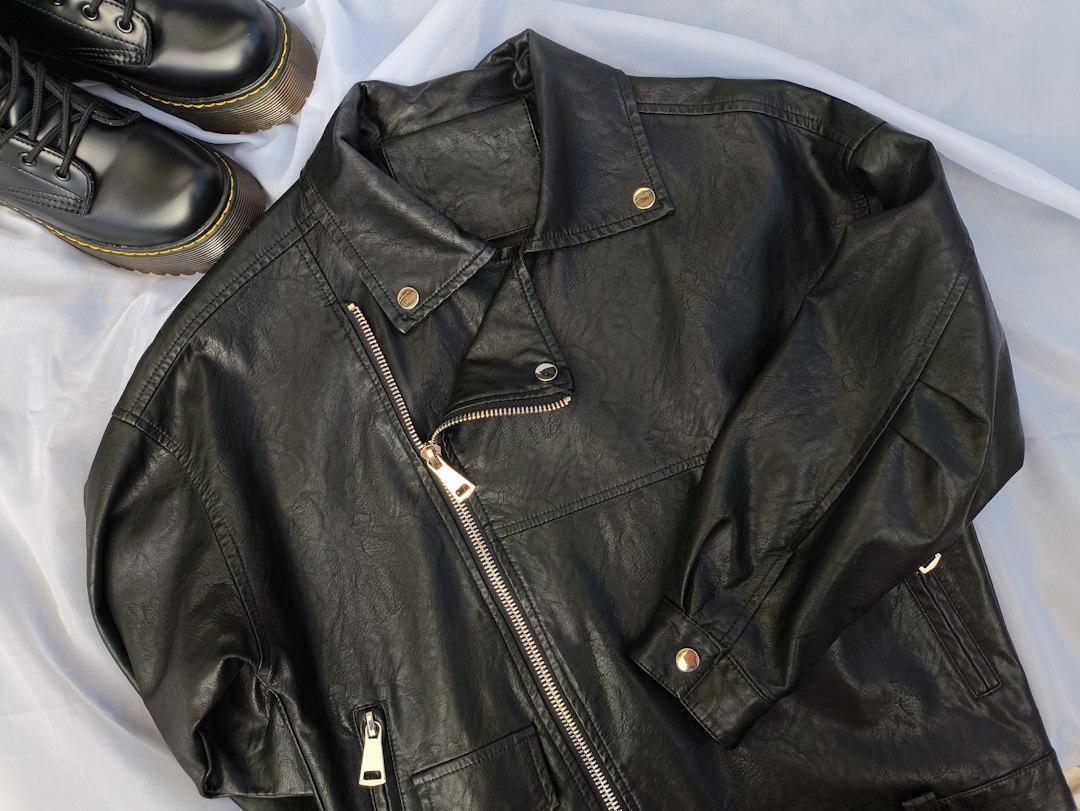 Photo by Anna Evans on Unsplash
Question 1: What Is the Jacket Actually Made Of?
The word “vegan” describes what’s absent, not what’s present. Your first job is to find the actual material composition, usually on the inner side seam tag or the product page’s materials section. If a brand won’t tell you what the jacket is made of, that’s your answer.
Here’s the rough landscape you’re navigating:
Coated polyurethane (PU) on a fabric backing. This is the most common vegan leather. PU is a polymer applied as a coating over a woven or knit base—often polyester, sometimes cotton or viscose. Quality varies enormously. A thin PU coating on a loose polyester knit is the recipe for the peeling, cracking jacket you remember. A thicker PU on a tight cotton backing can last years with care.
PVC. Avoid it. Polyvinyl chloride is the older, cheaper faux leather, and it’s the least breathable, most crack-prone option on the market. It’s also the one with the worst environmental profile—chlorine-based production and poor end-of-life options. If a tag says PVC, put the jacket down.
Plant-based and bio-fabricated materials. These include mushroom-derived mycelium leather, apple-waste leather (often branded as AppleSkin), cactus leather, grape-based materials, and various plant-fiber composites. Some are genuinely innovative; others are still small-batch and behave unpredictably in wear. They’re worth considering, but they demand more scrutiny, not less—ask about coating, backing, and care instructions specifically.
Recycled PU or recycled polyester backing. A meaningful improvement on virgin inputs, though it doesn’t change how the material performs. Recycled content is a bonus, not a durability guarantee.
The practical takeaway: a well-made PU jacket on a substantial woven backing is currently the most reliable plant-based option for everyday wear. Bio-materials are exciting but newer, so treat early-generation versions as experiments rather than workhorses.
Question 2: Will It Peel, Crack, or Flake?
Peeling is the failure mode that defines cheap vegan leather, and it almost always starts at the stress points: collar, cuffs, pocket edges, and anywhere the jacket creases repeatedly. You can often predict it before you buy.
The flex test
Pick up a sleeve or the front panel and fold it firmly back on itself, then unfold it. Look closely at the crease. A quality PU will show a soft fold and spring back with minimal visible marking. A cheap coating will show a sharp white line, a hairline crack, or a texture change right at the fold. If you can see stress whitening, walk away—that’s the coating beginning to fail, and it will only accelerate with wear.
The edge inspection
Turn the jacket inside out and look at the seam allowances and the raw edges of the coating. On a well-constructed piece, the material is cleanly finished. On a cheap one, you’ll see the coating sitting thin and flaky at the cut edge, sometimes already lifting. Also check the inner collar and cuff interiors—these are where peeling first becomes visible in real life.
The backing check
Flex the material and look at the back side. A tight, dense woven backing holds the coating far better than a loose, stretchy knit. If the backing feels like a thin athletic jersey, expect the coating to separate from it over time.
The honest caveat
Even good PU has a lifespan. It is not leather; it will not patina and last thirty years. What you’re buying is a jacket that looks good and holds up for a realistic number of seasons—three to five years of regular wear is a strong outcome for coated material. If a brand promises a decade of daily wear from a PU jacket, be skeptical.
Question 3: Will It Trap Sweat?
This is where most vegan leather disappoints in daily life. Plastic-based coatings don’t breathe. On a cool morning commute, that’s fine. At a crowded indoor event, in a warm car, or on any day above about 65°F, a non-breathable jacket becomes a sauna. You’ll feel it as dampness along your back and inner arms within twenty minutes.
There’s no perfect fix, but you can shop smarter:
Look for perforation or venting. Some jackets build in perforated panels under the arms or across the back yoke. These make a real difference and are worth prioritizing if you run warm.
Check the lining. A breathable lining—cotton, cupro, or a moisture-wicking knit—helps a lot. A solid polyester taffeta lining against a non-breathable shell traps heat twice over. If the jacket is fully lined in polyester and the shell is solid PU, treat it as a cool-weather-only piece.
Consider the cut. A boxy, loose fit with room to layer ventilates far better than a tight, cropped moto style. If you want one jacket to work across seasons, choose the roomier silhouette.
Know your climate. If you live somewhere with mild winters and warm shoulders seasons, a solid PU jacket will frustrate you. If your winters are genuinely cold, the breathability issue matters less because you’ll be wearing it in low temperatures anyway.
For readers building out cold-weather layers, the same logic that applies to choosing a warm secondhand puffer—checking fill, fit, and construction before committing—applies here. Our secondhand winter puffer jacket checklist walks through the questions that keep you from buying a jacket that looks warm but isn’t.
Question 4: Is the Construction Worth the Price?
A great material can be ruined by bad construction, and a mid-tier material can be elevated by good construction. Run through these checks before you decide.
Seams and stitching
Look for even, dense stitching with no loose threads or skipped stitches. Stress points—armholes, pocket openings, the bottom of the zipper—should have reinforced stitching or bar tacks. On a cheap jacket, these are the first places to split.
Hardware
Zippers, snaps, and buckles should feel substantial, not flimsy. A cheap zipper that catches and jams will outlast neither the jacket nor your patience. Metal hardware generally outlasts plastic. Check that the zipper runs smoothly along its full length and that the pull feels solid in your hand.
Lining attachment
Give the lining a gentle tug at the hem and cuffs. It should be securely anchored, not hanging loose or already separating. A lining that bags or twists is a sign of rushed construction.
The fit test
Put the jacket on over the layer you’d realistically wear underneath—a sweater in winter, a tee in fall. Raise your arms overhead, reach forward, and sit down. A good jacket moves with you. If it pulls across the back or restricts your shoulders, it will spend more time on the hanger than on you. Pay attention to sleeve length too: plant-based materials don’t tailor as forgivingly as wool, so buy the fit you actually want.
Question 5: Can You Care for It Without Ruining It?
Vegan leather is not low-maintenance by default—it’s just differently maintained. Before you buy, find out what the brand recommends, because the wrong cleaning method can strip or crack a coating fast.
Most PU jackets should be wiped with a damp cloth and mild soap, hung to dry away from direct heat, and never machine washed or tumble dried. Heat is the enemy: a hot dryer or a radiator will accelerate cracking. Store them on a wide hanger in a cool, dry closet, not compressed in a crowded wardrobe.
Bio-based materials sometimes have their own care quirks—some mycelium and plant-leather products are more sensitive to moisture or abrasion. If the brand provides specific care guidance, follow it exactly; if they provide none, that’s a warning sign about how well they understand their own product.
If you’re the kind of shopper who wants a care plan in hand before you commit, this is the moment to think about it. The same instinct that makes a secondhand wool coat repair playbook useful for inherited coats applies here: know how you’ll maintain a piece before you bring it home.
The Shortlist Criteria That Matter
When you’re standing in the store or staring at a product page with your cursor hovering over “add to cart,” narrow it down to these five non-negotiables. If a jacket fails more than one, leave it.
| Criterion | What to Look For | Red Flag |
|---|---|---|
| Material composition | Named PU on a woven backing, or a specific bio-material with care guidance | ”Vegan leather” with no composition listed, or PVC |
| Flex and edge quality | Soft fold with no whitening; cleanly finished edges | White crease lines, lifting coating at seams |
| Breathability | Perforation, venting, or a breathable lining | Solid PU shell with full polyester lining |
| Construction | Even stitching, reinforced stress points, solid metal hardware | Loose threads, flimsy zippers, baggy lining |
| Care clarity | Specific, realistic care instructions from the brand | No care guidance at all |
A few brands worth knowing as you shop. Will’s Vegan Store makes a range of plant-based jackets with published material breakdowns and care instructions, and their pieces are a solid benchmark for mid-price PU construction. Matt & Nat has been working with recycled and plant-based materials for years and is a reasonable starting point for coated jackets, though check the composition on each style—their line varies. For bio-based options, Mushroom Material-style mycelium products and apple-leather lines from brands like Samara are worth exploring if you want to support next-generation materials, but go in expecting to baby the piece a little more than a standard PU jacket.
One more note on fit and styling: a plant-based jacket works hardest when it layers cleanly over the rest of your wardrobe. If you’re building around transitional weather, our fall layering system formula shows how to slot a jacket like this into outfits that actually get worn, rather than one-off looks that live on a hanger.
Your Next Step: The Fitting-Room Test
Before you buy, do three things in order. First, find the composition tag and confirm the material—no tag, no sale. Second, run the flex test on a sleeve and inspect the seam edges. Third, put the jacket on over your real base layer, raise your arms, and sit down.
If it passes all three, you’ve found a plant-based jacket that has a genuine shot at earning its place. If it fails any of them, you’ve saved yourself the slow disappointment of a jacket that peels by spring. Either way, you’ve shopped like someone who intends to wear the thing for years—which is the whole point.