The first time you have a 6 p.m. networking event after a full day of back-to-back meetings, the reality of the “dressy casual” dress code hits differently. You stand in front of your closet at 8 a.m., knowing that whatever you choose has to survive a deadline, a coffee run, and then transition seamlessly to a room full of industry contacts without looking like you’re wearing a costume. The common solution is to buy a separate “evening” outfit, which means carrying a second bag, or worse, feeling overdone and uncomfortable all day.
The smarter approach is to stop thinking in terms of individual outfits and start thinking in terms of a formula. You don’t need a wardrobe overhaul; you need a system where the same five pieces can generate five distinct looks that shift from professional to polished-evening with a simple swap of accessories or a change in layering. This is where a secondhand-first strategy shines. Not only does it keep your environmental footprint low, but vintage and pre-owned pieces often have a uniqueness and structural quality that fast-fashion evening wear lacks.
Here is the specific formula for building a 5-outfit workwear capsule that takes you from the newsroom to dinner, using pre-loved finds and a few intentional new staples.
 Photo by Angela Bailey on Unsplash
The 5-Piece Core: The “Dressy Casual” Equation
Before we talk about styling, we have to nail down the inventory. The mistake most people make is buying “basics” that are too casual (think ribbed knit tees) or too rigid (stiff blazers that feel like armor). For this capsule, we are aiming for a balance of soft structure and fluidity.
The foundation of this system is a 3-2-1 ratio: three bottom pieces, two top layers, and one statement piece. This isn’t a strict uniform, but a framework that forces versatility.
Here is the exact shopping list to source secondhand:
- The Fluid Trouser (Navy or Charcoal): Look for a wide-leg or tailored straight-leg trouser in a drapey fabric like viscose, cupro, or a wool blend. The key is that it should have a defined waistband but no harsh crease. This is your “dressy” anchor.
- The Dark-Wash Denim (No Rips): A slim-straight or slightly tapered dark wash jean is your “casual” anchor. The darkness makes it evening-appropriate, but the fabric keeps it comfortable for a 10-hour day. Seek out 100% cotton or a high-quality stretch blend that holds its shape.
- The Slip Skirt (Midi Length): This is the secret weapon for the office-to-evening transition. A bias-cut or straight midi slip skirt in silk or a silky viscose reads as professional with a blazer and elegant with a knit top. It takes up minimal space in your closet but maximizes your outfit count.
- The Structured Blazer (Black or Camel): This is your armor. It doesn’t need to be boxy; in fact, a slightly softer shoulder with a nipped waist is more flattering and modern. This is the piece that instantly elevates the denim and the trousers.
- The Fine-Gauge Knit (Crewneck or V-Neck): This is your layering workhorse. It should be thin enough to tuck into the skirt without bulk, but substantial enough to wear alone. Merino wool or a silk-cotton blend in a neutral tone (ivory, grey, or rust) works best.
The “Evening Shift” Layer
You will notice there are no dresses in the core. That is intentional. The capsule relies on the ability to shift the energy of the outfit rather than changing the entire garment. The transition happens with your accessories and your outer layer. You are not changing your clothes; you are changing your silhouette.
The 5 Outfits: From Deadline to Dinner
Now, let’s put the formula to work. Each outfit is built on a “base” and then modified for the evening. The rule is simple: For the office, you button up; for the evening, you unbutton and add texture.
Outfit 1: The Editorial Minimalist
- Day: Fluid Trouser + Fine-Gauge Knit (tucked in) + Structured Blazer. Low block heels.
- Evening Transition: Remove the blazer and swap the low block heels for a pointed-toe flat or a sleek heeled boot. Unbutton the top two buttons of the knit and add a delicate gold necklace. The fluidity of the trouser now reads as evening elegance rather than office professionalism.
Outfit 2: The Modern Utility
- Day: Dark-Wash Denim + Fine-Gauge Knit (untucked) + Structured Blazer. White leather sneakers.
- Evening Transition: Swap the sneakers for the pointed-toe flats. Swap the blazer for a longline cardigan or a leather jacket if you have one (though the blazer works too). The key here is the shoe change—it instantly dresses up the denim and knit combo. Add a silk scarf tied at the neck or in your hair for a Parisian evening vibe.
Outfit 3: The Soft Power Suit
- Day: Fluid Trouser + Slip Skirt (layered over the trousers? No, this is a separate look). Let’s clarify: This outfit is the Slip Skirt + Structured Blazer + Fine-Gauge Knit (worn under the blazer, over the skirt).
- Evening Transition: Remove the blazer and untuck the knit. Let the knit hang loosely over the slip skirt. Add a pair of heeled mules. The juxtaposition of the fine knit with the slippery skirt is very “cool girl” evening wear, while the blazer kept it interview-ready during the day.
Outfit 4: The Elevated Weekend (If you have a late brunch meeting)
- Day: Dark-Wash Denim + Slip Skirt (worn as a top? No, let’s keep it simple). This outfit is Denim + Structured Blazer + a simple white tee (not in the core, but a good add-on).
- Evening Transition: Swap the blazer for the Fine-Gauge Knit. Tie the knit around your shoulders (if it’s a cardigan) or wear it as a top. This is the most casual of the five, but it’s perfect for a low-key event that still requires a pulse on style.
Outfit 5: The One-Piece Illusion
- Day: Slip Skirt + Fine-Gauge Knit (tucked in) + Structured Blazer.
- Evening Transition: Remove the blazer. Add a belt at the waist over the knit to define your silhouette. Swap your bag to a smaller, metallic or structured evening bag. This simple shift in accessories changes the outfit from “work uniform” to “dinner date.”
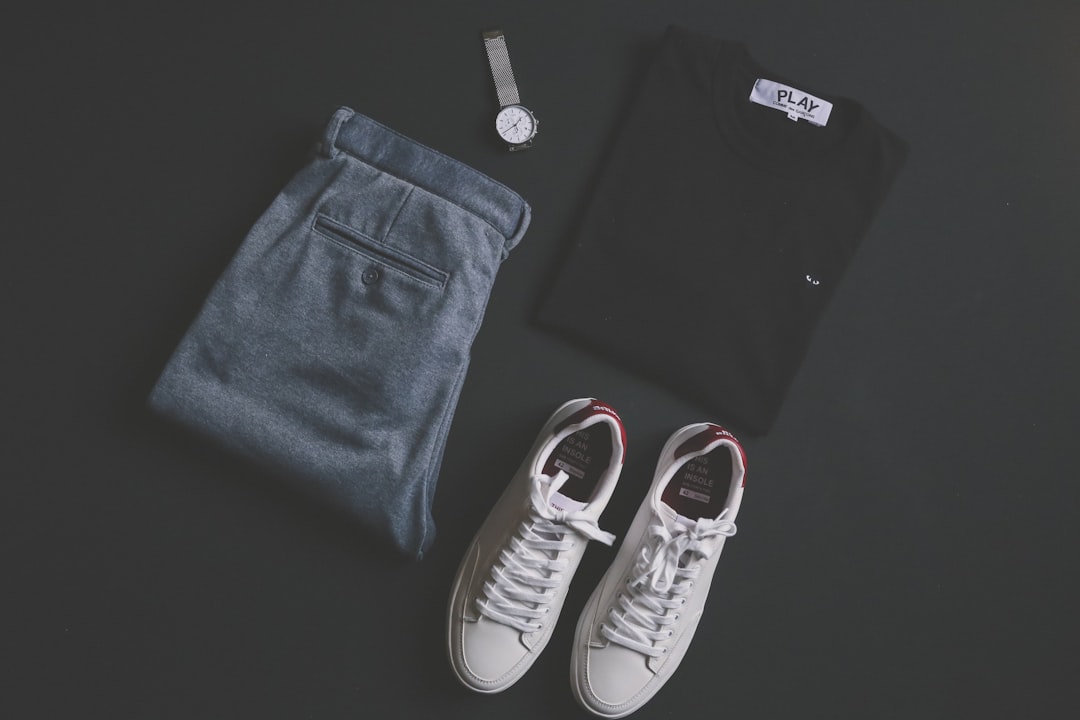 Photo by Mnz on Unsplash
The “Secondhand-First” Shopping Strategy
Sourcing these five pieces secondhand requires a different eye than buying new. You aren’t looking for the perfect item; you are looking for the perfect fabric and construction.
What to Hunt For (and What to Skip)
When scouring resale sites or thrift stores, prioritize natural fibers and quality zippers. A 100% wool blazer from a heritage brand will outlast and out-perform a new polyester one. For the trousers, check the lining—it should be smooth and not pulling. For the slip skirt, hold it up to the light to check for thinning or pulls in the silk.
Skip: Anything with visible pilling, broken zippers, or stains that cannot be professionally cleaned. Also, skip anything that requires dry cleaning unless you are prepared for that cost. The goal is a low-maintenance capsule.
The Brand Hunting Grounds
While you should focus on the garment, not the label, certain brands are consistently great for this specific aesthetic:
- Eileen Fisher: Their pieces are the definition of fluid and structured. Look for their silk slip skirts and crepe trousers. They are the most commonly found high-quality workwear brand on resale sites. If you are comparing brands for work-to-weekend versatility, Eileen Fisher almost always wins on fabric quality alone.
- Theory: For trousers and blazers that are sharp but not stiff. A used Theory blazer is a steal compared to retail.
- Baukjen: If you are in the UK or can shop European resale, Baukjen offers beautifully draped, sustainable workwear that holds up well.
When you do need to buy new, focus on the items that take the most wear and tear—the knit and the denim. For new pieces, check brands that prioritize organic cotton and recycled materials.
The Decision Rules: How to Edit Your Closet
To make this capsule work, you need to apply the 70/30 rule. 70% of your capsule should be these versatile, neutral-toned basics, and 30% can be your personality pieces (statement jewelry, a printed scarf, a colored bag). This balance prevents boredom without sacrificing practicality.
Rule 1: The “3-Outfit” Test. Before buying any pre-owned piece, ask yourself: Can I wear this in at least 3 of the 5 outfits above? If the answer is no, put it back. This prevents you from buying a beautiful but isolated piece that doesn’t integrate.
Rule 2: The Color Palette Constraint. Stick to a narrow palette: Navy, Black, Camel, Ivory, and Denim. This ensures every piece mixes and matches without thinking. If you want a pop of color, make it your scarf or your handbag, not your blazer.
Rule 3: The “Shoe” Factor. In this formula, shoes are the primary “evening” signal. You need three pairs: a low block heel (day), a pointed flat (transition), and a clean white sneaker (casual day). If you are buying one new item, make it the pointed flat—it is the hardest working shoe in your closet.
Repeatable Outfits, Not One-Off Looks
The ultimate goal of this capsule is to eliminate the “I have nothing to wear” panic at 5:30 p.m. By relying on a formula rather than a collection of individual garments, you remove the guesswork. You know that the blazer is your day-time anchor, and the knit is your evening anchor. You know that the slip skirt is your wildcard that can go either way depending on the shoe.
This system works because it is repetitive. You will wear the same trousers twice a week, but you will style them differently. This is the essence of a sustainable wardrobe—not buying less, but using more of what you buy. It aligns with the principles of a 30-day outfit rotation, where the goal is to create new looks from existing pieces rather than adding new ones.
The Next Step: The “Outfit Audit”
Don’t try to build this capsule in a weekend. Instead, take an afternoon to do an “Outfit Audit.” Pull out the five core pieces you already own that are closest to this formula. Lay them on your bed. Now, try to create these 5 outfits. You will likely find you are missing one or two key pieces (usually the slip skirt or the fluid trouser).
Make a list of those specific gaps. Take that list to your favorite secondhand platform or thrift store. You aren’t shopping; you are sourcing. This shift in mindset—from browsing to sourcing—is what separates a conscious wardrobe from a cluttered one. You are not looking for inspiration; you are looking for the solution to a specific problem. That is how you build a capsule that actually works, and how you ensure that your workwear is as kind to the planet as it is to your schedule.