Most knitwear doesn’t die in the wash. It dies in a bin bag at the back of a closet. Every spring, well-intentioned sweaters get folded into whatever container is closest, shoved onto a shelf under a winter coat, and forgotten until the first cold snap. By October, you pull out a cardigan and find three things: a moth hole the size of a peppercorn, shoulders stretched into little peaks from a wire hanger, and a faint musty smell that no amount of airing seems to fix. The sweater wasn’t worn out. It was stored badly.
The fix is less about buying fancy supplies and more about understanding what wool and wool blends actually want during their months off: clean fibers, room to breathe, protection from pests, and a shape that isn’t being pulled in any direction. That’s true whether you spent $12 at a thrift store or $200 on an ethical merino crewneck. This playbook walks through prevention, the step-by-step routine, what to do when something has already gone wrong, and the point at which a piece genuinely deserves to be retired. If you’ve already invested in good knits — or you’re shopping for them — this is the care that makes that investment hold.
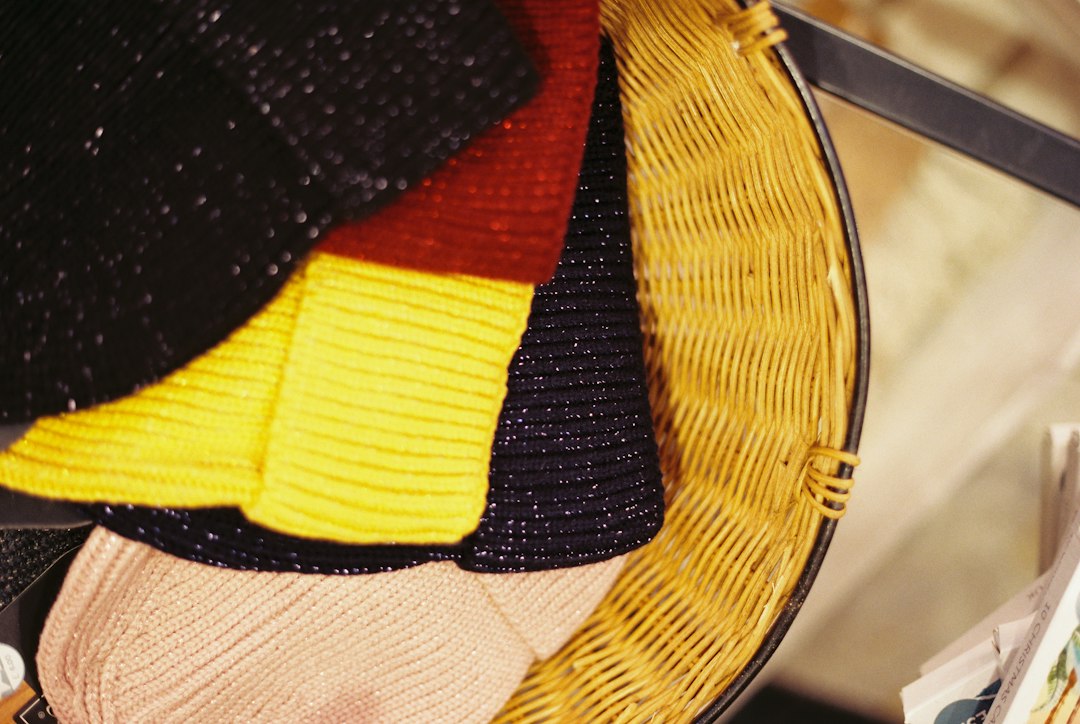 Photo by Barney Goodman on Unsplash
Why Knitwear Fails in Storage (and What’s Actually Happening)
Moths get blamed for everything, but they’re only part of the story. Three separate forces are working on your sweaters while they sit in storage, and each one needs a different countermeasure.
The moth problem is really a protein problem. Clothes moths don’t eat wool because they love cashmere — they lay eggs on it, and the larvae feed on the keratin in animal fibers. That means wool, cashmere, merino, alpaca, and any blend with a meaningful percentage of animal fiber are all at risk. Cotton and linen are largely safe; synthetic-heavy blends are lower risk but not immune if stored against wool. Crucially, moths are attracted to soil: sweat, skin oils, food residue, and perfume all make a garment more appealing. A “clean enough” sweater is a buffet.
Shape loss is a gravity and tension problem. Wool fibers have memory, but they also creep. Hang a heavy knit on a hanger and the shoulders stretch into points within weeks. Stuff it into a tight bin and the folds become permanent creases. Store it damp and the fibers felt and mat together in ways you can’t undo. The goal is to support the garment’s weight evenly and let it rest without compression.
The third force is moisture and light. Damp storage invites mildew and accelerates fiber degradation; direct sunlight fades color and weakens wool over months. A cool, dark, dry spot is the baseline requirement, and it rules out most garages, basements, and sunny top shelves.
Once you understand these three pressures, the routine stops feeling like a list of chores and starts making sense as a single system: clean the fiber, support the shape, starve the moths, control the environment.
Prevention Starts Before Anything Goes Into Storage
The most effective moth prevention happens in the weeks before storage, not in the container itself. Skipping this stage is the single most common reason a careful storage routine still fails.
Wash or air everything — no exceptions. A sweater worn twice and deemed “basically clean” still carries body oils and microscopic food particles that attract larvae. Follow the care label, but for most wool and wool blends, a gentle hand-wash in cool water with a pH-neutral wool wash (Eucalan and Soak are both reliable, low-rinse options) is safe and removes the soil moths want. If you’re unsure how a secondhand piece will behave, our guide to repairing and refreshing secondhand knitwear covers pre-storage washing for delicate or vintage pieces. For anything you truly can’t wash, air it outdoors in indirect light for a full day, then brush it gently to lift surface debris.
Inspect seams, underarms, and cuffs. These are the spots moths target first because they trap warmth and moisture. Turn each garment inside out and check the underarm gussets, the inside of the collar, and any folded hems. A tiny hole caught now is a five-minute fix; caught in October, it’s a reweaving job.
De-pill before storing, not after. Pilling left on a sweater during storage can mat and felt against the fibers, making it harder to remove later. A fabric shaver or a fine-toothed comb run lightly over the surface takes two minutes and leaves the knit smoother going in.
Let everything dry completely. Even slightly damp wool stored in a sealed bin is a mildew risk. Lay knits flat on a towel to air for a few hours before they go anywhere near a container — and never store them straight from a steamy bathroom.
The Step-by-Step Storage Routine
Here’s the sequence that protects both shape and fiber. It takes an afternoon for a full seasonal rotation, and it’s worth doing in one pass rather than piecemeal.
Step 1: Choose the right container
Breathable beats sealed for most home storage. Cotton canvas storage bags, breathable zip pouches, or a clean, dry lidded bin with ventilation are all workable. Avoid vacuum-seal bags entirely — compression crushes wool fibers and creates permanent creases that no steamer will fully lift. Avoid cardboard boxes, which can harbor pests and off-gas; avoid wire or plastic bins with sharp interior edges that snag knits.
For a small collection, cotton pillowcases or dedicated canvas sweater bags work well and stack neatly. For a larger one, a lidded cotton or canvas storage bin kept in a cool closet is the practical choice. Cedar chests are lovely and naturally repellent, but only if the seal is tight and the wood is genuine — many “cedar” chests are lined with a thin veneer that loses potency within a season.
Step 2: Fold for shape, not for space
The goal is to distribute weight and avoid sharp creases. Fold sweaters along the natural seams, not arbitrarily. For a crewneck or cardigan, lay it flat, fold the sleeves in toward the body at the shoulder seam, then fold the body in thirds. For heavier knits, fold in half and then roll loosely rather than folding flat — rolling distributes weight and prevents the hard crease line that comes from a flat fold under pressure.
Never hang a knit. Not on a padded hanger, not on a wide wooden one, not “just for a week.” Gravity wins. The exception is a very lightweight, structured knit cardigan worn as a light layer — and even then, fold it the moment it’s off your body.
Step 3: Layer with protection, not suffocation
Place each folded knit in its own breathable bag or pouch, or layer them loosely in a bin with a sheet of acid-free tissue between heavy pieces. Don’t overstuff. A bin packed so tightly that you have to press the lid down is compressing the fibers underneath and creating creases at every fold.
Add a repellent — but choose one that doesn’t stain or off-gas onto the fabric. Cedar blocks or rings are the classic option and work well when refreshed by light sanding each season. Lavender sachets are pleasant and mildly repellent but lose potency within a few months; refresh them mid-season. Avoid mothballs entirely: they’re toxic, they leave an odor that’s nearly impossible to remove from wool, and they’re unnecessary if the fiber is clean and the container is managed.
Step 4: Control the environment
Store bins in a cool, dark, dry space — a closet interior, an under-bed box in a dry room, or a top shelf away from windows. Ideal conditions are roughly 60–68°F with low humidity. Avoid attics (heat swings), basements (damp), garages (both), and anywhere near a radiator or heating vent. If your closet runs humid, a small moisture absorber in the storage area helps, but don’t put one inside a sealed bag with the knits.
Check the bins once mid-season — around the six-week mark. Open them, look for any sign of larvae or frass (tiny grainy deposits), and confirm nothing smells musty. This ten-minute check catches problems while they’re still small.
When Something’s Already Gone Wrong: Rescue Tactics
You open the bin in October and something’s off. Here’s how to triage, in order of severity.
Musty smell, no visible damage. Air the garment outdoors in indirect light for a full day, then wash gently with a wool wash and a half-cup of white vinegar in the rinse water. Repeat if needed. Don’t reach for fabric softener — it coats fibers and traps odor.
Small holes (one or two, peppercorn-sized). These are usually larval feeding holes. Isolate the garment immediately, wash it, and inspect every other piece in the bin. Small holes in knits can be darned nearly invisibly with matching yarn; a local tailor or a visible-mending specialist can do it for a modest fee. For a step-by-step on darning and snag repair, see the mending playbook linked above.
Widespread holes or frass in the bin. This is an active infestation. Remove everything, wash all washable pieces on the appropriate cycle, and freeze anything that can’t be washed: seal the garment in a zip bag, press out the air, and freeze for at least 72 hours, then thaw and repeat once. Discard the container or scrub it thoroughly. Check adjacent bins and closet corners.
Stretched shoulders from hanging. Sometimes recoverable: wash gently, then lay flat to dry, gently reshaping the shoulder line with your hands while damp and blocking it to the correct width with pins on a towel. Severe stretching may not fully reverse, but a good wash and block recovers most of it.
Pilling that’s matted in storage. A fabric shaver on a low setting, used lightly, will lift most of it. Work in small sections and don’t press hard — you’re shearing pills, not the fabric.
If the damage is significant and you’re weighing repair versus replacement, our guide to buying secondhand knitwear that won’t pill, sag, or itch is a useful benchmark for what a replacement should actually meet — so you’re not trading one problem piece for another.
 Photo by Barney Goodman on Unsplash
When Replacement Is Actually Justified
Repair culture has real limits, and pretending otherwise does a disservice to the pieces worth keeping. A sweater earns replacement when the fiber itself has failed — when the wool has felted into a dense, stiff mat that no wash will loosen, when the elbows have worn through to the point that darning would create a visible patch on a piece you wear to work, or when an infestation has left holes across multiple panels rather than one localized spot.
It’s also fair to replace when the fit has permanently gone. A garment that’s been stretched beyond blocking, or shrunk and felted in a hot wash, won’t return to its original shape no matter how carefully you treat it.
What replacement shouldn’t be is a reflex. Before you buy, ask whether the piece could be repaired for less than a third of the replacement cost, and whether the replacement would actually be better made. Our wash-test roundup of sustainable knitwear brands is a useful starting point for brands that hold up to repeated washing — which is the real test of whether a knit survives more than one storage cycle.
When you do replace, buy with storage in mind: a knit with a tight, smooth ply resists pilling and moth damage better than a loose, fuzzy one, and a fiber with a bit of natural resilience (merino, a wool-nylon blend, a wool-cashmere mix) will hold its shape through years of seasonal rotation.
The Care Routine Worth Keeping
The routine that actually protects knitwear is short enough to repeat every year without dread: wash before storing, fold flat, bag in breathable cotton, add cedar, keep it cool and dark, and check once mid-season. That’s it. Everything else — the rescue tactics, the replacement math — is contingency.
Put a reminder in your calendar for the weekend you rotate your closet each season, and build the check into that same afternoon: pull the bins, open them, look, smell, close. Ten minutes twice a year is the difference between a sweater that lasts a decade and one that quietly disintegrates in a bin. Your knits don’t need a perfect system. They need a consistent one — and the discipline to fold them flat instead of reaching for a hanger when you’re tired.