You’re standing in a thrift store holding a cable-knit sweater that looks gorgeous on the hanger. The price is right. The color is perfect. Then you flip it over and see the underarms: a halo of fuzz, tiny bobbles where the fibers have tangled into little balls, and a hem that’s lost its snap. You buy it anyway, take it home, and by the second wear it’s pilled across the chest, stretched at the cuffs, and scratching your neck hard enough that you keep tugging at the collar all day.
Secondhand knitwear is one of the smartest categories to shop pre-owned — wool and cashmere especially hold up for decades when they’re made well — but it’s also one of the easiest places to waste money. A sweater’s flaws hide in plain sight until you know where to look. The checklist below walks you through five questions to ask before you pay, in the order you’ll actually ask them in a store or while scrolling a resale listing. Each step has a quick pass/fail test you can run in about thirty seconds.
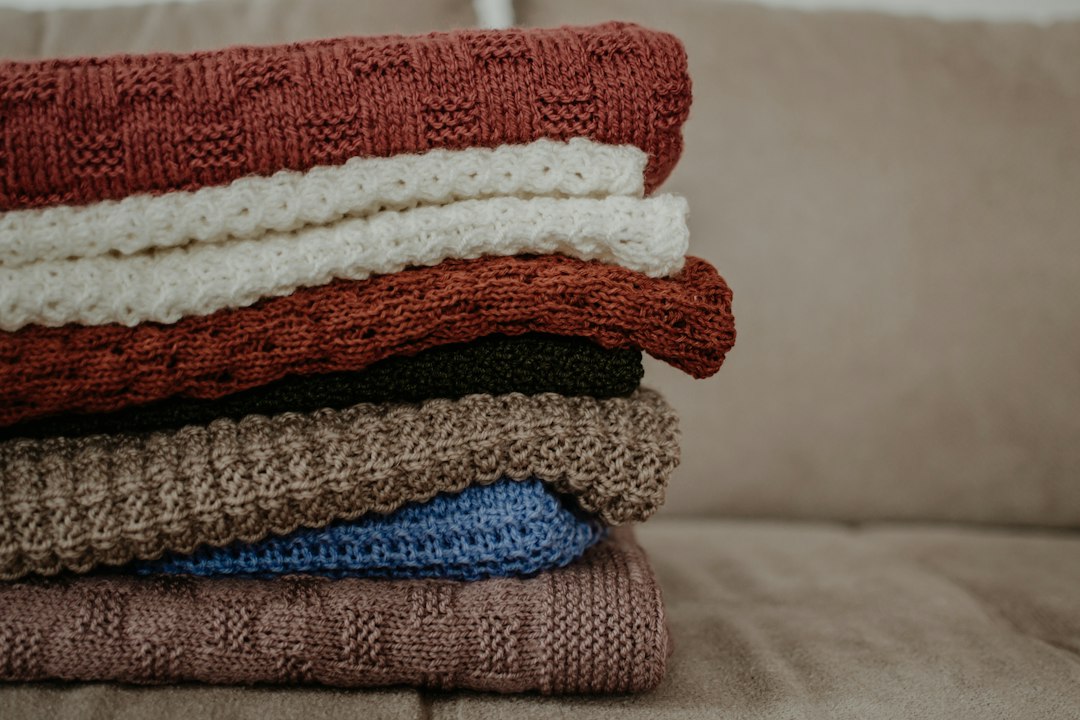 Photo by Annette Poi on Unsplash
Step 1: What Is It Actually Made Of?
Fiber content determines almost everything a knit will do over time — whether it pills, sags, itches, or survives a decade. Before you look at anything else, find the care label. If it’s missing, check the inside side seam; most knits have a small woven tag tucked there. If there’s no label at all, assume a blend and price your risk accordingly.
The fibers that age well
Wool and merino resist pilling better than almost anything else because the fibers are long and crimped, which helps them lock together instead of tangling into balls. Merino is the softest option if you’re itch-sensitive. Cashmere is glorious but pills more readily than wool, especially lower-grade two-ply cashmere — if you’re shopping secondhand cashmere specifically, our secondhand cashmere checklist goes deeper on grade and moth damage. Alpaca drapes beautifully and is warmer than wool by weight, but it stretches, so check the shoulders and cuffs carefully. Yak wool sits between cashmere and merino in softness and durability; if you’ve never shopped it, our yak wool explainer covers how it compares.
The fibers that betray you
Acrylic is the biggest culprit behind pilling and sagging. It’s plastic-based, it fuzzes quickly, and it has almost no memory — meaning a stretched acrylic cuff stays stretched. A small percentage of acrylic blended into wool (under 20%) is usually fine and adds softness. A sweater that’s 60% acrylic or more will look tired within a season. Rayon and viscose blends feel lovely and drape well but stretch out at the elbows and knees and can shrink unpredictably in the wash. Cotton knits are fine for spring and layering but have less elasticity, so they bag at the seat and elbows over time. Polyester-heavy blends trap heat and odor and pill readily.
A quick fiber cheat sheet
| Fiber | Pilling risk | Sagging risk | Itch risk | Verdict for secondhand |
|---|---|---|---|---|
| Merino wool | Low | Low | Low | Excellent — buy confidently |
| Cashmere | Medium | Medium | Very low | Good if two-ply and unpilled |
| Alpaca | Low–medium | Medium–high | Low | Check shoulders and cuffs closely |
| Yak wool | Low | Low | Very low | Excellent, underrated |
| Cotton | Low | Medium–high | None | Fine for layering, check elbows |
| Acrylic | High | High | Low | Skip unless under 20% of a blend |
| Rayon/viscose | Medium | High | None | Proceed with caution |
What to look for on the label
A “2-ply” or “4-ply” notation tells you how many strands were twisted together — more plies generally means a denser, more durable yarn. “Long-staple” or “extra-long-staple” cotton and wool means longer fibers, which pill less. If a listing or label says “100% cashmere” but the price is suspiciously low and the knit feels thin and limp, it’s likely a low-grade short-fiber cashmere that will pill within weeks.
Step 2: How Does the Fabric Feel and Behave Under Your Hands?
Labels lie less often than sellers do, but your hands are the fastest test you have. Pick the garment up, hold it to the light, and work through these checks.
The pill and fuzz test
Look at the areas of friction first: underarms, the sides of the torso where a bag or seatbelt rubs, the cuffs, and the center chest. Small, tight pills that you can flick off with a fabric shaver are cosmetic and fixable. Dense, matted pilling across a large area means the fibers are already breaking down — that sweater will keep pilling no matter how much you shave it. Run your palm firmly across the surface. If your hand comes away covered in loose fibers, the knit is shedding and will continue to.
The stretch-and-recover test
Gently stretch a cuff, the hem, and a section of the side seam, then let go. Good knitwear snaps back into shape almost immediately. If the fabric stays stretched or recovers slowly, the elastic memory is gone — that’s a sweater that will sag at the elbows and hem. Pay special attention to the neckline: a stretched-out crew neck or a cardigan whose button band ripples is very hard to fix.
The itch test
Hold the sweater against the inside of your wrist or your neck for a few seconds. Wool that feels prickly there will feel worse after an hour of wear. Some itchiness fades after a wash with a wool conditioner, but coarse, kempy fibers (the thick guard hairs in some fleeces) don’t soften much. If you’re sensitive, stick to merino, cashmere, yak, or a wool-cotton blend.
The thin-spot and hole check
Hold the knit up to a window or overhead light. Thin, translucent patches — usually at the elbows, underarms, or where a bag strap sits — signal wear that will become holes. Then turn the garment inside out and check the seams and underarms for small moth holes, which are often invisible from the outside. A single small hole near a seam can be darned; a scattering of holes across the body is a pass.
The weight and drape check
A well-made sweater has some heft to it. Hold it by the shoulders and let it hang. If it droops limply and feels thin and lightweight relative to its bulk, the yarn is likely low-density and will lose shape. A good wool or cashmere knit should feel substantial without being stiff.
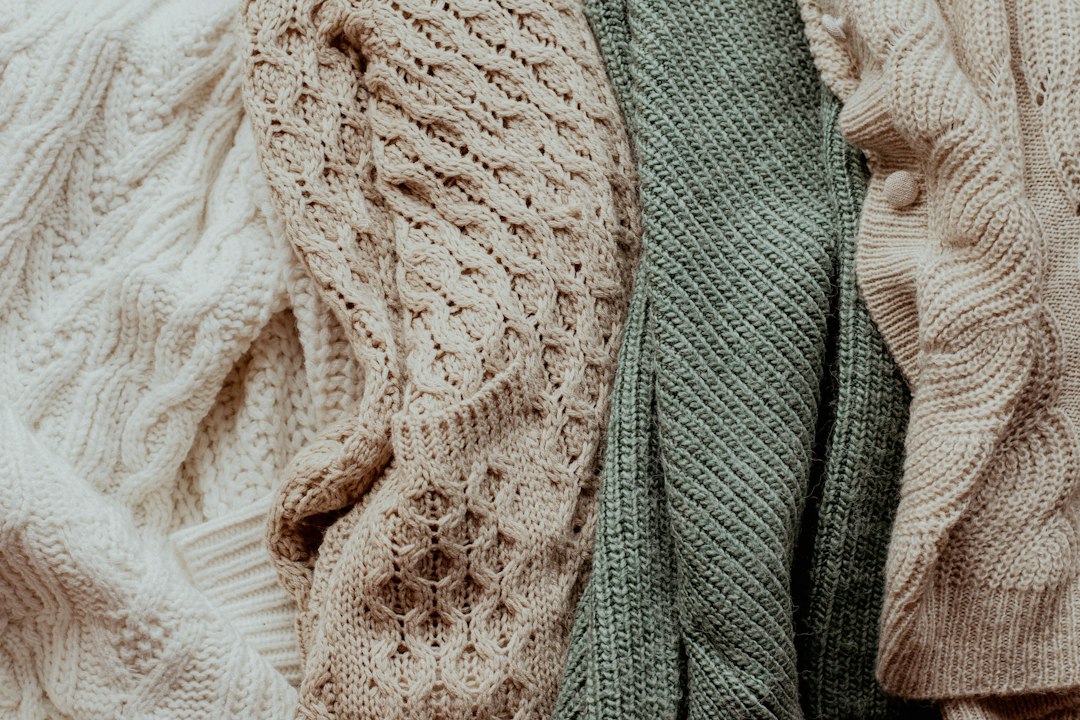 Photo by Ruta Gudeliene on Unsplash
Step 3: Does the Construction Hold Up?
Construction is where cheap knitwear gives itself away, and it’s the step most shoppers skip. Flip the sweater inside out and look at how it was put together.
Seams and finishing
Look at the shoulder and side seams. A well-made knit has seams that are neat, flat, and securely finished — often a linked or fully fashioned seam where the pieces are knit to shape rather than cut from a bolt of fabric and sewn. Cut-and-sew knits (common in fast fashion) have raw or overlocked edges inside and tend to distort. Check that the seams lie flat and aren’t puckered or pulling.
The neckline, cuffs, and hem
These are the first places to wear out. Ribbed cuffs and hems should be tight and springy, not flared or limp. The neckline should sit flat against a surface when you lay the sweater down — if it waves or gapes, it’s been stretched. On cardigans, check that the button band doesn’t ripple and that the buttons are securely attached and match.
Linings and trims
Some knits — especially blazers-style cardigans and heavier coats — have linings. Check that the lining isn’t torn at the underarms and that it’s attached securely at the hem. If you’re shopping a knit blazer or a structured knit jacket, our secondhand blazer quality checklist covers the tailoring details worth inspecting.
The wash test (for listings)
If you’re buying online, ask the seller how the item has been washed. Machine-washed wool that wasn’t meant for it may have already felted or shrunk — check measurements against the listed size. A seller who can tell you the fiber content, the wash history, and provide close-ups of the underarms and hem is a green flag.
Step 4: Does It Fit in the Ways That Matter?
Fit is the step where secondhand shopping gets tricky, because you can’t size up or down. But knitwear is forgiving — up to a point. Here’s what to check.
Shoulders and sleeve length
The shoulder seam should sit at or just past your natural shoulder. A dropped-shoulder knit is a style choice, not a flaw, but if the shoulders are so wide that the sleeves hang past your knuckles, the sweater will look slouchy in a way that’s hard to style. Sleeve length should hit at or just past your wrist bone; too-short sleeves can’t be lengthened easily in knitwear.
Body length and proportion
Hold the sweater up against your torso. Cropped knits are great with high-waisted bottoms; longline knits work over leggings and skirts. What you want to avoid is a length that hits at the widest part of your hip if you plan to wear it untucked — that’s a proportion that makes most outfits look boxy. Tuck one side into your waistband in the fitting room (or hold it up in the mirror at home) to see how it sits.
The “would I reach for it” test
This is the least technical check and the most important. Imagine your actual week: the school run, the office, the Saturday market. Does this sweater work for at least three of those? If it’s a beautiful but fussy piece — a cropped mohair cardigan, say — that’s fine as long as you have a clear place for it. If you can’t picture wearing it in the next two weeks, leave it.
Step 5: Is the Price Fair for the Condition?
Secondhand knitwear pricing is all over the map, and a high price doesn’t guarantee quality. Use condition and fiber to anchor your offer.
What to pay
A well-made merino or cashmere sweater in excellent condition is worth paying for — often $40–$120 depending on brand and fiber. A pilled acrylic blend should be cheap or free. Factor in the cost of a fabric shaver (about $15) and a possible re-darning ($20–$40 at a tailor) when you decide. If a sweater needs both, the price should reflect it.
When to walk away
Walk away if: the underarms are densely pilled, the neckline is stretched, there are multiple moth holes, the fiber content is mostly acrylic at a premium price, or the seller won’t answer basic questions about measurements and condition. There will be another sweater.
When to buy two
If you find a well-made merino or cashmere knit in a color you’ll actually wear, in your size, in excellent condition — buy it, and consider buying a second in a neutral. These are the workhorses of a cold-weather wardrobe, and good ones don’t come around often. If you want to know which brands actually survive repeated washing, our sustainable knitwear wash-test roundup is a useful companion read.
The Shortlist Criteria That Matter
Before you pay, run this five-point shortlist. A sweater has to pass all five to earn a spot in your closet.
- Fiber: Mostly natural (wool, merino, cashmere, alpaca, yak, or cotton), with acrylic under 20% if present at all.
- Feel: No dense matted pilling, no shedding, and it snaps back when stretched.
- Construction: Neat seams, springy ribbing, a flat neckline, and no thin spots or moth holes.
- Fit: Shoulders sit right, sleeves reach your wrist, and the length works with your actual wardrobe.
- Price: Fair for the fiber and condition, with repair costs factored in.
If a sweater passes four out of five, it’s usually worth a second look. If it fails on fiber or feel, walk away — those are the two flaws you can’t fix. Everything else is a negotiation.
The next time you’re standing in that thrift store aisle, flip the label first, then run your hand across the underarms, then hold it up to the light. Thirty seconds of inspection saves you a season of tugging at a scratchy collar — and leaves room in your closet for the sweater you’ll actually reach for every week.