You bought the perfect pair of vintage Levi’s 501s on a Thursday. By Sunday, you’d washed them the way you wash everything else—warm cycle, regular detergent, tumble dry low—and by Monday they’d shrunk half an inch in the waist, faded unevenly across the thighs, and developed a faint but unmistakable tear at the back pocket corner. The jeans didn’t fail you. The care routine did.
Secondhand denim arrives with history: previous washes, previous wear patterns, previous repairs, and cotton fibers that have already been through years of agitation. Treating a ten-year-old pair of jeans like a new pair from a fast-fashion haul is the single most common way people destroy thrifted denim. Vintage and thrifted jeans need a gentler, more deliberate approach than anything you’d apply to a fresh-off-the-shelf pair—and the payoff is denim that outlasts most of your other clothes.
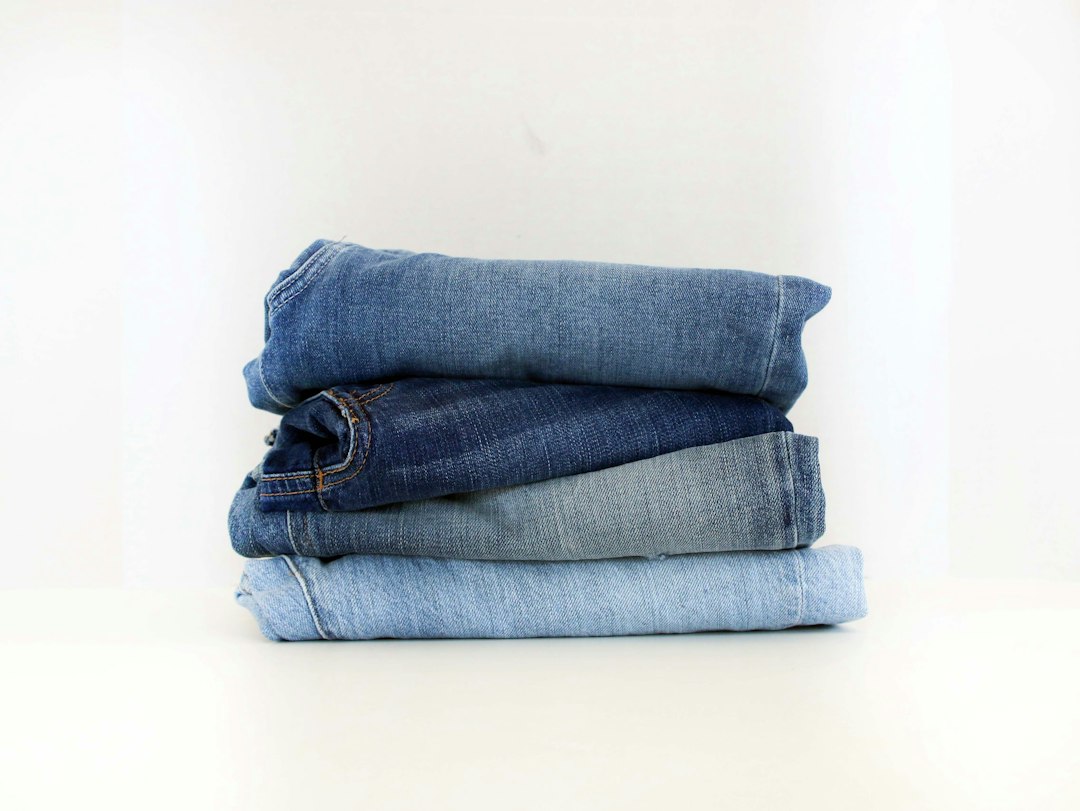 Photo by Claire Abdo on Unsplash
This playbook covers prevention first, then the actual wash-and-dry method, then repair and rescue tactics for damage that’s already happened, and finally the honest question of when a pair of jeans is genuinely done. It’s the same repair-first logic we use for secondhand wool coats and cashmere sweaters—denim just happens to be the piece most people overwash and underrepair.
Why Secondhand Denim Fails Faster Than New Denim
New denim has a protective layer of sizing (a starch-based finish applied during manufacturing) and unbroken cotton fibers. Secondhand denim has neither. What it does have is a wash history you can’t see, and that history matters more than the label.
The three invisible stressors
Fiber fatigue. Cotton fibers in denim break down with every wash cycle, not just every wear. A pair of jeans washed weekly for five years has been through roughly 260 agitation cycles before it reaches your closet. The fibers are thinner, the twill structure is looser, and the indigo has bonded unevenly to what’s left.
Residual shrinkage. Most denim is sanforized (pre-shrunk), but vintage denim—especially anything made before the 1990s—often isn’t. If a pair has already shrunk once, a hot wash can shrink it again. If it hasn’t, your first hot wash might be the one that takes it from “perfect” to “unwearable.”
Hidden repairs and weak points. Thrifted jeans frequently carry invisible mends, thinning at the crotch seam, or stressed belt loops. These fail catastrophically under heat and agitation. A belt loop that’s fine on a cold hand wash will tear off in a hot machine cycle.
What this means for your routine
You’re not maintaining new denim. You’re maintaining denim that’s already been through a lifecycle. That means fewer washes, colder water, gentler detergent, and air drying—every time, no exceptions.
Prevention: The Habits That Keep Denim Out of the Wash
The best way to preserve secondhand denim is to wash it less. Denim was designed to be worn hard and washed rarely; the “wash after every wear” instinct comes from underwear and t-shirts, not jeans.
Spot-clean instead of full-washing
Most marks on denim—coffee drips, food splatter, deodorant transfer—are surface-level and come out with a damp cloth and a drop of mild soap. Blot, don’t rub, and let it air dry. A full wash for a single spot is like dry-cleaning a shirt because of one wrinkle.
Freeze, don’t wash, for odor
If jeans smell faintly of the previous wear but aren’t visibly soiled, seal them in a zip bag and freeze them overnight. This doesn’t sanitize the way a wash does, but it does neutralize odor-causing bacteria temporarily. It buys you two or three more wears—which, over the life of the jeans, is dozens of avoided wash cycles.
Rotate between two pairs
Denim needs 24 hours to recover its shape after a wear. Rotating between two pairs means each gets a rest day, which reduces stress on the knees, seat, and waistband. If you only own one pair of jeans, this is your sign to find a second—and our secondhand cashmere shopping checklist covers the same “inspect before you buy” logic that applies to denim.
Protect the vulnerable points before they fail
Before you wear a newly thrifted pair, run a quick reinforcement pass: a few hand stitches at the top of each back pocket corner, a reinforcing stitch at the belt loops, and a check of the crotch seam for thinning. Five minutes of prevention saves a repair later.
The Wash-and-Dry Method for Vintage and Thrifted Jeans
When denim genuinely needs a wash—visible soil, stretched-out knees that won’t recover, or a full season of wear—this is the method. It’s slower than a machine cycle, but it’s the difference between jeans that last two more years and jeans that last ten.
Step 1: Turn them inside out and close everything
Turn the jeans inside out to protect the outer indigo from friction. Zip the fly, button the waist, and check pockets for anything you forgot. This prevents the zipper from snagging the fabric and the waistband from stretching.
Step 2: Choose cold water, always
Cold water (below 30°C / 86°F) preserves indigo dye and prevents shrinkage in unsanforized denim. Warm or hot water is the fastest way to fade a pair of jeans unevenly—the areas that get the most friction in the wash (thighs, seat, knees) lose dye faster than the rest.
Step 3: Use a gentle, pH-neutral detergent
Regular laundry detergent is formulated for heavy soil and contains enzymes and brighteners that strip indigo. Use a pH-neutral, enzyme-free detergent—Ecover Delicate or The Laundress Denim Wash both work well—and use half the recommended amount. Less detergent means less residue, and residue is what makes denim feel stiff after drying.
Step 4: Hand wash, or use the machine’s most delicate cycle
Hand washing is ideal: fill a basin with cold water and a capful of detergent, submerge the jeans, and gently knead for three to five minutes. Don’t scrub or wring. If you must use a machine, choose the delicate cycle with a low spin speed and no other items in the drum. Never wash denim with towels, zippers, or anything with hardware.
Step 5: Rinse cold and press, don’t wring
Rinse in cold water until the water runs clear. To remove excess water, lay the jeans flat on a clean towel, roll the towel up with the jeans inside, and press down. Never twist or wring—wringing distorts the twill and creates permanent creases.
Step 6: Air dry flat or hanging, away from direct sun
Lay the jeans flat on a drying rack or hang them by the waistband (not the belt loops, which will stretch). Keep them out of direct sunlight, which fades indigo. Never put secondhand denim in a dryer—heat is the single most damaging thing you can do to vintage cotton. If you want to soften stiff denim after drying, wear them for twenty minutes; body heat does the job.
A note on frequency
Wash secondhand denim every 8–12 wears, or when visibly soiled. If you wear jeans daily, that’s roughly once a month. If you rotate between pairs, every six to eight weeks. More frequent washing is the most common cause of premature denim death.
Rescue Tactics: Repairing Fading, Tears, and Weak Seams
Damage happens even with careful care. The question is whether it’s repairable—and most denim damage is.
Fading and uneven indigo loss
If the thighs or seat have faded faster than the rest, you have two options: embrace the patina, or overdye. Overdyeing with a fiber-reactive dye (Rit DyeMore works on cotton) can restore depth, but it’s a commitment—you’ll need to dye the entire garment for even color, and the result won’t match the original. For most people, patina is the point of vintage denim. Wear it.
Crotch blowouts and thinning seams
The crotch is the first place denim fails, especially on jeans worn regularly. A small thinning area can be reinforced with an iron-on denim patch on the inside (no visible stitching) or a hand-sewn running stitch. For a full blowout, take the jeans to a tailor who specializes in denim repair—a good denim darning job costs $25–45 and adds years to the pair. Nudie Jeans offers free repairs on their own denim; for other brands, look for a local denim specialist rather than a general alterations shop.
Torn belt loops and pocket corners
These are the easiest repairs. A few minutes with a needle and heavy-duty thread (or a tailor’s $10 fix) restores them. Reinforce the repair with a small bar tack—a dense zigzag stitch—at the stress point.
Holes and rips
Small holes can be darned with matching thread using a simple running stitch. Larger rips need a patch. For visible repairs on vintage denim, use a contrasting thread and embrace the visible mending aesthetic—it’s a legitimate style choice, not a compromise. Our suede boot care playbook follows the same repair-first philosophy if you want to apply this logic across your wardrobe.
When to bring in a professional
If the damage involves the waistband structure, the fly, or multiple areas at once, a professional denim tailor is worth the cost. A $40 repair on a pair of jeans you’ll wear for another five years is better value than a $70 replacement pair that will fail in two.
Storage: How to Keep Denim From Deteriorating Between Wears
How you store denim matters as much as how you wash it. Poor storage causes creasing, mildew, and moth damage—yes, moths eat cotton, especially cotton blended with wool or elastane.
Fold, don’t hang
Hanging denim by the belt loops stretches them out and creates shoulder-like bumps at the waistband. Fold jeans in half lengthwise, then in thirds, and stack them on a shelf. If you’re short on shelf space, hang them folded over a padded hanger or a trouser bar—never by the loops.
Keep them dry and dark
Denim should be stored in a cool, dry place away from direct light. Damp environments encourage mildew, which stains indigo permanently. If you live in a humid climate, add a silica gel packet to the storage area.
Rotate seasonally
If you’re storing jeans for the off-season, wash them first (never store dirty denim), fold them, and place them in a breathable cotton bag—not plastic, which traps moisture. Cedar blocks or lavender sachets deter moths without chemicals. If you’re storing multiple pairs, keep them separated so hardware doesn’t snag fabric.
The one thing not to do
Don’t store denim in vacuum-sealed bags. The compression crushes the twill structure and creates permanent creases that won’t relax with wear.
When Replacement Is Actually Justified
There’s a point where repair stops making sense. Here’s how to know.
Replace if: the denim has dry rot (the fabric tears with light pressure, not from stress), the waistband structure has failed and can’t be rebuilt, or the repairs needed would cost more than a comparable secondhand replacement.
Repair if: the damage is localized (crotch, pockets, belt loops, hems), the fabric still has tensile strength (pull gently—if it stretches and recovers, it’s fine), and the fit is still good.
The honest math: a $40 repair on jeans you’ll wear twice a week for three more years costs about $0.13 per wear. A $60 replacement pair that lasts eighteen months costs about $0.38 per wear. Repair almost always wins—unless the fabric itself is failing.
If you do replace, buy secondhand again. The same durability logic that applies to sustainable sleepwear applies to denim: a well-made pair from a decade ago will outlast most new fast-fashion denim, and it’s already survived its first life.
The Care Routine Worth Keeping
Secondhand denim rewards restraint. Wash it rarely, wash it cold, dry it flat, repair it early, and store it folded. That’s the entire playbook—and it’s the same routine that keeps vintage silk scarves and secondhand wool coats alive for decades.
Your next step: pull out the pair of thrifted jeans you’ve been avoiding washing because you’re afraid of ruining them. Turn them inside out, check the crotch seam and belt loops for weak points, and reinforce anything that looks stressed. Then set a wash reminder for every ten wears. That’s it. The jeans will tell you the rest.