The mistake usually happens in the first ten minutes after a secondhand silk blouse comes home. It gets tossed in the laundry basket with everything else, or dunked in a sink of hot water and detergent “just to be safe,” or hung on a plastic hanger in a crowded closet where it slowly creases into a permanent map of everything it touched. By the time the damage shows up — a dulled patch, a faint watermark ring, a seam that’s started to pull — the piece has usually already been worn twice and loved once.
Silk and satin are not fragile the way people assume. They’re actually strong fibers. What they are is reactive. They respond to water temperature, to the pH of what touches them, to how they’re dried, to the weight of the hanger they sit on. Treat them like a delicate you’re afraid of, and you’ll under-clean them and let oils set in. Treat them like a cotton tee, and you’ll strip the sheen in one wash. The middle path is specific, and it’s what this playbook covers — for slips, blouses, and scarves, whether they’re true silk, silk-blend, or the polyester satins that make up so much of the secondhand market.
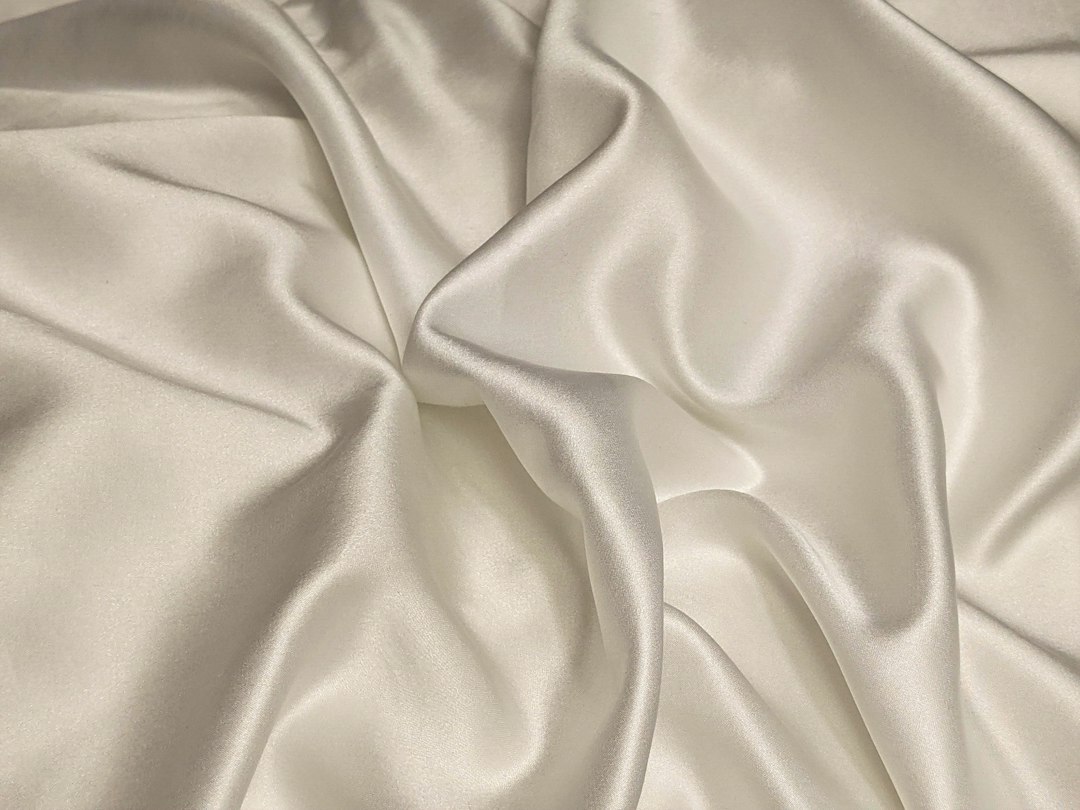 Photo by Susan Wilkinson on Unsplash
First, Know What You Actually Bought
Before any care decision, confirm the fiber. This matters more for silk and satin than almost any other category, because “satin” is a weave, not a fiber — a satin slip can be 100% silk, 100% polyester, or a blend, and each behaves differently in water.
Check the content tag first. If it’s missing or faded, do a burn test on a loose interior thread (a seam allowance thread works): silk smells like burnt hair and self-extinguishes into a crushable ash; polyester melts into a hard bead and smells chemical. If you can’t test, assume the gentlest route.
A quick reference for what you’re likely dealing with:
| Fiber | Hand feel | Water behavior | Care reality |
|---|---|---|---|
| 100% silk | Cool, dry, slightly grippy | Weakens ~20% when wet | Hand wash or delicate cycle, never wring |
| Silk blend (silk + cotton/viscose) | Softer, less crisp | More forgiving wet | Hand wash cool, lay flat |
| Polyester satin | Slick, warm, static-prone | Unchanged when wet | Machine delicate or hand wash, low heat only |
| Acetate satin | Cool, heavy drape | Weakens when wet, prone to creasing | Hand wash only, never hot |
Vintage silk — anything pre-1990s — often has weaker seams and older dyes. Assume it needs cooler water and shorter contact time than a modern piece. If you’re building a care routine across a whole secondhand wardrobe, it helps to think in categories rather than individual garments; our secondhand denim care playbook uses the same logic for a much tougher fiber, and the structure transfers.
Prevention: The Habits That Keep Silk Out of Trouble
Most silk damage isn’t caused by a single bad wash. It’s caused by accumulation — deodorant residue, perfume oils, body lotion, and sweat sitting on the fabric between wears, then getting heat-set in a dryer or a hot closet.
Wear a barrier. For slips and blouses worn against skin, a thin cotton camisole underneath absorbs most of the oil and sweat that would otherwise bond to the silk. This one habit roughly doubles the number of wears between washes.
Apply fragrance and lotion first, then dress. Alcohol-based perfume and most body lotions contain ingredients that dull silk’s luster on contact. Let them dry completely before the fabric touches your skin.
Air between wears, don’t rehang in a closet. After wearing, hang the piece on a padded hanger in open air — a doorway, a hook, a drying rack — for a few hours before it goes back in the closet. This evaporates surface moisture and prevents the faint sour smell that comes from storing worn silk in a dark, closed space.
Rotate hangers. Wire and thin plastic hangers concentrate stress on the shoulder seams of slips and blouses. Over a season, they’ll stretch the bias and create shoulder points that never press out. Padded or wide wooden hangers distribute the weight.
Keep scarves folded, not hung. A silk scarf on a hanger slides, creases, and snags. Fold it loosely in a drawer or a breathable box. If you have a collection, our silk scarf care guide goes deeper on storage and print preservation specifically.
The Wash: Step-by-Step for Slips, Blouses, and Scarves
Silk can be washed. In fact, it should be — dry cleaning solvents can be harsh on older dyes and often leave a chemical residue that dulls the sheen over time. The exception is structured or heavily embellished pieces, or anything with a lining that’s a different fiber.
What you need
- A pH-neutral detergent. Silk is protein-based, like wool, so alkaline detergents (most standard laundry detergents) degrade it over time. Use a wool-safe or silk-specific wash: Soak Wash, Eucalan, or Heritage Park Silk & Wool Detergent are all reliable and widely available. AFFILIATE_LINK_SOAK_WASH if you want a starting point.
- Two clean basins or a clean sink.
- A white towel for blotting.
- A drying rack or a flat surface with a breathable towel.
The method
- Fill a basin with cool water — lukewarm at most, never hot. Hot water sets protein stains and can shrink silk.
- Add a capful of pH-neutral detergent and agitate gently to distribute.
- Submerge the garment and press it down with your palms. Do not scrub, twist, or rub. Let it soak for 3–5 minutes for a blouse or slip, 2–3 minutes for a scarf.
- Drain and refill with clean cool water for the rinse. Press the garment against the bottom of the basin to release soap. Repeat the rinse once more if the water still feels slippery.
- Remove without wringing. Lift the garment in both hands, supporting the weight, and lay it on a white towel.
- Roll the towel with the garment inside, pressing gently to absorb excess water. Do not twist the roll.
- Lay flat to dry on a rack or a clean towel, reshaping the garment to its original lines. Keep it out of direct sun — UV fades silk dyes fast.
For polyester satin, you can machine wash on a delicate cycle in a mesh bag with cold water and the same pH-neutral detergent, then hang to dry. Skip the dryer entirely; heat is what kills the sheen on synthetics.
A note on washing machines
If you must machine-wash silk, use a mesh lingerie bag, a delicate cycle, cold water, and the lowest spin setting. Never wash silk with zippers, hooks, or heavy knits — the abrasion is what causes the dull patches people mistake for age.
 Photo by Jatin Gajjar on Unsplash
Stain Rescue: What Works, What Ruins the Fabric
The instinct to rub a stain is the single most destructive thing you can do to silk. Rubbing breaks the fiber surface and creates a permanent dull spot that no amount of washing will fix. Blot, don’t rub. And act fast — silk absorbs oils within minutes.
Oil and grease (food, lotion, makeup): Blot with a clean white cloth. Sprinkle cornstarch or baby powder on the spot and let it sit 15–30 minutes to draw out the oil, then brush off. If a mark remains, apply a drop of pH-neutral detergent directly to the spot and hand wash as above. Do not use dish soap — it’s too alkaline for silk.
Deodorant and sweat: These leave yellow or white residue that bonds over time. Treat with a diluted white vinegar solution (1 part vinegar to 4 parts cool water), blot, then wash normally. Vinegar is acidic, which is compatible with silk’s protein structure.
Perfume and alcohol: These can lift dye, not just stain the surface. Blot immediately with cool water. If the dye has shifted, the damage is usually permanent — this is one of the few cases where replacement is the honest answer.
Water spots: If a splash dries into a ring, don’t spot-treat it. Rewet the entire panel evenly by hand washing the whole garment, then dry flat. Silk doesn’t like partial wetting.
Ink: Isopropyl alcohol on a cotton swab, applied to the spot only, blotted — not rubbed. Test on an interior seam first. This works better on polyester satin than on silk, where it can lift dye.
Mildew or storage smell: A diluted white vinegar soak (1:4) for 10 minutes, then a normal wash. Do not use bleach, oxygen or otherwise — it will yellow silk.
What to never use on silk or satin: chlorine bleach, oxygen bleach, enzyme-based detergents (they digest protein fibers), hot water, fabric softener, and dryer sheets. Fabric softener coats the fiber and kills the sheen permanently.
When to Repair, When to Retire
Silk and satin have a long lifespan if cared for, but they do reach a point where the cost of intervention exceeds the value of the piece. Here’s a rough line:
Worth repairing: Small pulls or snags (use a fine needle to gently work the thread back into the weave), minor seam separations, small moth holes in a scarf (a reweaver can often blend them invisibly), and hem letting down. A slip with a stretched strap is a five-minute fix.
Judgment call: Fading across a large panel, especially on a printed scarf or a colored blouse. If the fade is even and the piece is a solid color, it can sometimes read as intentional patina. If it’s patchy, it usually can’t be saved.
Retire it: Shattered silk (where the fabric tears under light pressure — a sign the fiber has degraded from age or past heat damage), extensive dye bleed from a bad wash, or a smell that survives two washes. These pieces aren’t worth the emotional energy. If the fabric is still beautiful, consider repurposing it — a scarf into a hair tie, a slip into a lining for a tote.
For a broader framework on when repair is worth the effort across a secondhand wardrobe, our secondhand wool coat repair playbook applies the same repair-first logic to a very different fiber.
The Care Routine Worth Keeping
The routine that actually holds up over years isn’t elaborate. It’s four habits: air between wears, wash with pH-neutral detergent in cool water, dry flat away from sun, and store folded or on padded hangers away from light and abrasion.
If you do those four things, a secondhand silk blouse will outlast most of the fast-fashion pieces in your closet, and it will look better doing it. The sheen you noticed on the rack — the reason you bought it — is a function of fiber integrity, and fiber integrity is a function of consistency, not intensity.
Start with one piece this week. Take the silk slip or scarf you wear most, wash it properly by hand, dry it flat, and store it folded. Then notice how it feels the next time you put it on. That’s the whole playbook.