You’ve finally done it. You replaced the cheap plastic poncho that ripped after three wears, and you’re ready to invest in a raincoat that will last. But every time you search for “sustainable raincoat,” you hit a wall of technical jargon: PFC-free, DWR, PFAS, recycled nylon, e-PE membranes. It sounds less like shopping and more like a chemistry exam.
The real tension isn’t finding a raincoat that keeps you dry. It’s finding one that keeps you dry without leaching persistent chemicals into the water table, that fits over your commute layers, and that doesn’t require a second mortgage. The market has finally caught up to the fact that you shouldn’t have to choose between staying dry and staying clean. Here are six brands that have done the homework, so you can just pick the one that fits your life.
Why Your Raincoat’s Chemistry Matters More Than the Color
Before we compare brands, it helps to understand why “waterproof” and “sustainable” have historically been opposites. Most conventional rainwear relies on per- and polyfluoroalkyl substances (PFAS) to create that beading effect on the outer fabric. These “forever chemicals” are incredibly effective at repelling water—and incredibly persistent in the environment and your body.
The good news? The outdoor industry has been pivoting hard. Patagonia, Burton, Jack Wolfskin, and Vaude committed to eliminating PFCs (a subset of PFAS) from all products by 2020. VF Corporation (parent of The North Face and Timberland) pledged to go PFC-free by 2025. Today, the best sustainable raincoats use either a PFAS-free DWR (durable water repellent) coating or a physical waterproof membrane like polyurethane that doesn’t require chemical treatment at all.
When you’re comparing coats, the key specs to look for are:
- PFAS/PFC-free DWR – The coating that makes water bead up and roll off
- Recycled content – Look for 100% post-consumer recycled polyester or nylon
- Fair labor certification – Fair Wear, Fair Trade, or B Corp status
- Membrane type – e-PE (expanded polyethylene) is the new gold standard; polyurethane is also solid
Now, let’s get into the coats that actually deliver on all fronts.
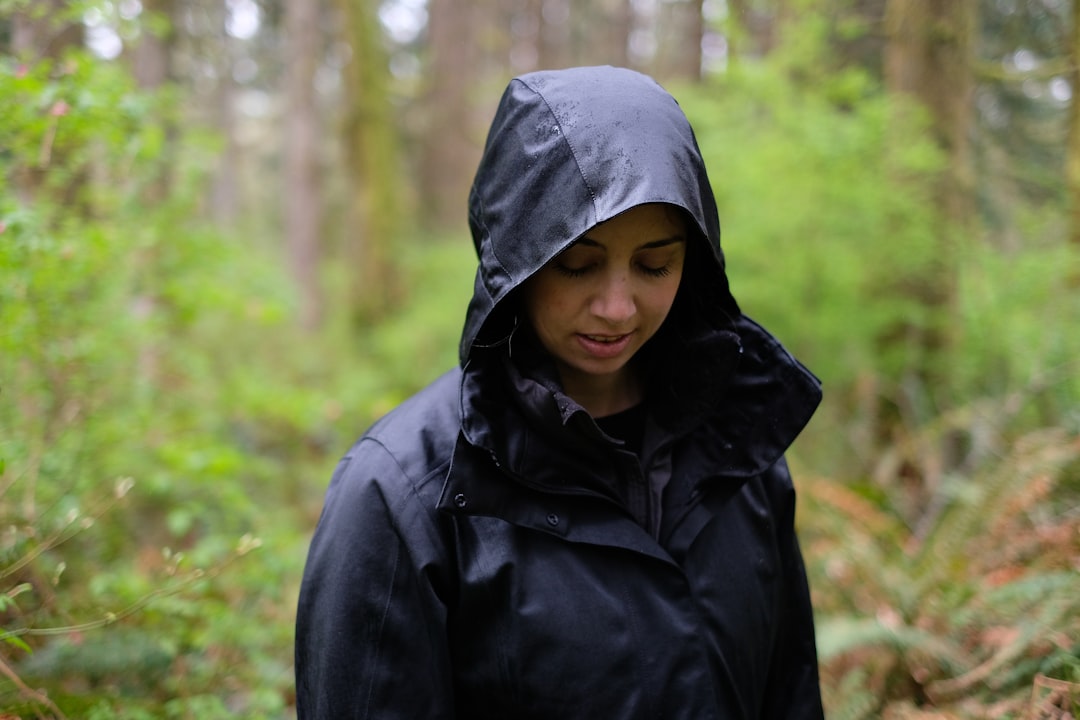 Photo by Steve Gale on Unsplash
The Six Brands Worth Comparing
Patagonia: The Gold Standard for Durability and Repairability
Patagonia’s Torrentshell 3L jacket has been a staple for years, and the 2026 iteration is the most sustainable yet. It uses a 100% recycled nylon face fabric, a PFAS-free DWR finish, and a H2No® Performance Standard membrane that is fully waterproof and breathable. The three-layer construction means the inner liner is bonded to the membrane and outer shell, so there’s no separate mesh lining to snag or degrade.
What sets Patagonia apart isn’t just the specs—it’s the Ironclad Guarantee. If the coat ever fails, they repair it for free. If they can’t repair it, they’ll replace it. This is the single most sustainable thing a brand can do because it keeps the coat in use for decades. The Torrentshell also packs into its own pocket, making it ideal for commuters who stash a raincoat in their bag “just in case.”
Price: $179+ Key certifications: Fair Trade Certified™ sewn, 1% for the Planet, B Corp Best for: Commuters who want a no-compromise workhorse they can send in for repairs
Fjällräven: The Waxed-Cotton Alternative for City Style
If you hate the crinkle of technical shells, Fjällräven’s G-1000 fabric offers a different path. The brand’s Eco-Shell jackets use recycled polyester and a PFAS-free wax coating that you can reapply at home. The High Coast Hydratic jacket is a standout for urban commuters: it’s lightweight, packable, and uses a polyurethane membrane that is completely free of fluorocarbons.
The trade-off is breathability. Waxed and PU-coated jackets don’t ventilate as well as e-PE membranes, so you’ll want to size up if you plan to layer thick sweaters underneath. But for the city cyclist or dog walker who values a matte, natural look over technical flash, Fjällräven’s aesthetic is hard to beat. The brand is also a member of the Fair Labor Association and uses recycled materials across its outerwear line.
Price: $120+ Key certifications: Fair Labor Association member, uses recycled polyester Best for: Style-conscious commuters who prefer a natural look and don’t mind reapplying wax
Cotopaxi: Bright Colors, Recycled Materials, and a Social Mission
Cotopaxi has built a cult following for its vibrant color-blocked designs and its commitment to fighting poverty. The Tiempo Rain Jacket is their flagship: a three-layer shell made from 100% recycled polyester with a PFAS-free DWR. It’s lightweight, fully seam-taped, and has a two-way front zipper that’s a godsend for sitting on the train or biking.
What makes Cotopaxi genuinely different is their Gear For Good model. They donate 1% of revenue to social impact initiatives, and their factory in Vietnam is Fair Trade Certified™. The Tiempo also has a stowaway hood and pit zips for ventilation, which matters more than you think when you’re walking from a humid subway platform into a rainstorm.
Price: $175+ Key certifications: Fair Trade Certified™, 1% for the Planet, B Corp Best for: Anyone who wants a raincoat that sparks joy and funds community programs
Quince: The Budget-Friendly Entry Point Without Greenwashing
Quince has disrupted the sustainable fashion space by offering direct-to-consumer basics at remarkably low prices. Their Packable Rain Jacket is made from 100% recycled polyester with a PFAS-free DWR and a waterproof/breathable membrane. It’s lightweight, packs into its own pocket, and costs a fraction of the premium brands.
The catch? Quince doesn’t have the same repair program as Patagonia, and their supply chain transparency isn’t as deep. But for the reader who is starting their conscious wardrobe and needs a functional raincoat under $100, Quince is a solid entry point. The fit is slightly more relaxed than Patagonia’s, which works well for layering over blazers or cardigans.
Price: $79.90 Key certifications: Uses recycled materials, OEKO-TEX® certified Best for: Budget-conscious shoppers who want a functional raincoat without the premium price tag
Kampos: The Recycled-Bottle Innovation
Kampos is a smaller brand that has earned a “Good” rating from Good On You for its environmental and labor practices. Their Rain Jacket is made from recycled plastic bottles (rPET) and features a PFAS-free DWR. The fabric is surprisingly soft for a raincoat—it doesn’t have that stiff, crinkly feel that many shells have.
What we like most is the fit. Kampos designs for a more tailored silhouette, so the jacket doesn’t billow in the wind. The hood is helmet-compatible (useful for cyclists) and the cuffs are adjustable. It’s not as fully featured as the Patagonia Torrentshell—no pit zips, for instance—but for light to moderate rain on the commute, it’s more than adequate.
Price: $150+ Key certifications: Fair Wear Certified, 1% for the Planet Best for: Cyclists and commuters who want a tailored, non-bulky fit
Vaude: The European Leader in PFC-Free Innovation
Vaude is a German brand that has been pushing the sustainability envelope for years. Their Moena Jacket is made from recycled polyester with a Ceplex™ Green membrane that is completely PFC-free. The brand has been PFC-free across all products since 2020, and they manufacture exclusively in Fair Wear Certified factories.
The Moena is a solid mid-range option with thoughtful details: a stowaway hood, inner pocket, and adjustable hem. It’s slightly heavier than the Quince or Kampos options, but the fabric feels more substantial. If you’re in the UK or Europe, Vaude is widely available and often goes on sale at the end of the season.
Price: $200+ Key certifications: Fair Wear Certified, bluesign® certified, Green Button certified Best for: European readers or anyone who wants a rigorously certified, PFC-free shell
 Photo by teleterapia.fi on Unsplash
Quick Comparison Table
| Brand | Model | Price | Recycled Content | PFAS-Free? | Certifications | Best For |
|---|---|---|---|---|---|---|
| Patagonia | Torrentshell 3L | $179+ | 100% recycled nylon | Yes | Fair Trade, B Corp, 1% FTP | Durability & repairability |
| Fjällräven | High Coast Hydratic | $120+ | Recycled polyester | Yes | Fair Labor Association | City style & natural look |
| Cotopaxi | Tiempo Rain Jacket | $175+ | 100% recycled polyester | Yes | Fair Trade, B Corp, 1% FTP | Colorful design & social mission |
| Quince | Packable Rain Jacket | $79.90 | 100% recycled polyester | Yes | OEKO-TEX® | Budget-friendly entry |
| Kampos | Rain Jacket | $150+ | Recycled plastic bottles | Yes | Fair Wear, 1% FTP | Tailored fit for cyclists |
| Vaude | Moena Jacket | $200+ | Recycled polyester | Yes (PFC-free since 2020) | Fair Wear, bluesign® | Rigorous certification & EU availability |
How to Choose Your Best Match
You don’t need to buy six raincoats. You need the one that matches your specific commute. Here’s how to narrow it down:
-
Assess your rain exposure. Do you walk 10 minutes to the train, or bike 45 minutes in heavy rain? For short urban walks, a lighter coat like Quince or Kampos works. For long, wet commutes, invest in the Patagonia Torrentshell for its superior waterproofing and breathability.
-
Check your layering. If you wear thick wool sweaters or blazers under your raincoat, size up—especially with Fjällräven and Kampos. Patagonia and Cotopaxi run slightly roomier.
-
Consider your repair culture. Patagonia’s repair program is unmatched. If you want a coat that can be fixed for life, that’s your pick. If you’re comfortable doing your own wax touch-ups, Fjällräven gives you that control.
-
Match your values to the certification. Fair Trade Certified™ ensures the people who made your coat were paid fairly. Fair Wear does similar work but is more common in Europe. Both are excellent. Just avoid coats with no labor certification at all.
-
Don’t forget the care. A raincoat’s sustainability depends on how you treat it. Wash it sparingly (only when visibly dirty) using a specialized tech wash, and reapply DWR spray as needed. For more on extending the life of your outerwear, check out our Care Playbook for Stretchy Synthetics—the same principles apply to your raincoat’s waterproof membrane.
Your Next Step: Test the Fit (and the Zipper)
The best sustainable raincoat is the one you actually wear. Before you buy, visit a store or order two sizes to compare. Walk around in the coat for five minutes. Raise your arms. Sit down. Does the hood stay on when you turn your head? Does the front zipper snag at the hem?
If you’re thrifting instead of buying new, our Secondhand Shopping Checklist will help you inspect seams, zippers, and DWR performance before you commit. A used Patagonia Torrentshell that’s been properly cared for can easily give you another decade of service.
And if you’re still deciding between a raincoat and a more versatile shell, remember that the principles of What to Buy Secondhand vs. New for a Sustainable Wardrobe apply here: buy the raincoat new if you need specific technical features, but don’t overlook a high-quality secondhand shell that can be re-proofed with a PFAS-free DWR spray.
Stay dry, stay clean, and wear it kindly.