You’ve got the invite: mulled wine at six, a friend’s annual Christmas market crawl, and a forecast that reads “feels like -3°C.” You open your closet and face the usual winter-market trap: the cute coat that’s too thin, the sweater that’s too bulky to layer, and the boots you wore last year that left your toes numb by the second stall. The easy fix is to buy something new—a “proper” winter coat, a chunky knit, a pair of fleece-lined boots. The smarter fix is to build three outfits from what you already own, layered in a system that traps heat without turning you into a marshmallow, and to fill any real gaps secondhand.
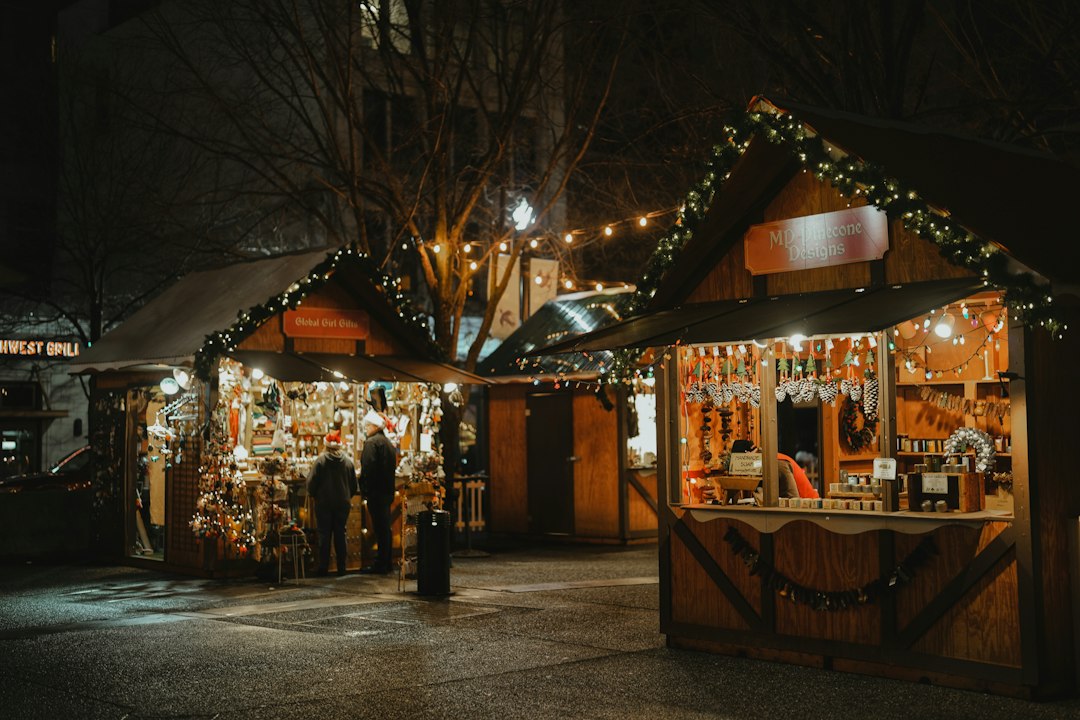 Photo by Jocelyn Allen on Unsplash
The Layer Logic: Why Most Christmas Market Outfits Fail
Christmas markets are a specific kind of cold. You’re standing still for long stretches, then walking briskly between stalls, then ducking into a heated tent, then back out into the wind. Your body temperature swings constantly, and most winter outfits are built for one condition—usually “walking from a car to a door.” That’s why the woman in the beautiful wool coat is shivering by the bratwurst stand while the woman in the slightly frumpy puffer is comfortably sipping Glühwein.
The fix is a three-layer system that you can adjust as you move through the evening:
Base layer: Thin, close-fitting, and moisture-wicking. This is the layer that touches your skin and manages sweat when you’re inside a crowded tent. A merino or silk base layer is ideal, but a fitted cotton long-sleeve tee works for shorter outings. Avoid bulky knits as your base—they trap heat but don’t regulate it, and they’re miserable once you step indoors.
Mid layer: The insulating layer. This is your sweater, your fleece, your quilted vest. It should be warm but not so thick that it restricts movement or makes you sweat. A mid-weight merino sweater, a cashmere blend, or a thin down vest are all good choices. This is the layer you’ll remove when you duck into a heated tent.
Outer layer: Windproof and water-resistant. This is non-negotiable for a Christmas market, because wind is what makes cold feel unbearable. A wool coat works if it’s tightly woven and long enough to cover your hips, but a puffer or a waxed jacket is more practical. The outer layer doesn’t need to be the warmest piece—it needs to block wind and shed light rain or snow.
The magic of this system is that each layer has a job, and you can add or remove layers as the evening progresses. You’re not dressing for one temperature; you’re dressing for five.
The pieces that do the most work
Before you think about specific outfits, identify the pieces in your closet that fit these roles. You likely already own most of them:
- A thin base layer (merino, silk, or technical fabric)
- A mid-weight knit sweater (merino, cashmere, or a wool blend)
- A windproof outer layer (puffer, wool coat, or waxed jacket)
- Water-resistant boots with a grippy sole
- A hat that covers your ears, gloves that let you hold a mug, and a scarf that blocks wind
If you’re missing one of these, that’s the piece to look for secondhand—not a whole new outfit. For boots specifically, the 5-step shopping checklist for secondhand winter boots covers sole condition, leather quality, and fit so you don’t end up with another pair that leaves your toes numb.
Outfit 1: The Wool Coat and Knit Formula
This is the outfit for the woman who wants to look put-together without feeling like she’s wearing a sleeping bag. It works best for evening markets, city-center locations, and any outing where you’ll be walking on paved ground rather than tramping through slush.
The formula: Merino base layer + mid-weight crewneck sweater + long wool coat + wool trousers or dark jeans + leather boots + scarf + hat + gloves.
The key here is the wool coat. A good wool coat—ideally a blend with at least 60% wool—blocks wind far better than synthetic coats and looks more polished than a puffer. If you’re buying secondhand, check the label for wool content and inspect the lining for tears. The secondhand blazer quality checklist has a section on evaluating wool garments that applies to coats too: check the seams, the lining, and the weight of the fabric.
For the sweater, choose something mid-weight—not a chunky cable knit, which will make you sweat indoors, and not a paper-thin cashmere, which won’t insulate. A merino crewneck or a cashmere blend in a neutral color (cream, grey, navy, camel) will work with everything else in your closet. If you’re shopping for secondhand knitwear, the 5-step shopping checklist for secondhand knitwear covers how to check for pilling, sagging, and itchiness before you buy.
Why it works: The wool coat blocks wind, the sweater insulates, and the base layer manages moisture. When you step into a heated tent, you can unbutton the coat and push up your sleeves without overheating. When you step back out, you button up and you’re warm again.
The boots: Leather boots with a lug sole and a wool or fleece lining. Avoid smooth-soled boots—they’re treacherous on cobblestones and wet pavement. If your boots aren’t waterproof, treat them with a wax or water-repellent spray before you go out. And if you’re buying secondhand boots, check the sole for wear and the leather for cracking.
The accessories: A wool or cashmere scarf that’s long enough to wrap twice, a hat that covers your ears (a beanie or a wool fedora), and gloves that let you hold a mug. Fingerless gloves with a mitten flap are ideal for Christmas markets—you can text, hold a mug, and still keep your fingers warm.
Outfit 2: The Puffer and Fleece Formula
This is the outfit for the woman who prioritizes warmth above all else—the one who wants to stand outside for three hours and not think about the cold once. It’s less polished than the wool coat formula, but it’s more practical for outdoor markets, snowy locations, and any evening where the temperature drops below freezing.
The formula: Thermal base layer + fleece or quilted vest + puffer jacket + jeans or fleece-lined leggings + insulated boots + scarf + hat + gloves.
The puffer is the star here. A good puffer—down or synthetic—traps heat in a way that wool simply can’t match. If you’re buying secondhand, the 5-step shopping checklist for secondhand winter puffer jackets covers how to check for warmth, cleanliness, and value so you don’t end up with a jacket that’s lost its loft.
Underneath the puffer, a fleece or a quilted vest adds warmth without bulk. A fleece pullover is ideal—it’s warm, lightweight, and dries quickly if it gets damp. A quilted vest is slightly more polished and works well if you want to look a bit more put-together.
Why it works: The puffer blocks wind and traps heat, the fleece adds insulation, and the base layer manages moisture. This is the warmest of the three formulas, and it’s the one to choose if you’re going to be outside for a long time or if the temperature is below freezing.
The boots: Insulated boots with a thick sole and a waterproof upper. This is the outfit where you can justify the chunky snow boots—they’re practical, and they’ll keep your feet warm even if you’re standing in slush.
The accessories: A thick wool scarf, a fleece-lined hat, and insulated gloves. This is not the outfit for delicate accessories—go for warmth.
 Photo by Kayle Kaupanger on Unsplash
Outfit 3: The Layered Dress and Tights Formula
This is the outfit for the woman who wants to wear a dress but doesn’t want to freeze—the one who has a holiday party before or after the market and wants one outfit that works for both. It’s the least warm of the three formulas, so it’s best for milder evenings, indoor-outdoor markets, or any outing where you’ll be ducking into heated tents frequently.
The formula: Thermal base layer (top and leggings) + knit dress or midi skirt + sweater layered over or under + wool coat or long puffer + warm tights + boots + scarf + hat + gloves.
The key here is the base layer. A thermal top and thermal leggings under a dress or skirt make all the difference—they’re thin, they’re warm, and they’re invisible. Look for merino or silk base layers, which regulate temperature better than cotton.
Over the base layer, a knit dress or a midi skirt with a sweater tucked in works well. A knit dress is warmer than a woven dress, and it’s more forgiving if you’re layering underneath. If you’re wearing a skirt, choose one that’s long enough to cover your knees—cold knees are miserable.
Why it works: The base layer adds warmth without bulk, the knit dress or skirt provides coverage, and the coat blocks wind. This is the formula to choose if you want to look a bit more dressed up without sacrificing warmth.
The boots: Leather boots with a heel if you’re going somewhere nicer, but make sure they have a grippy sole. Avoid stilettos—cobblestones and wet pavement are not your friends.
The accessories: A scarf that doubles as a wrap if you’re going somewhere nicer, a hat that works with your hairstyle, and gloves that match your coat.
The Comparison Table: Which Formula for Which Evening
| Formula | Warmth Level | Best For | Key Piece | Packing Notes |
|---|---|---|---|---|
| Wool Coat + Knit | Moderate | Evening markets, city centers, paved ground | Long wool coat | Bulky—wear it on the plane if traveling |
| Puffer + Fleece | High | Outdoor markets, snowy locations, below-freezing temps | Puffer jacket | Packable if down; bulky if synthetic |
| Layered Dress + Tights | Moderate | Milder evenings, indoor-outdoor markets, party-to-market | Thermal base layer | Packs small; layer up for warmth |
If you’re traveling to a market—say, a weekend trip to a city with a famous Christmas market—the 5-outfit capsule for a cold-weather city break covers how to pack for four days in one carry-on, including how to layer for different temperatures.
What to Look for Secondhand (and What to Skip)
If you’re filling gaps in your winter wardrobe, here’s where to focus your secondhand shopping:
Worth buying secondhand:
- Wool coats (check for moth holes, lining tears, and missing buttons)
- Merino and cashmere sweaters (check for pilling, sagging, and itchiness)
- Leather boots (check the sole, the leather, and the fit)
- Puffer jackets (check the loft, the zipper, and the cleanliness)
Skip secondhand:
- Base layers (they’re often worn thin and lose their stretch)
- Gloves (they’re often stretched or missing pairs)
- Hats (they’re often stretched or have makeup stains)
For knitwear specifically, the secondhand knitwear repair and refresh playbook covers how to fix pilling, snags, and sagging hemlines—useful if you find a great sweater that needs a little love.
The Repeatable Outfits, Not One-Off Looks
The point of this system isn’t to build three separate outfits—it’s to build a set of layers that work together in different combinations. The base layer you wear with the wool coat is the same base layer you wear with the puffer. The boots you wear with the puffer are the same boots you wear with the dress. The scarf, hat, and gloves work with all three.
That means you’re not buying a new outfit for every market—you’re building a small set of pieces that can be combined in different ways. And when you do need to fill a gap, you’re buying one piece, not a whole new wardrobe.
Here’s the test: can you get dressed for a Christmas market in under five minutes, using only pieces you already own? If the answer is yes, you’ve built the system. If the answer is no, identify the missing piece—the base layer, the windproof coat, the warm boots—and look for it secondhand. One piece at a time.
The next time you’re invited to a market, you won’t need to shop. You’ll open your closet, pull out the layers, and go.