You found it at the bottom of a bin at your local thrift: a silk scarf with a hand-rolled hem, the colors still saturated, the drape fluid and heavy in a way polyester can only imitate. You brought it home, wore it twice, and then did what feels like the responsible thing. You washed it.
Now it’s dull. The surface that once caught light like water looks chalky and flat. The hem has puckered into a ruffled wave. You’re not sure if you ruined it or if this is just what old silk does.
It’s almost always the wash. Silk is a protein fiber, structurally closer to your hair than to cotton, and it reacts to the wrong detergent the way your hair reacts to cheap shampoo: stripped, rough, and stripped of the natural sericin and finish that give it that low, liquid shine. The fix isn’t complicated, but it is specific. Here’s the playbook for thrifted and vintage silk scarves and slips, from the first wash to the tenth year.
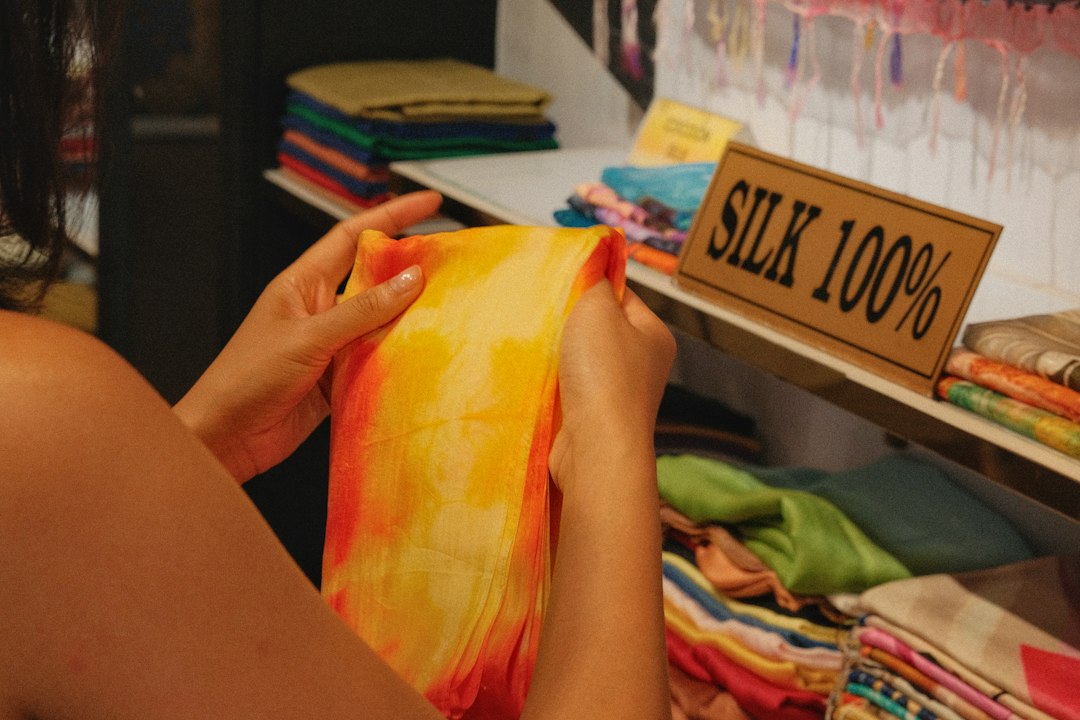 Photo by Quang Tran on Unsplash
Why Secondhand Silk Loses Its Sheen (and What Actually Causes It)
New silk has two things going for it: the fiber itself and the finish applied to it. The fiber is a continuous filament, which is why silk reflects light in one smooth direction instead of scattering it like the short staple fibers in cotton. The finish, often a light starch, gum, or calendaring treatment, amplifies that reflection.
Secondhand silk has usually lost some of the finish already. That’s fine. What kills the remaining sheen is a short list of specific aggressors, and most of them show up in a single wash cycle.
Alkaline detergent. Silk prefers a pH around 4.5 to 5.5, mildly acidic, close to your skin. Most conventional laundry detergents run alkaline, often pH 9 or higher. They strip the finish, roughen the fiber surface, and leave the fabric looking cloudy. This is the single most common cause of a dulled scarf.
Enzymes. Many “gentle” detergents contain protease enzymes, which are designed to break down protein-based stains like grass and blood. Silk is protein. The enzyme can’t tell the difference and will slowly digest the fiber surface, causing pilling, thinning, and a permanently matte finish. Check the label for “protease” or “enzyme” before you pour.
Heat. Hot water and a hot dryer both cause silk to lose luster and shrink. Silk doesn’t felt the way wool does, but the fibers can tighten and the weave can distort.
Mechanical agitation. A normal wash cycle tumbles silk against itself and the drum for 30 to 60 minutes. That friction abrades the surface and is what turns a smooth scarf into something that feels like crepe.
Chlorine and oxygen bleach. Both degrade silk. Chlorine is worse, but oxygen bleach will still dull color and weaken the fiber over repeated use.
Hard water minerals. Calcium and magnesium in hard water deposit onto the fiber and leave a gray cast. If your tap water leaves spots on glass, it’s leaving minerals on your silk.
None of these are irreversible in every case, but the more of them you stack in one wash, the more sheen you lose. The good news, though it’s more of a mechanic’s note than a reassurance, is that most of the damage is surface-level and some of it can be walked back.
Prevention First: Sorting, Storing, and the Habits That Save Sheen
Before you ever get to washing, the way you store and handle silk determines how often you’ll need to wash it at all. Silk is more forgiving than wool when it comes to moths, but it’s more sensitive to light, moisture, and the wrong hanger.
Sort by fiber, not by color
If you’re washing a silk slip alongside cotton pajamas, you’re washing silk in cotton conditions. Cotton likes warm water, agitation, and a normal detergent. Silk likes none of those. Keep silk separate, and if you only have one or two pieces, hand-wash them together in a basin rather than running a machine cycle for two items.
Store folded, not hung, for slips and bias-cut pieces
Bias-cut silk slips and dresses will stretch under their own weight if hung by the shoulders. Fold them and lay them flat in a drawer, or hang them from the side seams using a padded hanger with a fabric strap. Scarves should be folded loosely and stored flat or rolled around a cardboard tube, not knotted on a hook where the fold lines become permanent creases.
Keep silk out of direct light
Ultraviolet light weakens silk fibers and fades dye. A scarf displayed on a sunny wall will lose its color within a season or two. Store in a breathable cotton bag or a drawer away from windows. Don’t use plastic bins for long-term storage; silk needs to breathe, and trapped moisture encourages mildew.
Air between wears
Silk doesn’t hold odor the way synthetics do. A scarf worn over a clean blouse usually just needs to hang in open air for a few hours before going back in the drawer. You can go several wears between washes if you’re not wearing silk against product-heavy skin or in humid conditions.
If you’re building out a care routine for other secondhand natural fibers, the cashmere care checklist covers the same prevention-first logic for wool, and the wool coat care playbook applies it to outerwear.
The Step-by-Step Wash: Hand-Washing Silk Without Stripping It
This is the method that preserves sheen. It takes about 15 minutes of active time and works for scarves, slips, blouses, and any silk piece that isn’t heavily structured or lined.
What you’ll need
- A clean basin or sink
- A pH-neutral or silk-specific detergent. Two that work well and are easy to find: The Laundress Delicate Wash (AFFILIATE_LINK_THE_LAUNDRESS) or Soak Wash in the unscented formula (AFFILIATE_LINK_SOAK). Both are enzyme-free and pH-appropriate for protein fibers. A drop of baby shampoo works in a pinch, but it’s not ideal for repeated use because it’s formulated for hair, not fabric.
- Two clean white towels
- A drying rack or a hanger with a padded bar
Step 1: Test for color bleed
Before washing the whole piece, wet a hidden corner, like the inside of a hem or the back of a seam, and press it against a white paper towel. If color transfers, the dye is unstable and you should wash the piece alone, in cool water, and expect some fading. Vintage silk, especially reds, blues, and greens, is more likely to bleed than modern silk.
Step 2: Fill the basin with cool water
Cool to lukewarm, never hot. If you have hard water, use filtered water or add a tablespoon of distilled white vinegar per gallon to soften it. The vinegar also helps restore the mildly acidic pH silk prefers.
Step 3: Add detergent and submerge
Use about a teaspoon of detergent per gallon of water. Swirl it in, then place the silk in the basin and press it down gently. Don’t wring, scrub, or rub the fabric against itself. Let it soak for 5 to 10 minutes. For a slip with light body oils, 10 minutes is enough. For a scarf with perfume residue, you may need to gently press the fabric between your palms in the water, but still no rubbing.
Step 4: Rinse in cool water
Lift the silk out and drain the basin. Refill with cool water and press the silk through the water to rinse. Repeat until the water runs clear and no suds remain. Two rinses is typical. Don’t run water directly onto the silk; the pressure can distort the weave.
Step 5: Remove water without wringing
Lay the silk flat on a clean white towel. Roll the towel up from one end, with the silk inside, and press down firmly along the roll. The towel will absorb most of the water. Do not twist or wring the roll. Unroll and repeat with a second dry towel if the silk still feels heavy.
Step 6: Dry flat, away from heat and sun
Lay the silk flat on a drying rack or on a clean towel, reshaping it to its original dimensions. Keep it out of direct sunlight and away from radiators or vents. Silk dries relatively quickly, usually within a few hours. Don’t hang a wet slip by the straps; the weight of the water will stretch them.
Step 7: Press while slightly damp
If the silk has dried completely and looks creased, you can press it, but the safest window is while it’s still slightly damp. Use a cool iron on the lowest silk setting, with the silk face down or with a clean cotton cloth between the iron and the fabric. Never press a hand-rolled hem flat; press around it, or use a pressing cloth and light steam to coax the roll back into shape.
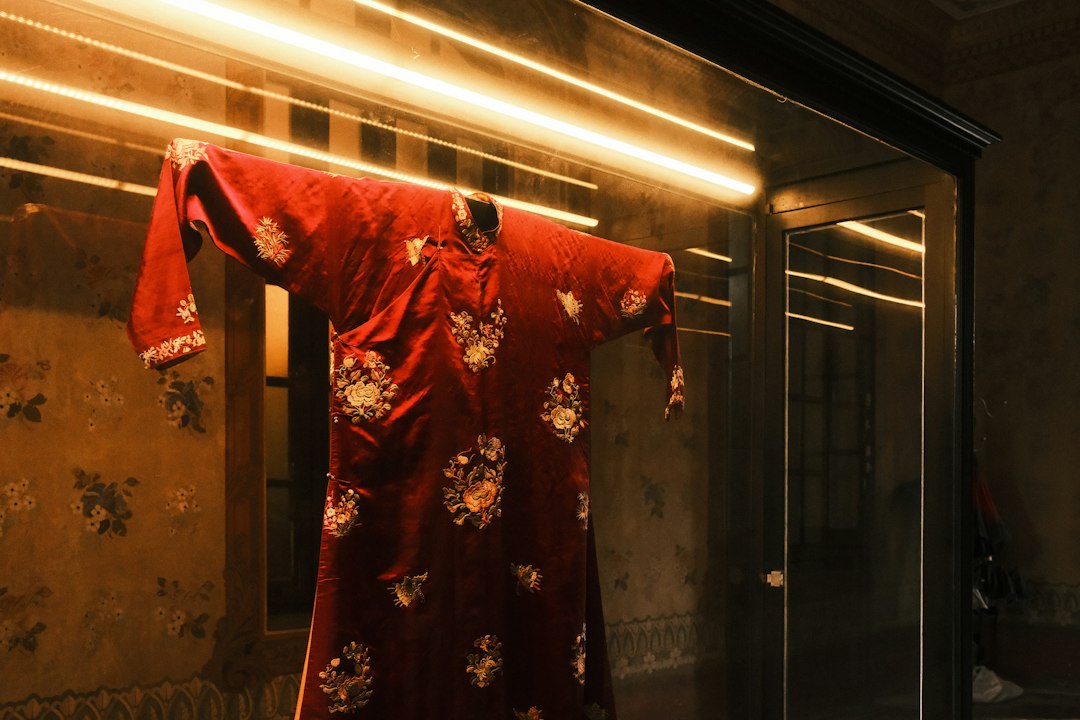 Photo by Nguyen Minh on Unsplash
Rescue Tactics for Silk That’s Already Dulled, Stained, or Puckered
If the sheen is already gone, or the piece has a specific problem, here’s what to try before you write it off.
Dull, chalky surface
This is usually mineral deposit or detergent residue. Soak the piece in cool water with a tablespoon of distilled white vinegar per gallon for 15 minutes, then rinse thoroughly. Vinegar dissolves mineral film and restores the acidic pH. If that doesn’t work, a very dilute silk rinse product like Heritage Park Silk & Wool Wash (AFFILIATE_LINK_HERITAGE_PARK) can help, but vinegar handles most cases.
Water spots and rings
Water spots are mineral deposits left behind when a drop evaporates. Dampen the entire area, not just the spot, and dry it evenly. If the spot persists, a brief soak in vinegar water usually lifts it.
Oil stains and perfume residue
For fresh oil, sprinkle cornstarch or baby powder on the stain and let it sit for 30 minutes to absorb what it can, then brush it off and hand-wash as above. For set-in oil or perfume, a drop of clear dish soap on the stain, worked in gently with your fingertip, then rinsed, is more effective than most stain removers. Test on a hidden area first. Avoid enzyme stain removers on silk entirely.
Puckered or wavy hems
A puckered hem usually means the silk was washed in water that was too warm or dried under tension. You can sometimes relax it by soaking the hem in cool water for 10 minutes, then drying flat and pressing with a cool iron and a pressing cloth. If the hem was hand-rolled and the roll has flattened, a tailor can re-roll it, though the cost may exceed the value of a thrifted scarf. For a slip, a puckered hem is often a sign the fabric has shrunk unevenly; in that case, a tailor can re-hem it slightly shorter.
Persistent creases
Hang the piece in a steamy bathroom for 20 minutes, then press with a cool iron and pressing cloth. Steam alone rarely removes a hard crease in silk, but it softens the fiber enough for a light press to finish the job.
Color fading
Fading from UV light is not reversible. If a scarf has faded unevenly, you can sometimes overdye it, but that’s a project, not a rescue. For a slip, fading is usually only visible in direct comparison, and it’s often worth keeping.
When Replacement Is Actually Justified
Silk is durable. A well-cared-for scarf can last decades, and many vintage pieces outlast their modern equivalents because the fiber quality was higher. But there are a few situations where repair or continued care doesn’t make sense.
The fiber is shattering. Hold the silk up to a light. If you can see thin, weak spots where the fabric looks like it’s about to tear, or if it tears with light pressure, the fiber has degraded. This happens with silk that’s been stored in heat or exposed to chlorine. It’s not repairable.
The damage is structural, not cosmetic. A slipped seam on a slip is a five-minute fix. A torn bias panel or a shredded underarm is not. If the repair cost exceeds what you’d pay for a comparable secondhand piece, replace it.
The piece no longer fits your life. A silk slip that’s the wrong size, a scarf in a color you never wear, a blouse with a cut that doesn’t work with anything you own. These aren’t care failures. They’re just not the right pieces, and passing them along to someone who’ll wear them is the more sustainable move than storing them indefinitely.
The stain is set and the piece is common. A basic cream silk slip with a set-in oil stain is replaceable for under $30 at most thrift stores. A hand-rolled vintage scarf with a signature print is not. Spend your rescue energy on the pieces that are actually hard to replace.
If you’re deciding whether to repair or replace a different secondhand staple, the leather bag care playbook and the suede boot care playbook both use the same repair-first framework.
The Care Routine Worth Keeping
The routine that preserves silk sheen is short enough to actually stick to. Wash less often than you think you need to. When you do wash, use cool water, a pH-neutral enzyme-free detergent, and your hands, not a machine. Dry flat, away from heat and sun, and press only while slightly damp. Store folded, out of light, in something breathable.
If you do those things, a thrifted silk scarf will outlast most of the fast-fashion in your closet by a wide margin. The sheen comes back with each careful wash, and the piece gets softer and more yours. That’s the whole point of buying secondhand in the first place: not to preserve something perfectly, but to keep it in use long enough that it becomes part of your actual life.