You buy a pair of leggings that promise to be “made with recycled materials.” They feel soft in the fitting room. They cost $98. Three washes later, the waistband rolls, the seams fuzz, and the crotch has gone sheer enough that you can read the care label through it. The sustainability claim was real, technically — but a garment that fails in eight weeks isn’t sustainable, no matter what’s printed on the hangtag. Durability is the least glamorous part of ethical activewear and the one that matters most, because the greenest leggings are the ones you’re still wearing in year three.
This checklist is built around the questions to ask before you pay, in the order you’ll actually ask them — at the rack, in the fitting room, and at the checkout. It’s written for yoga specifically, which is a useful stress test: practice involves deep flexion, sweat, repeated washing, and a lot of time on your knees and seat. Gear that survives that tends to survive everything else.
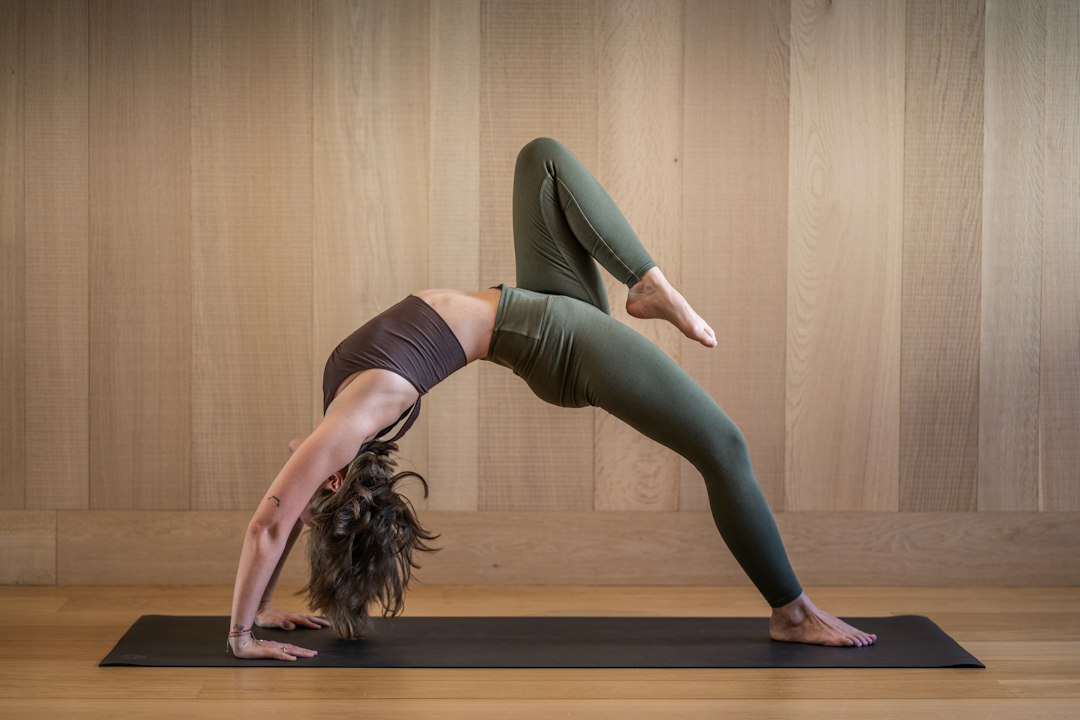 Photo by Tino Rischawy on Unsplash
Question 1: What Is This Fabric Actually Made Of — and What Is It Blended With?
Start with the fiber content tag, not the marketing copy. “Recycled polyester” tells you the feedstock; it doesn’t tell you whether the fabric will pill, hold odor, or go transparent under load. For yoga, the fiber blend predicts behavior more reliably than any certification logo.
The blends that tend to hold up in practice:
- Nylon (including recycled nylon) at 70% or more, blended with 20–30% elastane or a nylon/elastane duo. Nylon is abrasion-resistant and holds shape well through repeated washing. This is the workhorse blend for leggings that survive mat time.
- High-elastane content for compression pieces. Look for 20%+ elastane in sculpting leggings; lower percentages (8–12%) are fine for lighter, stretchier styles but will bag out faster at the knee and seat.
- Merino wool blends for slower, cooler practices. Merino resists odor naturally, which means fewer washes — and washing is what kills activewear. A merino-nylon blend (around 80/20) suits yin, restorative, and warm-room practice beautifully.
The blends that tend to disappoint:
- High polyester with low elastane. Polyester is durable on its own but traps odor and, in cheap jersey knits, pills quickly at friction points. Fine for a top; risky for leggings.
- “Buttery” brushed fabrics with no nylon in the mix. That peach-fuzz hand-feel often comes from a brushed surface that fuzzes, pills, and thins. Softness at the rack is not the same as softness after twenty washes.
- Cotton-heavy blends for hot yoga. Cotton holds sweat against the skin. It’s lovely for slow practice and lousy for anything vigorous.
One more tag check: OEKO-TEX Standard 100 or bluesign certification tells you the fabric was tested for harmful substances — a meaningful baseline for anything worn against sweaty skin. It says nothing about durability, so treat it as a floor, not a finish line.
Question 2: Can You See the Seams, and Do They Look Like They’ll Hold?
Turn the garment inside out. This is the single most revealing thirty seconds of any activewear purchase, and it’s the same instinct behind our secondhand blazer quality checklist — construction tells you what the marketing won’t.
What to look for at the seams:
- Flatlock or coverstitch seams on leggings and tops. These lie flat against the skin, stretch without snapping, and distribute stress along the seam rather than at single points. Overlocked (serged) seams are acceptable on tops but can chafe and fail under the repeated stretch of leggings.
- Reinforced gussets. A gusset (the triangular panel at the crotch) should be sewn with flat seams and, ideally, a second row of stitching. A single-stitch gusset is where sheer spots and blowouts begin.
- Clean, dense stitching at stress points — waistband joins, strap attachments, and the crotch. Pull the seam gently sideways. If you can see light through the stitch holes or the thread looks sparse, it will open.
- No loose threads or skipped stitches anywhere along a seam line. One skipped stitch is a future hole.
The waistband test
Roll the waistband down twice and let it spring back. A well-constructed band returns to shape and stays put; a cheap one folds over on itself or twists. Look for a wide, bonded, or double-layer band with an internal elastic or drawcord — narrow elastic bands dig in during forward folds and lose recovery first.
Question 3: Is It Opaque Under Stretch — Really?
Sheer leggings are the most common activewear failure, and fitting-room lighting is designed to hide it. Do the squat test, but do it properly: face a mirror, squat deeply, and check the seat and inner thigh in daylight if you can get near a window. Then bend forward and check the front.
If you’re shopping online, this is where reviews earn their keep. Search the reviews specifically for the words “sheer,” “squat-proof,” and “pilled” — and read the three-star reviews first. Five-star reviews describe the honeymoon; three-star reviews describe month three.
Question 4: Does It Fit Your Actual Practice, Not the Fantasy Version?
A common shopping mistake: buying for the yoga you aspire to do rather than the yoga you do. A strappy, low-support top is lovely for a slow flow and a distraction in a vinyasa class. A thick, compressive legging is great for hot power yoga and overkill for yin.
Ask three fit questions before you commit:
- Does it stay put in the poses you actually practice? Raise your arms overhead, twist, and lunge in the fitting room. If the top rides up or the leggings slide down, they will do it in class, too.
- Is there enough ease at the hip and knee? Deep flexion puts enormous strain on fabric at the knee. If the fabric feels taut when you bend, it will thin there first.
- Does the rise suit your body and your tops? A high rise that sits at your natural waist stays put through folds; a low rise that migrates during downward dog will spend the whole class being adjusted.
Sizing down for compression is a durability mistake — overstretched elastane fatigues faster and goes sheer sooner. Buy the size that fits without strain.
Question 5: What Does the Brand Actually Say About Repairs, Returns, and Take-Back?
This is the question almost nobody asks at the rack, and it’s the one that separates durable activewear from durable-sounding activewear. A brand that stands behind its construction will tell you so in specific terms.
Look for:
- A repair or replacement policy with real terms. Lifetime guarantees against seam failure and pilling, or a repair service for a fee, signal that the brand expects the garment to last.
- A take-back or resale program. Brands that reclaim their own garments have an incentive to build them to survive resale.
- Specific care instructions on the product page — not just “machine wash cold,” but guidance on avoiding fabric softener (which coats elastane and reduces recovery) and drying flat.
- Published fiber and supplier information. Vague “eco-conscious” language with no fiber percentages or factory details is a yellow flag.
For context on how much variance exists between brands that all use the word “sustainable,” our wash-test roundup of sustainable knitwear brands is a useful model for the kind of scrutiny activewear deserves — the testing, not the labeling, is what tells you anything.
 Photo by Wesley Tingey on Unsplash
Question 6: Is There a Secondhand or Resale Route Worth Taking First?
Activewear is one of the trickier secondhand categories — sweat, elastic fatigue, and pilling all accumulate — but it’s not a write-off. The same inspection logic from our secondhand knitwear shopping checklist applies: check fiber content, feel for stretch recovery, and inspect friction points.
What to inspect on secondhand activewear:
- Elastane recovery. Stretch the waistband and cuffs and release. Slow return means fatigued elastic.
- The crotch and inner thigh of leggings, held up to light. Any sheerness is disqualifying.
- Pilling at the seat, inner thighs, and underarms — surface pills suggest the fabric is already past its best.
- Seam integrity at the gusset and waistband, as above.
Brands with strong resale programs and durable construction are the best secondhand bets, because the original owner’s use has already stress-tested the garment for you. If you’re building out a practice wardrobe alongside other parts of your closet, the same secondhand-first logic in our cold-weather city break capsule applies here: buy fewer, better pieces and let them work across contexts.
A Quick Comparison: Fiber Blends and What They Mean for Yoga
| Blend | Best for | Durability notes | Watch out for |
|---|---|---|---|
| Recycled nylon + 20–30% elastane | Vinyasa, hot yoga, leggings | High abrasion resistance, good shape retention | Check gusset construction; nylon can still pill at friction points |
| Polyester + 8–12% elastane | Tops, light flow | Durable but odor-retentive | Pilling in cheap jersey knits; buy for tops, not leggings |
| Merino + nylon (≈80/20) | Yin, restorative, warm rooms | Odor-resistant, fewer washes needed | Less compression; check for moth damage on secondhand pieces |
| Cotton + elastane | Slow practice, casual wear | Comfortable but slower to dry | Holds sweat; not for vigorous practice |
The Shortlist Criteria That Matter
Before you buy any piece of activewear, run it against these five criteria. If it fails two or more, walk away — regardless of how good the sustainability story sounds.
- Fiber content supports the job. Nylon-dominant blends with 20%+ elastane for leggings; merino blends for slow practice; polyester reserved for tops.
- Construction is visible and sound. Flatlock seams, reinforced gussets, dense stitching at stress points, and a waistband that springs back.
- Opaque under real stretch. Squat test in daylight, or three-star reviews that specifically address sheerness.
- Fit matches your actual practice. No sizing down for compression; enough ease at knee and hip; stays put through the poses you do.
- The brand backs durability with policy. Repair, replacement, or take-back terms in writing, plus specific care guidance.
Your next step: pick the one activewear piece you reach for most — probably your leggings — and audit it against this list tonight. Turn it inside out, check the gusset and waistband seams, hold the seat up to a lamp, and read the fiber tag. If it fails, you now know exactly what to look for in its replacement, and you can shop the shortlist criteria instead of the marketing. If it passes, you’ve found your benchmark — buy your next piece to match it.