You know the airport outfit that starts so well: the elastic-waist trousers that feel like pajamas at 5 a.m., the soft tee, the sneakers you can slip off at security. And then you catch your reflection in the terminal glass and realize you look like you’re heading to a group nap, not a gate. The opposite mistake costs just as much: the stiff blazer and unforgiving jeans that photograph beautifully in the departures lounge and then turn on you somewhere over the Atlantic, when you’re wedged into seat 34C and the waistband is leaving a mark.
The fix isn’t a new wardrobe. It’s a small set of pieces chosen for the specific physics of travel — sitting, standing, queuing, temperature swings, and the fact that everything you pack has to work with everything else. This is a five-outfit formula built from secondhand and already-owned pieces, with decision rules you can reuse for every trip.
 Photo by Cameron Cox on Unsplash
The Travel Physics That Should Drive Every Piece
Before you think about outfits, think about what a travel day actually asks of your clothes. It’s a specific physical job, and most packing mistakes come from choosing clothes for how they look standing still in a bedroom mirror rather than how they behave in motion and in seats.
Four pressures matter most.
Sitting. This is the underrated one. A waistband that’s fine standing becomes a tourniquet after three hours. Trousers with too little stretch across the seat bag out. A structured blazer that looks sharp on the walk to the gate develops a hard horizontal crease across your back. Test every bottom by sitting on the floor or a low chair for ten minutes before it earns a packing slot.
Layering. Planes and trains run either arctic or stuffy, often both on the same journey. The answer is a three-layer system you can shed and rebuild: a base layer against the skin, a mid layer for warmth, and an outer layer for wind and drizzle. Each layer should be thin enough to fold into a tote and sturdy enough to look intentional on its own.
Footwear. Security lines, long concourses, and standing at baggage claim are a foot test. You want a shoe you can walk three miles in and remove without undoing a dozen laces. This is where a lot of sustainable sandal and sneaker research pays off — our comparison of Birkenstock, Mephisto, and Naot is worth a read if you’re choosing a warm-weather travel shoe, because support matters more than the aesthetic.
Fabric behavior. Natural fibers breathe and resist odor, which is why a wool or wool-blend tee can be worn twice on a trip while a polyester one needs washing after a single wear. Knits travel better than wovens for the mid layer, and a fine-gauge merino or a recycled cashmere cardigan folds to almost nothing. If you’re weighing whether recycled cashmere earns its price for travel, our fiber deep-dive on recycled cashmere breaks down what you’re actually paying for.
The through-line: choose pieces for behavior, not for the flat-lay.
The Five-Slot Formula: Two Bottoms, Three Tops, One Layer, One Shoe
Here’s the structure. Five outfits come from a small pool of pieces, not from five separate looks. The pool is deliberately tight so that every piece pairs with every other piece, which is what makes a capsule actually function on the road.
The piece count
| Slot | Pieces | What to look for secondhand | Outfits it unlocks |
|---|---|---|---|
| Bottoms | 2 | One relaxed straight-leg or wide-leg trouser in wool blend or cotton-linen; one pull-on knit or ponte pant | Each bottom works with all three tops |
| Tops | 3 | Two tees or fine-knit short-sleeve layers; one button-down or shirt that can open over a tee | Layered or alone, across both bottoms |
| Mid layer | 1 | A fine-gauge cardigan or a soft crewneck in merino or recycled cashmere | Worn over any top, under the outer layer |
| Outer layer | 1 | A packable jacket or an unstructured blazer that folds flat | Tops every outfit for cold cabins |
| Shoes | 1 | A walkable sneaker or a supportive slip-on sandal | Worn every day |
| Extras | 2–3 | A scarf or bandana; a crossbody bag; one belt if needed | Adds variation without new pieces |
That’s roughly eight to ten items, and it produces far more than five combinations — but five is the number you actually need for a typical four-to-five-day trip, and it’s the number that keeps the bag carry-on sized.
The decision rules
Rule one: every top must work alone and under the mid layer. If a top only looks right with something over it, it’s a liability, because you’ll want to shed layers in a warm terminal.
Rule two: both bottoms must pass the ten-minute sit test. Sit, cross your legs, stand, repeat. If the waistband digs or the seat bags, it stays home.
Rule three: the shoe must be one you’ve already walked a full day in. Never debut a shoe on a travel day. This is the single most common packing regret, and it’s entirely preventable.
Rule four: the outer layer must fold flat and weigh almost nothing. A packable jacket or an unstructured secondhand blazer both qualify. A structured wool coat does not, however good it looks. If you’re shopping for a blazer specifically, our secondhand blazer inspection checklist covers what to check for tailoring and fabric before you commit.
Rule five: nothing enters the bag unless it pairs with at least three other pieces. This is the rule that keeps a capsule from quietly becoming a suitcase.
What to Look For Secondhand (and What to Skip)
Secondhand is the natural home for a travel capsule, because the pieces that travel best — broken-in wool trousers, soft merino knits, unstructured blazers — are often better made and better priced on the resale market than new. But not everything secondhand is a good travel buy.
Buy secondhand: fine-gauge merino and cashmere knits (check for pilling and moth holes at the underarms and cuffs); wool-blend trousers with a bit of stretch; unstructured cotton or linen blazers; leather crossbody bags with intact zips; and quality sneakers with life left in the sole. These are the workhorses, and the resale market is full of them because people underestimate how much wear they’ll get.
Skip secondhand for travel: anything with a fragile lining that’s already separating, structured coats that won’t pack, shoes with worn-down heels (a travel day will finish them), and anything that needs dry cleaning after one wear. Travel clothes need to be low-maintenance by design.
One more filter: check the fiber content label, not just the feel. A “wool blend” that’s 80 percent polyester will not breathe the way you need it to on a long flight. The secondhand knitwear shopping checklist walks through fiber, feel, and fit in detail if you want a structured inspection routine.
If you’re building this capsule from scratch and want a shortlist of labels that hold up, our roundup of affordable sustainable fashion brands that deliver on quality is a reasonable starting point — though secondhand will almost always beat new on both price and footprint.
The Five Outfits, Built From the Same Eight Pieces
Here’s where the formula becomes concrete. These five outfits use the same pool, which is the whole point — you’re not packing five looks, you’re packing one small system that rearranges itself.
Outfit 1: The travel day
Relaxed wool-blend trouser, fine-knit tee, packable jacket, walkable sneaker. This is the outfit you wear onto the plane, so it has to survive the longest, most variable day. The trouser passes the sit test, the tee breathes, the jacket handles the cabin, and the sneaker is already broken in. Add a crossbody bag so your hands are free for the passport and the coffee.
Outfit 2: The arrival dinner
Same trouser, button-down shirt worn open over the tee (or alone, sleeves rolled), the cardigan over the shoulders, and the same sneaker. Swapping the tee for the shirt and adding the cardigan shifts the register from “in transit” to “in public” without a change of bottoms. This is the outfit that proves the capsule works.
Outfit 3: The walking day
Knit pull-on pant, tee, cardigan tied around the waist or worn open, sneaker, scarf. The pull-on pant is the comfort option, and pairing it with a structured top and a scarf keeps it from reading as loungewear. The scarf is doing real work here — it adds color, warmth, and a bit of polish for almost no packing weight.
Outfit 4: The cool evening
Wool-blend trouser, button-down, unstructured blazer, sneaker (or a dressier flat if you’ve packed one). The blazer is the one piece that elevates everything, and because it’s unstructured it folds flat and doesn’t crease badly. This is your dinner-out or museum-late outfit.
Outfit 5: The repeat
Whatever you wore on day one, worn again with a different top or a different layer. This isn’t a cop-out — it’s the entire argument for a capsule. By day four, you should be recombining confidently rather than wishing you’d packed more.
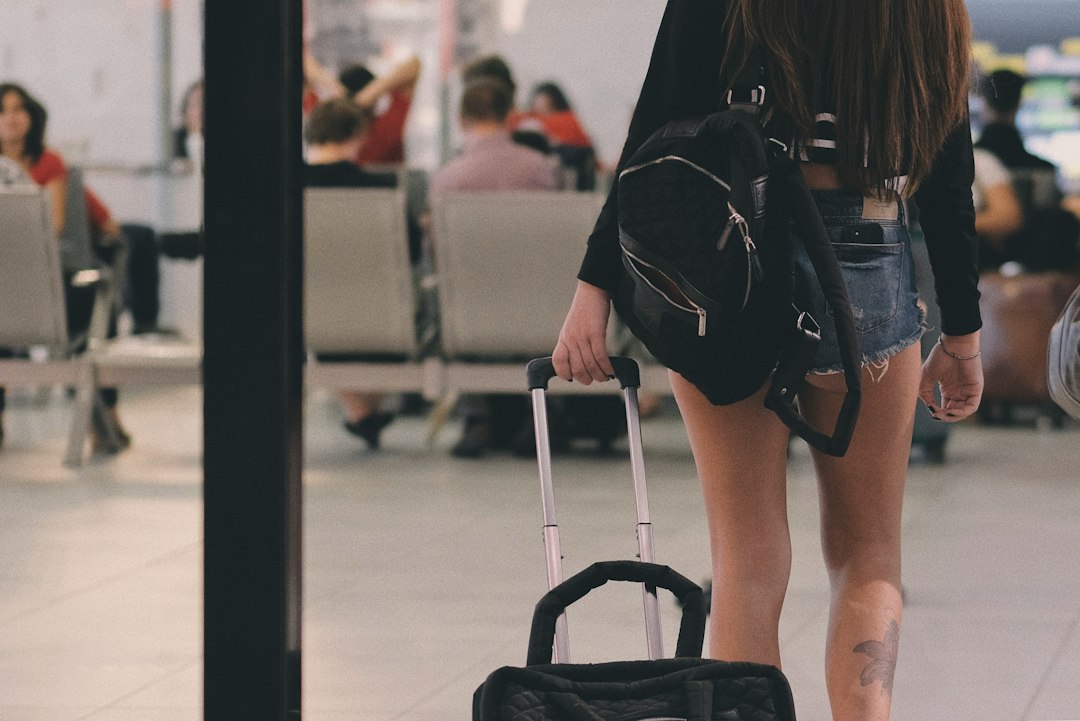 Photo by Gabriel Crismariu on Unsplash
Repeatable Outfits, Not One-Off Looks
The reason this formula works isn’t that five is a magic number. It’s that every piece was chosen to recombine, which means the capsule keeps producing outfits after the trip ends. The wool trouser goes into your regular rotation. The cardigan becomes a layering staple. The blazer earns a place in your workweek. Nothing is a travel-only purchase, which is the quiet sustainability argument for packing this way: you’re not buying disposable vacation clothes, you’re choosing pieces that work at home too.
That’s also why the secondhand-first approach matters here. A travel capsule is a small, high-use set of clothes, and high-use clothes deserve to be well made. Buying them secondhand means you’re getting the construction quality of a previous era at a fraction of new prices, and you’re keeping good garments in circulation instead of adding to demand for new ones.
A few practical notes for keeping the system working trip after trip. Store the capsule together between trips so it’s ready to go rather than re-litigated each time. Rotate the knits out for the off-season using a proper storage method — our off-season knitwear storage playbook covers moths, stretching, and musty smells, all of which will quietly ruin a good travel knit if you store it badly. And repair rather than replace: a snagged knit or a sagging hemline is a mending job, not a shopping trip, and our secondhand knitwear repair playbook walks through pills, snags, and hemlines.
The next step is small and specific: pull the eight pieces you already own that fit the five-slot formula, lay them out, and run the ten-minute sit test on both bottoms. Whatever fails, replace from secondhand rather than new — and if you want a model for how a seasonal capsule is structured, our five-outfit fall transition capsule uses the same logic for changing weather. Pack once, recombine all week, and let the outfit stop being a decision you have to make at 5 a.m.