The email says “creative office,” which sounds liberating until you’re standing in front of your closet at 8:40 on a Tuesday. The studio where you work has people in paint-splattered clogs and people in immaculate wide-leg trousers, and the dress code (if it exists) is somewhere between “no logos” and “please look like you have opinions.” You want to look hired, not hemmed in. You also want to stop buying a new top every time a meeting with clients appears on the calendar.
Here’s the trap I see most often: people building a “creative office” capsule buy personality pieces first—the sculptural earring, the printed silk shirt, the chartreuse loafer—and then discover they have nothing to wear them with. A capsule only works when the connective tissue comes first. That means two or three bottoms that fit properly, one jacket that reads polished without reading corporate, and a small set of tops that can move between a desk day and a presentation without a costume change.
This is a formula for five repeatable outfits built from roughly ten secondhand pieces, with a decision rule for every purchase so you don’t drift back into one-off buying. The goal is a closet where Tuesday’s outfit and Thursday’s outfit share four pieces and still look like they belong to different days.
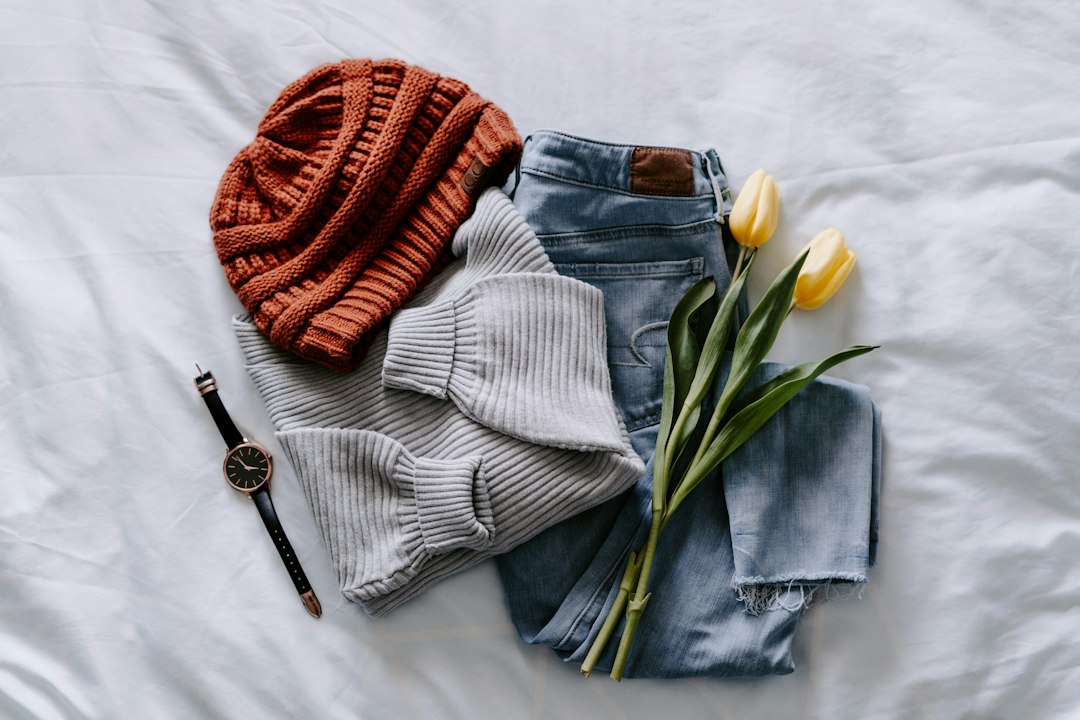 Photo by Angela Bailey on Unsplash
The 10-Piece Core: What Goes In Before the Fun Stuff
The math is simple: five outfits, ten pieces, and enough overlap that you’re never laundering a single blazer three nights a week. The ratios matter more than the exact items. I aim for three bottoms, four tops, one jacket, one knit layer, and one pair of shoes that can handle a full day on your feet. Accessories are free agents—they don’t count toward the ten because they’re what makes the same base read differently.
The bottoms (3)
One tailored trouser in a dark neutral—charcoal wool or a navy crepe—that you can press and wear twice before it needs a clean. One relaxed straight-leg jean in a dark wash, because creative offices tolerate denim and dark denim reads intentional rather than casual. One midi skirt or wide-leg cropped pant in a texture that isn’t flat, like a wool blend or a heavy cotton twill, so it photographs as a choice rather than a default.
When you’re thrifting trousers, check the seat and the hem before anything else. A pair that needs a $40 waist alteration is still a good buy if the fabric is excellent; a pair with a shiny seat from too many dry cleans is not. Our guide to caring for secondhand wool trousers covers the pressing and lining checks that separate a keeper from a regret.
The tops (4)
Two button-front shirts—one crisp cotton or poplin, one in a softer drape like silk or a silk-blend—and two knit tops, ideally a fine-gauge crewneck and a slightly looser long-sleeve you can tuck. This is where secondhand shopping pays off most: silk blouses that retail for $200+ show up constantly for under $30, and the fiber quality is often better than new fast-fashion equivalents. If you’re weighing whether used silk is worth it, the secondhand silk versus new silk comparison lays out the durability and care tradeoffs honestly.
The jacket and the layer (2)
One blazer, unstructured or lightly structured, in a color that isn’t black if you can find it—camel, olive, a deep rust. An unstructured blazer reads creative; a stiff pinstripe reads bank. Before you pay for alterations on a thrifted jacket, run the shoulder and button-stance checks in our secondhand blazer quality checklist. Shoulders are the one thing a tailor can’t fix cheaply.
One knit layer—a cardigan or a fine merino pullover—that lives on your chair and gets thrown over everything when the office AC wins.
The shoes (1)
One pair of closed-toe shoes you can walk in for a full day: a loafer, a low block heel, a clean ankle boot depending on season. This is the piece I’d buy new or nearly new if you must, because secondhand shoe fit is unforgiving. If you do thrift them, use the sole and leather inspection steps in our secondhand boots checklist—the same logic applies to loafers.
| Slot | Piece | Secondhand budget | What it must do |
|---|---|---|---|
| Bottoms | Tailored trouser (charcoal/navy) | $20–45 | Presses clean, wears twice |
| Bottoms | Dark-wash straight jean | $15–35 | No distressing, holds shape |
| Bottoms | Textured midi skirt or wide-leg crop | $20–40 | Adds visual variety |
| Tops | Crisp button-front shirt | $10–25 | Tucks without bulk |
| Tops | Silk or silk-blend blouse | $15–35 | Drapes, layers under jacket |
| Tops | Fine-gauge knit crewneck | $12–30 | No pilling at underarms |
| Tops | Looser long-sleeve knit | $12–30 | Tucks or half-tucks cleanly |
| Jacket | Unstructured blazer | $25–60 | Shoulders fit you, not hangers |
| Layer | Cardigan or merino pullover | $15–35 | Warm without bulk |
| Shoes | Loafer, low heel, or ankle boot | $30–70 | Walkable for 8 hours |
The Five Outfits, Built From the Same Ten Pieces
Each outfit below uses four to five pieces from the core, which means you can assemble any of them on a Monday morning without thinking. The formulas are deliberately plain on paper—the polish comes from fit, pressing, and how you finish the edges: sleeves pushed, shirt half-tucked, one piece of jewelry that isn’t an afterthought.
Outfit 1: The Client-Meeting Default
Tailored trouser + crisp button-front + unstructured blazer + loafers. Tuck the shirt fully, add a thin belt if the trouser has loops, and keep jewelry to one strong piece—a single gold hoop or a signet ring. This is the outfit that makes you look like you take the meeting seriously without looking like you’re interviewing for a different job. It works in every season; swap the loafers for ankle boots in cold months.
Outfit 2: The Studio Day
Dark jean + fine-gauge crewneck + blazer + loafers. Half-tuck the knit at the front only, push the blazer sleeves to the elbow. This is the outfit for a day of actual work—cutting, pinning, standing at a whiteboard—where you still want to look composed when someone walks in. If your office runs cold, the cardigan goes over the knit and under the blazer, which sounds like too many layers and isn’t.
Outfit 3: The Presentation
Silk blouse + textured midi skirt + blazer + low heel. Button the blazer or leave it open depending on how formal the room is. The silk does the work here—it catches light and reads expensive in a way cotton can’t—which is why it’s worth hunting a good one secondhand. Keep the shoe heel low and blocky so you can stand for an hour without shifting your weight.
Outfit 4: The Casual Friday That Isn’t Sloppy
Dark jean + looser long-sleeve knit + cardigan + loafers. No blazer. Roll the knit sleeves once, add a scarf or a bold earring if the day needs it. The absence of the jacket is the point—it signals the week is winding down without dropping into athleisure. This is also your travel outfit if you’re heading straight from the office to a train.
Outfit 5: The Wildcard
Textured skirt + silk blouse + cardigan worn as a top (buttoned, tucked) + loafers, or swap in the crisp shirt knotted at the waist over the skirt if the silhouette allows. The wildcard exists so the capsule doesn’t feel like a uniform. It’s the outfit you wear when you want to test whether a new accessory works before committing to it in a client meeting.
The Decision Rules That Keep It at Ten Pieces
A capsule falls apart at the point of purchase, not at the point of getting dressed. These are the rules I’d tape inside the closet door.
The three-outfit test. Before you buy any secondhand piece, name three outfits from the core it will complete. If you can only name one, it’s a one-off, not a capsule piece. The printed silk scarf passes because it finishes all five outfits; the chartreuse loafer fails because it only works with Outfit 4.
Fabric before color. A beautiful color in a bad fabric will pill, sag, or shine within a month. A boring color in an excellent fabric will outlast it by years. This is especially true for knits—use the fiber and feel inspection steps in our secondhand knitwear shopping checklist before you let a soft hand-feel talk you into a blend that will fuzz by December.
One statement per outfit, maximum. The capsule has enough texture and drape that you don’t need a statement top and a statement shoe and a statement earring. Pick one and let the rest be quiet.
Buy the alteration, not the fantasy. If a trouser is perfect except for the hem, that’s a $15 fix and a good buy. If it’s perfect except for the shoulders, walk away. Secondhand shopping rewards people who can see the finished garment, but only within the limits of what a tailor can actually change.
Rewear before you replace. If you’re bored of Outfit 2 by week three, the problem is usually styling, not the piece. Try the knit untucked, the blazer belted, the sleeves cuffed. Most capsule fatigue is a finishing problem.
Where Secondhand Actually Wins (and Where It Doesn’t)
The case for secondhand in a work capsule is strongest in three categories: blazers, silk blouses, and knitwear. These are the pieces where new equivalents are expensive and construction quality has quietly declined, so a ten-year-old jacket often outperforms a $180 new one. A thrifted wool blazer with a full lining and a canvassed front will hold its shape through a hundred wears; a fast-fashion blazer will start to pill at the cuffs by month four.
Where secondhand is weaker: shoes and anything requiring precise fit. Buy those new or nearly new if the budget allows, and put your secondhand effort into the pieces where the savings are largest.
One more note on care, because a capsule only stays polished if the pieces stay clean. Silk blouses need a gentle hand-wash and a hang-dry; wool trousers need brushing and airing more than dry cleaning. If you’re building this capsule in summer, the fiber conversation shifts entirely—our linen versus hemp versus cotton workwear comparison is the place to start before you buy a warm-weather version of this same ten-piece structure.
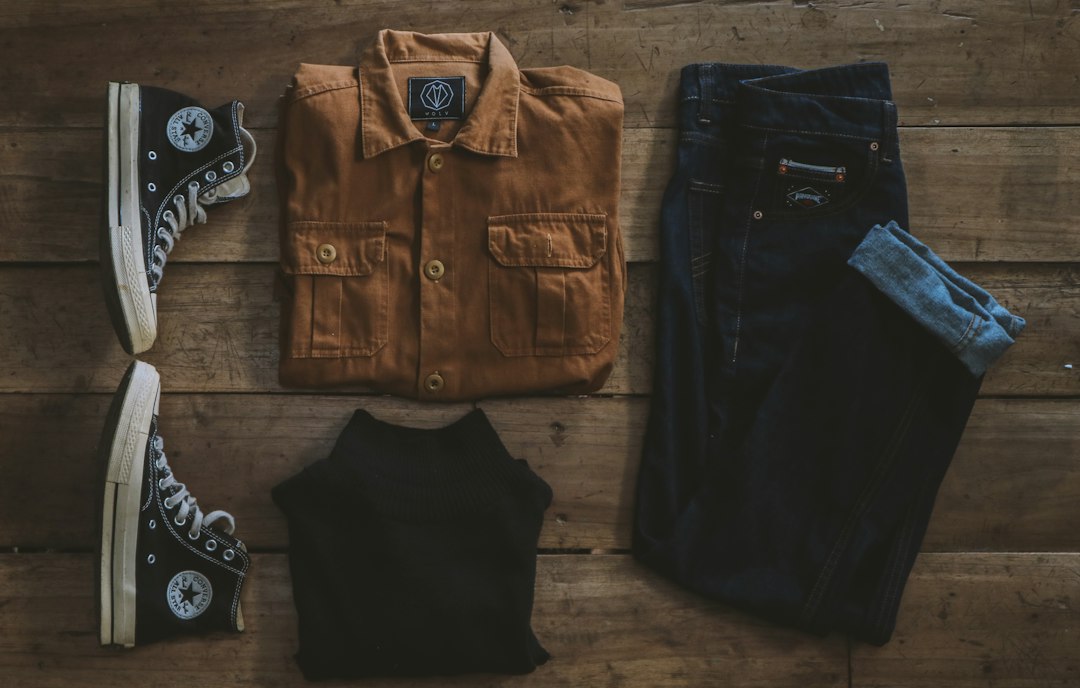 Photo by Abdul Artega on Unsplash
Repeatable Outfits, Not One-Off Looks
The measure of this capsule isn’t how many compliments you get on any single day. It’s whether you can get dressed in under five minutes on a Wednesday, look like yourself, and still have something left to wear on Thursday. Five outfits from ten pieces means each piece works at least twice a week, which means each piece earns its place—and that’s the whole argument for buying secondhand in the first place. You’re not collecting clothes. You’re assembling a small, high-functioning system.
Start this week with one piece: the blazer. It’s the hardest to get right and the one that changes the most outfits. Take your measurements, take the shoulder check seriously, and give yourself permission to walk away from three jackets before you buy the fourth. Then build outward—trousers, then shirts, then the knit layer—and let the outfits assemble themselves around the pieces that actually fit.