The invitation says “festive attire,” and your brain immediately starts a tab: the velvet dress you’ve worn three Decembers running, the heels that make you want to sit down by 8:45, the fact that it’s going to be 34 degrees and the party is a fifteen-minute walk from the train. Somewhere in there is a quiet, dangerous thought: maybe I just buy something new.
That’s the moment this formula is built for. Not because buying nothing is a moral high score, but because holiday dressing is where wardrobes get the most panic-purchased and the least worn — the sequined top that photographs beautifully and itches by dessert, the novelty blazer that only works December 1 through 31. The three outfits below use pieces you likely already own or can pull from secondhand in a single afternoon, and each one solves a different holiday-party problem: the dressy one, the standing-and-mingling one, and the cold-weather one that has to survive an actual walk. Every piece earns its place in more than one look, so the formula works whether you have one party or four.
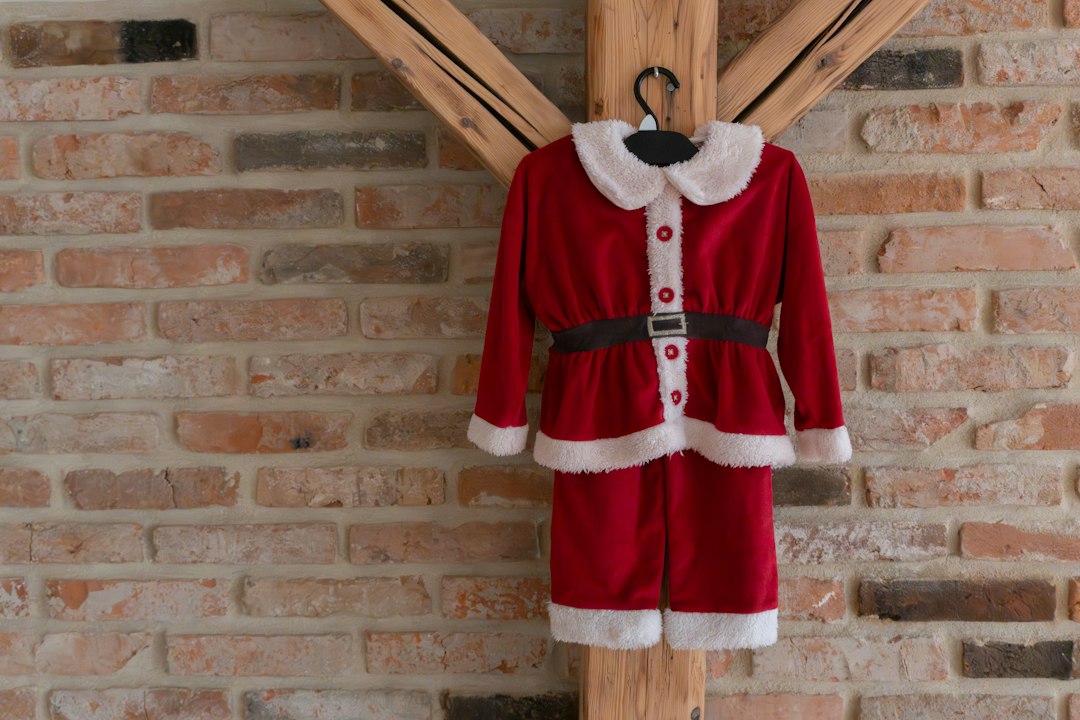 Photo by Raymond Petrik on Unsplash
Start With the Party, Not the Outfit
Most holiday outfit advice fails because it treats “holiday party” as one event. It isn’t. A seated dinner at a friend’s house, an office mixer with a bar and no chairs, and a New Year’s Eve thing that runs past midnight are three different physical experiences, and the clothes have to handle the actual conditions — temperature, seating, how long you’ll stand, how far you’ll walk, whether you’ll be photographed under fluorescent office lighting or candlelight.
Before you pull anything out of the closet, answer three questions:
How long am I actually there? A two-hour office party can tolerate a slightly fussy piece. A five-hour dinner with a long commute cannot. Fussiness compounds with time.
Will I be inside, outside, or both? This is the single biggest determinant of whether you’ll be miserable. A walk between the car and the door is a different problem than a forty-minute transit journey.
What’s the dress code, translated honestly? “Festive” usually means one step up from what the host wears on a normal Tuesday — a little shine, a richer color, a nicer fabric. It almost never means full formal. If you’re unsure, a good rule is: one festive element, everything else calm. One. That rule alone prevents most over-dressing and most panic purchases.
Once you’ve answered those, you’re not shopping for a party. You’re assembling for a set of conditions — which is a much easier problem to solve with what you already have.
The Three-Piece Rule That Makes Holiday Dressing Easy
Here’s the formula underneath all three outfits: a base layer you’d genuinely wear on a normal week, a festive layer that carries the holiday signal, and a temperature layer that keeps you functional in cold weather and warm rooms. Three pieces, three jobs. If any piece is doing two jobs badly, the outfit collapses.
The festive layer is where people overspend, so it’s worth being precise about what counts. Good festive layers are things you’d also wear to a nice dinner in February, a birthday, a gallery opening. Think: a silk or satin blouse, a velvet or corduroy blazer, a metallic knit, a beaded cardigan, a slip skirt, a pair of trousers with a bit of sheen. These are rewearable. Bad festive layers are things that only work in December — a Santa-red blazer, a sequin jumpsuit, a novelty sweater with a reindeer on it. Those are costumes, and they’re the pieces that end up in donation bags by January.
The base layer is your insurance policy. A fine-gauge knit, a plain silk shell, well-cut trousers, a slip dress, dark jeans that fit. If the festive layer turns out to be too much or too warm, you can shed it and still look intentional. This is why the base matters more than the sparkle: it’s what you’re left with when the party gets long.
The temperature layer is where cold-weather holiday dressing is usually won or lost. A coat that ruins the outfit is worse than no coat, because you’ll be photographed in it in the doorway. More on that below.
A quick test before you commit
Put the three pieces on together and do four things: sit down, raise your arms overhead, walk up a flight of stairs, and stand still for ten minutes. If any piece pulls, gapes, rides up, or makes you want to adjust it, it will do that all night, at a party, in front of people. Fix it now or swap it.
Outfit 1: The Seated Dinner — Silk, Knit, and a Skirt That Actually Lets You Eat
This is the outfit for the dinner party, the restaurant reservation, the hosted evening where you’ll be sitting for three hours and eating a real meal. The constraint here is comfort while seated, which eliminates a surprising amount of festive clothing.
Base: a fine-gauge merino or cashmere crewneck in a deep color — forest, burgundy, navy, chocolate. Festive layer: a silk or satin midi slip skirt, ideally bias-cut so it moves and doesn’t cling when you sit. Temperature layer: a wool coat or a long cardigan, depending on how far you’re traveling.
Why this works: the knit is the thing you’d wear any Tuesday, so it’s not a costume. The slip skirt supplies all the festive signal in one piece, and a bias-cut skirt in a heavy silk or satin drapes rather than grabs, which matters enormously when you’re seated. If you’re secondhand-shopping the skirt, this is the piece to inspect most carefully — silk and satin are prone to pulls and sweat marks at the waistband, and the care routine is specific enough that it’s worth reading how to care for secondhand silk and satin pieces before you commit. A well-chosen secondhand silk skirt is also, per our comparison of secondhand silk versus new silk for special occasions, usually the smarter buy — the fabric quality on older pieces is often better than what’s on the rack now.
Shoes: a low block heel or a polished flat. You are sitting, but you’re also arriving and leaving.
The one festive extra: a single piece of jewelry — a bold earring, a stack of thin bracelets, a vintage brooch on the shoulder of the knit. One. Not three.
What to avoid here: anything with a tight waistband, anything that requires special underwear you don’t own, and any skirt short enough that sitting changes its length.
If you don’t own a slip skirt
A bias-cut satin skirt is one of the most reliably available secondhand pieces — they were made in enormous quantities through the ’90s and 2000s and they hold up. Look for a midi length, a lining or enough weight that it doesn’t static-cling, and a waistband that sits where you actually want it. If you’d rather not deal with silk, a heavy viscose satin behaves similarly and is easier to clean. If you’re layering a slip-style piece over anything sheer or fitted, the fabric content of your underlayers matters more than usual — our explainer on Bemberg cupro versus silk and viscose for linings is the reference for why some linings breathe and others trap heat.
Outfit 2: The Standing Mixer — A Blazer, a Knit, and Trousers You Can Move In
The office party, the gallery opening, the friend-of-a-friend’s thing where you’ll be standing with a drink in one hand and a plate in the other for two hours. The constraint here is movement and temperature swings — offices and event spaces run hot, then you step outside.
Base: a fine knit or a silk shell. Festive layer: a velvet, corduroy, or slightly oversized blazer — this is the piece that does the work. Temperature layer: the blazer doubles as your warmth indoors; add a real coat for the journey.
Why this works: a blazer reads as “I made an effort” without requiring you to be cold or uncomfortable, and it’s the most rewearable festive layer on this list — it goes to work, to dinner, to a wedding. If you’re buying secondhand, the construction details matter more than the label, and our secondhand blazer quality checklist covers what to check at the seams, shoulders, and lining before you pay for alterations. A velvet blazer in a deep jewel tone is the sweet spot: festive under party lighting, neutral enough to wear in January.
Trousers: a straight or wide-leg wool blend, dark. Not leggings, not stiff denim. You need to be able to stand, perch on a bar stool, and walk.
Shoes: a boot or a low heel you’ve already broken in. Standing parties are where new shoes go to die.
The one festive extra: a metallic or beaded top under the blazer, visible only when it’s open. This is the move that makes a plain blazer read as holiday without committing to a whole sequined garment.
The layering trick for hot rooms and cold exits
Wear the festive layer as your outer layer indoors and keep the base simple. When you step outside, the coat goes over everything. When you get too warm inside, the blazer comes off and you’re in a good knit — still appropriate, still intentional. This is the same logic behind our Christmas market layer system, applied to an indoor event with a cold commute.
Outfit 3: The Cold-Weather Party — When the Walk Is Part of the Outfit
The New Year’s Eve thing, the party in a drafty venue, the event where you’re parking six blocks away. The constraint here is that the outfit has to work outdoors as well as in, which means the coat is not an afterthought — it’s part of the look.
Base: a fine knit or a slip dress. Festive layer: a metallic or textured knit, or a velvet dress if you’re going the dress route. Temperature layer: a coat you’d be happy to be photographed in — a wool overcoat, a long teddy, a well-cut peacoat.
Why this works: the coat carries the visual weight for the walk, and the festive layer takes over once you’re inside. The mistake people make is buying a party outfit that assumes a car door ten feet away; the fix is choosing a coat that’s actually part of the outfit rather than a bag you carry.
The practical pieces: tights or thermal leggings under a dress or skirt, boots with a real sole, gloves you can take off and put in a pocket, and a bag small enough to keep on your body. If you’re buying secondhand boots for this, sole condition is the thing to check — our secondhand winter boot inspection guide covers what to look for.
The one festive extra: a scarf in a rich color or a metallic knit, worn as part of the outfit rather than stuffed in a bag.
The coat rule
If the coat doesn’t work with the outfit, change the coat, not the outfit. A camel overcoat, a black wool coat, or a long textured coat will work with all three outfits in this piece — that’s the whole point. One good coat, three parties.
The Comparison: Which Formula Fits Which Party
| Outfit 1: Seated Dinner | Outfit 2: Standing Mixer | Outfit 3: Cold-Weather Party | |
|---|---|---|---|
| Festive layer | Silk or satin slip skirt | Velvet or corduroy blazer | Metallic or textured knit |
| Base layer | Fine-gauge knit | Fine knit or silk shell | Fine knit or slip dress |
| Temperature layer | Wool coat or long cardigan | Blazer (indoors) + coat (outdoors) | Statement wool coat |
| Shoes | Low block heel or polished flat | Broken-in boot or low heel | Boot with a real sole |
| Key constraint | Comfort while seated | Movement and heat swings | Outdoor walk and drafty venue |
| Rewear potential | High — skirt works year-round | Highest — blazer works everywhere | Medium — depends on the knit |
The rewear column is the one that matters. Outfit 2’s blazer is the most versatile single purchase on this list; Outfit 1’s skirt is the most festive per dollar; Outfit 3’s coat is the one you’ll wear most often but the least “holiday.” If you’re only adding one piece this season, add the blazer.
Repeatable Outfits, Not One-Off Looks
The point of this formula isn’t three outfits for three parties. It’s that the same nine or ten pieces — a fine knit or two, a slip skirt, a festive blazer, a metallic top, dark trousers, a slip dress, a good coat, boots, one piece of jewelry — recombine into every holiday event on your calendar, and then keep working in January, February, and the rest of the year. That’s what separates a holiday wardrobe from a holiday costume.
So here’s the next step, and it’s small: pull the three pieces for your next party out of your closet tonight, put them on, and do the sit-stand-stairs test. If something fails, you have time to swap it or find the one missing piece secondhand before the event. If everything passes, you’ve just solved your holiday dressing without opening a single shopping tab — and you’ll wear all three pieces again long after the decorations come down.