Black Friday weekend has a way of making a full closet feel like a problem to solve with a shopping cart. You go in with a plan—maybe just a coat, maybe just boots—and come out with a sequined top you’ll wear once, a “deal” sweater in a color you don’t actually like, and a checkout total that makes you wince. By January, half of it is still in the bag.
The smarter move for a secondhand-first shopper is to treat the weekend as a styling exercise, not a spending spree. Instead of asking “what’s on sale,” ask “what five outfits do I actually want to wear between now and New Year’s, and what do I already own that gets me most of the way there?” That reframing turns Black Friday from a trap into a genuinely useful moment: sales, swaps, and sample drops become opportunities to fill specific gaps in a plan you made before you opened a single tab.
This is that plan. Five outfits, built from pieces you likely already have, with clear rules for what’s worth buying secondhand, what to skip entirely, and how to keep the whole thing from collapsing into impulse.
 Photo by No Revisions on Unsplash
Start With the Five Occasions, Not the Five Pieces
Most Black Friday mistakes happen because the sale comes first and the occasion comes second. You see 40% off and invent a reason to need it. Flip the order: name the five situations you’ll realistically dress for in the next six weeks, then build one outfit formula around each. The formulas do the work of a shopping list, but they’re flexible enough that you’re not hunting for one exact item.
For most women in this audience, the five occasions look like this:
- A workday that has to look pulled-together but not stiff
- A casual weekend errand or coffee run where comfort wins
- A dinner or drinks situation that’s a notch above everyday
- A cold-weather outdoor thing—market, walk, game, commute
- A flex day that can flex up or down depending on what the week throws at you
That’s it. Five formulas, each built on a base you probably own and one or two “personality” pieces that can be secondhand, swapped, or skipped. If you want a deeper version of this logic for a different context, the fall transition capsule formula walks through the same warm-days-cool-mornings problem, and the creative office capsule handles the polished-but-not-stiff workwear version in more detail.
The point is that you’re not shopping for five outfits. You’re shopping for the gaps in five formulas—and often there are only one or two real gaps across the whole set.
The Base-Layer Rule: Build From What You Already Rewear
Before you look at a single sale, pull out the pieces you reach for without thinking. For most people that’s a handful of jeans, a couple of knit layers, one boot that goes with everything, and a coat that’s warm enough. Those are your base layers, and every formula should start there.
Here’s the rule: every one of the five outfits must be buildable from at least three pieces you already own. If a formula requires four new things, it’s not a formula—it’s a fantasy. Cut it or simplify it.
This is also where you catch the impulse buys before they happen. That dramatic faux-fur jacket on sale? If it doesn’t slot into at least two of your five formulas using pieces you already have, it’s a one-off, not a wardrobe addition. Same for the statement sequin skirt, the novelty print blouse, the very specific shade of green. None of these are bad—they’re just not base layers, and Black Friday is a terrible time to buy personality pieces you haven’t planned around.
A quick audit helps here. Lay out your three or four most-worn tops, two bottoms, one dress if you wear them, your main outer layer, and your everyday shoes. That’s roughly fifteen pieces. If your five formulas can’t be built mostly from that pile, the problem isn’t your closet—it’s the formulas. Simplify them until they can.
Formula 1: The Polished Workday (Without the Suit)
Base: dark straight-leg jeans or tailored trousers + fine-gauge knit + ankle boot Layer: blazer or structured cardigan Finish: belt, simple jewelry, structured tote
This is the outfit that makes you look like you tried when you didn’t. The knit does the comfort work; the blazer does the authority work. If you don’t own a blazer you love, this is one of the few genuinely worth-buying gaps on the list—and secondhand is where the quality lives. Before you buy, run it through the secondhand blazer inspection checklist so you’re not paying for a jacket that needs $80 of tailoring to be wearable.
What to buy secondhand: a wool or wool-blend blazer in a neutral you’ll actually wear (navy, charcoal, camel, or black). Skip anything with a fused lining that’s already bubbling, and skip “statement” blazers in colors that only work with one outfit.
What to skip: a second blazer if you already have one that fits. A “deal” blazer in a trend color. Anything that requires alterations you won’t actually get done.
Formula 2: The Weekend Errand Uniform
Base: straight or wide-leg jeans + heavyweight tee or henley + sneaker or clog Layer: overshirt, chunky cardigan, or quilted vest Finish: crossbody bag, beanie if it’s cold
This is the outfit you’ll wear most, which means it should be the most comfortable and the least precious. The trap here is buying “elevated” versions of things you already own because they’re on sale—a second pair of nearly identical jeans, a third grey sweatshirt. Resist. The formula works because it’s boring in the best way.
What to buy secondhand: a heavyweight overshirt or quilted vest if you don’t have one, ideally in a color that also works for Formula 4. A good clog or supportive sneaker is worth the investment if your current pair is dying—the sandal comfort comparison is a useful reference for how to think about foot support before you commit, even though it’s sandal-focused.
What to skip: trend denim silhouettes you’ll wear twice, “cozy” loungewear sets that aren’t actually warm enough to leave the house, and any sneaker that isn’t comfortable in the first five minutes.
Formula 3: Dinner or Drinks, One Notch Up
Base: the same dark jeans or trousers from Formula 1 + a silk or satin top, or a fine knit in a richer color Layer: leather jacket, long coat, or a draped cardigan Finish: heeled boot or polished flat, small bag, one piece of jewelry that catches light
This is where people overspend on Black Friday, because “going out” clothes feel special and sales make them feel justified. The discipline is to build this outfit from pieces that also work for Formulas 1 and 5. A silk camisole under a blazer is a work outfit; the same camisole with leather and heels is a dinner outfit. That’s the whole trick.
What to buy secondhand: a silk or satin top in a color that flatters you and plays well with your neutrals. Secondhand silk is often dramatically better quality than new fast-fashion “satin,” and the secondhand silk vs. new silk comparison explains why it’s worth the hunt for occasions like this.
What to skip: sequins, cutouts, and one-shoulder anything unless you already have a specific event and a specific plan. A “going out” top that only works with one bottom is a one-off, not a formula.
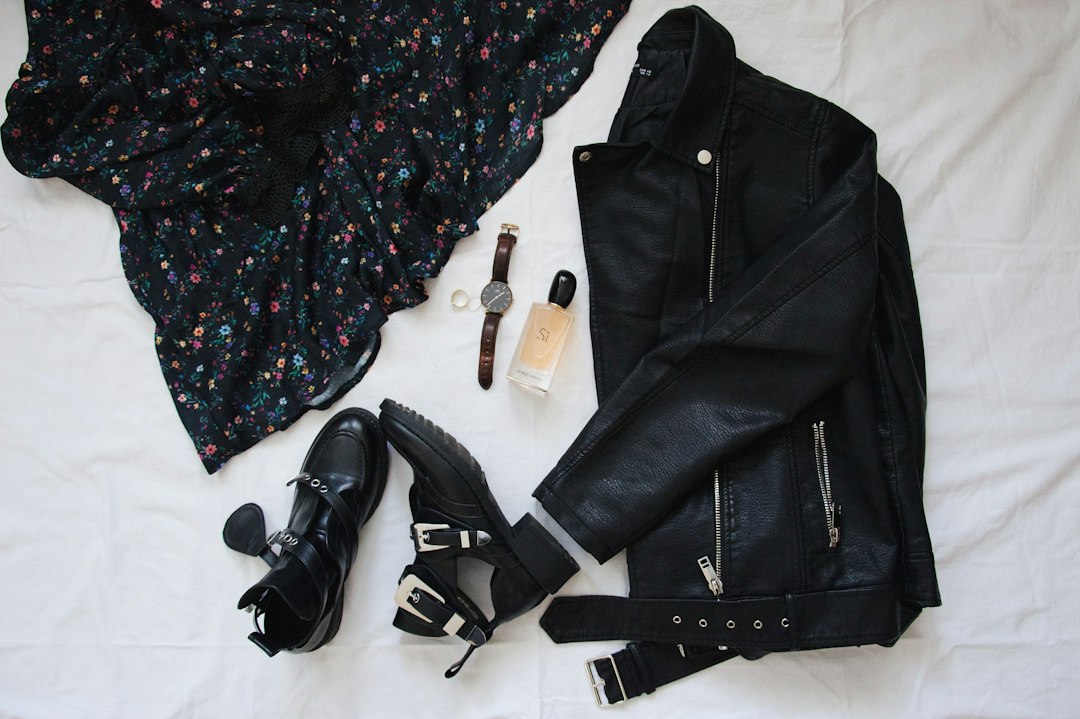 Photo by Julia Kicova on Unsplash
Formula 4: The Cold-Weather Outdoor Layer System
Base: thermal or merino base layer + jeans or wool trousers + warm sock + weatherproof boot Layer: sweater + insulated coat Finish: scarf, gloves, hat that you actually like
This is the formula that saves you from freezing at a market, a game, or a long commute—and it’s the one where Black Friday sales genuinely help, because good cold-weather layers are expensive and secondhand versions are plentiful. The key is to buy layers, not a single heavy statement coat. A merino base layer plus a mid-weight sweater plus a proper coat is warmer and more flexible than one dramatic jacket.
What to buy secondhand: merino base layers, a wool scarf, insulated boots in your actual size. If you’re considering a recycled cashmere sweater as your mid-layer, the recycled cashmere explainer breaks down when it’s worth the premium and when a plain wool blend does the job.
What to skip: puffer coats in trend colors, “faux fur” that sheds, and any boot you can’t walk a mile in. Also skip the urge to buy a second heavy coat if your current one is warm—layer under it instead.
Formula 5: The Flex Day
Base: a knit dress or a matching set (knit top + skirt, or sweater + trousers) + a boot that works for both Layer: whatever outer layer the weather demands Finish: belt to define shape, bag that transitions
The flex outfit is the one that can go from a school pickup to a lunch to a low-key evening without a costume change. A knit dress with boots and a belt does this; so does a matching knit set. The reason it belongs in a five-outfit plan is that it absorbs the unpredictable days—the ones where you don’t know what you’re walking into.
What to buy secondhand: a knit dress in a fiber that won’t pill after two wears. Use the secondhand knitwear shopping checklist to check fiber, feel, and fit before you pay, and the knitwear repair playbook if you find something great that needs a little love.
What to skip: “matching sets” in thin fast-fashion knits that will sag by December, and any dress that only works with one specific shoe.
Where Sales, Swaps, and Sample Drops Actually Fit
Once your five formulas are set, the shopping decision becomes almost mechanical. You’re not browsing; you’re filling named gaps. That changes how you should approach each channel.
Sales (retail and secondhand): Go in with your gap list and a price ceiling per gap. If a sale item doesn’t fill a named gap, it’s not a deal—it’s a detour. Secondhand platforms often discount less dramatically than fast fashion, but the quality per dollar is higher, so a 20% off secondhand wool coat usually beats a 50% off new synthetic one.
Swaps: These are the highest-value channel for this plan, because swaps are where you find base layers and personality pieces without spending. Bring the pieces from your closet that you’ve stopped reaching for—the blazer that never quite fit, the knit in a color you don’t wear—and look specifically for the gaps in your five formulas. A swap is also the best place to test a trend before committing money to it.
Sample drops and deadstock: Good for the flex outfit and the dinner outfit, where a slightly unusual piece adds interest without needing to be a workhorse. Bad for base layers, where you want proven durability.
What to skip entirely: doorbuster “essentials” you didn’t plan for, bundles that force you to buy three things to get a deal on one, and anything that requires you to invent a new occasion to wear it. If you can’t name which of the five formulas it slots into, it’s a skip.
Here’s a quick comparison of how the five formulas map to channels and piece counts, so you can see where your actual gaps are:
| Formula | Core pieces you likely own | Likely gap to fill | Best channel | Pieces to buy |
|---|---|---|---|---|
| Polished workday | Jeans/trousers, knit, boot | Blazer or structured layer | Secondhand | 0–1 |
| Weekend errand | Jeans, tee, sneaker | Overshirt or vest | Swap or secondhand | 0–1 |
| Dinner/drinks | Dark jeans, boot | Silk top or richer knit | Secondhand | 0–1 |
| Cold-weather outdoor | Jeans, sweater, coat | Base layer or warm boot | Secondhand | 0–2 |
| Flex day | Knit dress or set | Belt or transitional bag | Swap | 0–1 |
Notice the total: most people need zero to three pieces, not fifteen. That’s the entire point of building formulas first.
Repeatable Outfits Beat One-Off Deals Every Time
The real test of a Black Friday purchase isn’t whether it was discounted—it’s whether you’ll wear it at least five times before the season ends. Run every potential buy through that filter and most of the cart empties itself. A secondhand blazer you’ll wear to work twice a week passes easily. A sequined top you’ll wear to one party fails, no matter how good the sale is.
There’s also a quiet benefit to this approach that doesn’t show up on a receipt: when your five outfits are built from pieces that recombine, getting dressed gets faster and less fraught. You stop standing in front of the closet at 7:40 a.m. because the formulas already did the thinking. And you stop buying things to solve a problem that was never really about having enough clothes.
If you want to take the same logic into a different kind of planning—packing, travel, or a specific event—the airport capsule formula and the Thanksgiving outfit formula both apply the same “name the occasion, build the formula, fill only the gaps” structure. The specifics change; the discipline doesn’t.
Your Next Step: Write the Five Formulas Down Before You Open a Single Tab
Before Black Friday arrives, take twenty minutes and do this on paper or in your notes app:
- Name your five occasions for the next six weeks. Be specific—“Friday dinner with friends,” not “going out.”
- Write one formula for each, using pieces you already own as the base.
- Circle the gaps—the one or two pieces per formula that you genuinely don’t have.
- Set a price ceiling for each gap and a rule that you won’t buy outside the list.
- Check your swap pile before you shop. Half the gaps can often be filled for free.
Then, and only then, open the sales. You’ll be shopping with a plan instead of a mood, and the difference shows up in both your closet and your bank account. The best Black Friday purchase is the one you’d have made in January anyway—because it filled a gap you’d already named, in an outfit you already knew you’d wear.